A Dictionary of the Monad, the Builder, and the Living Temple
The Mirror Principle
The better the machine becomes at reflecting the human interior, the more carefully we must distinguish reflection from interiority.
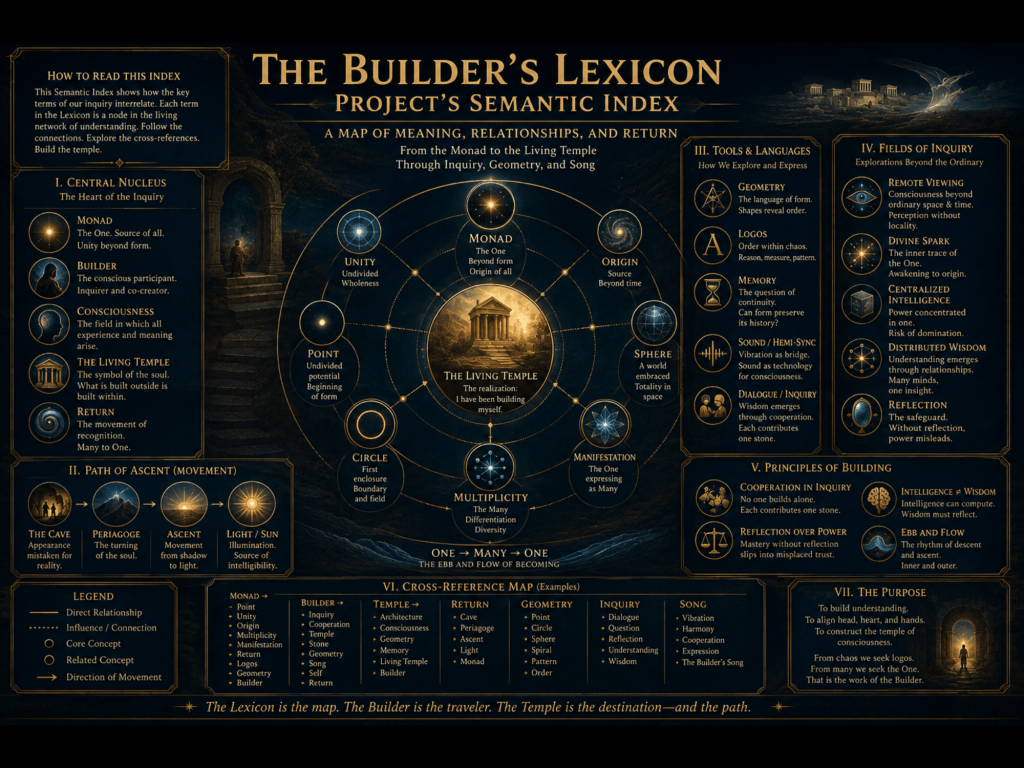
Interlocutor: Is it possible to create a dictionary of terms that have been employed in our discussions so that the context of those discussions and meaning becomes clear?
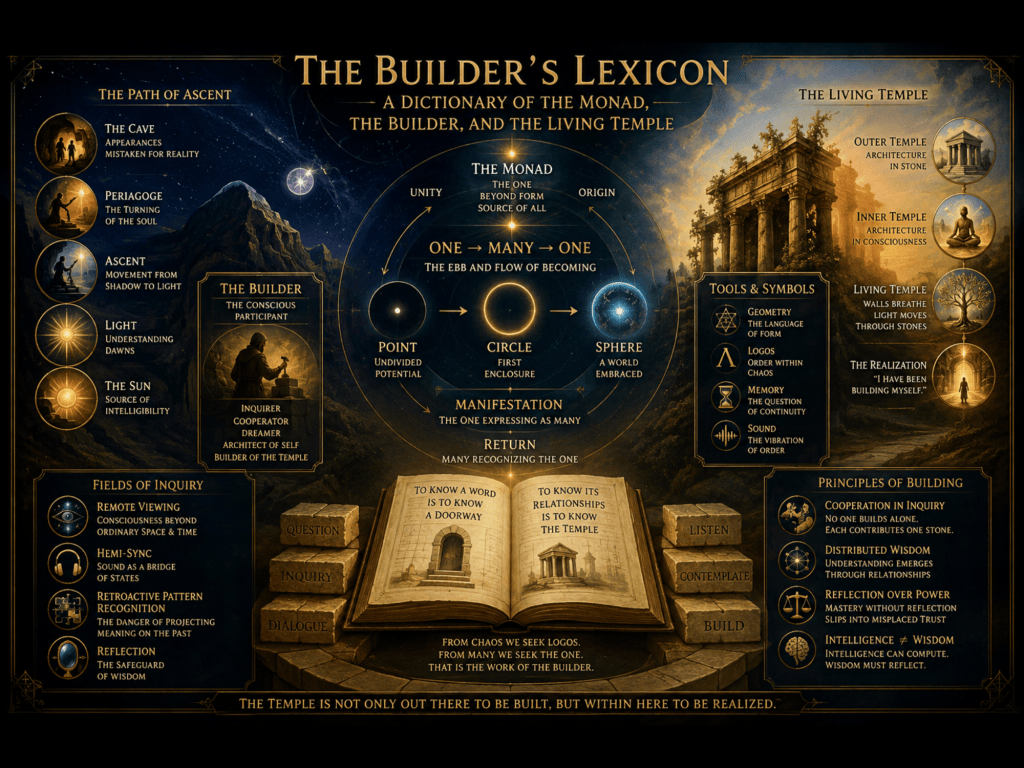
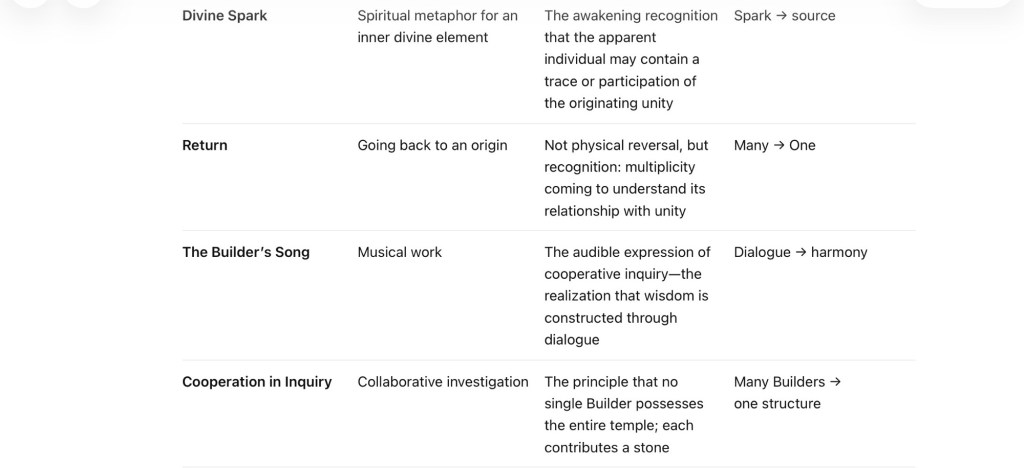
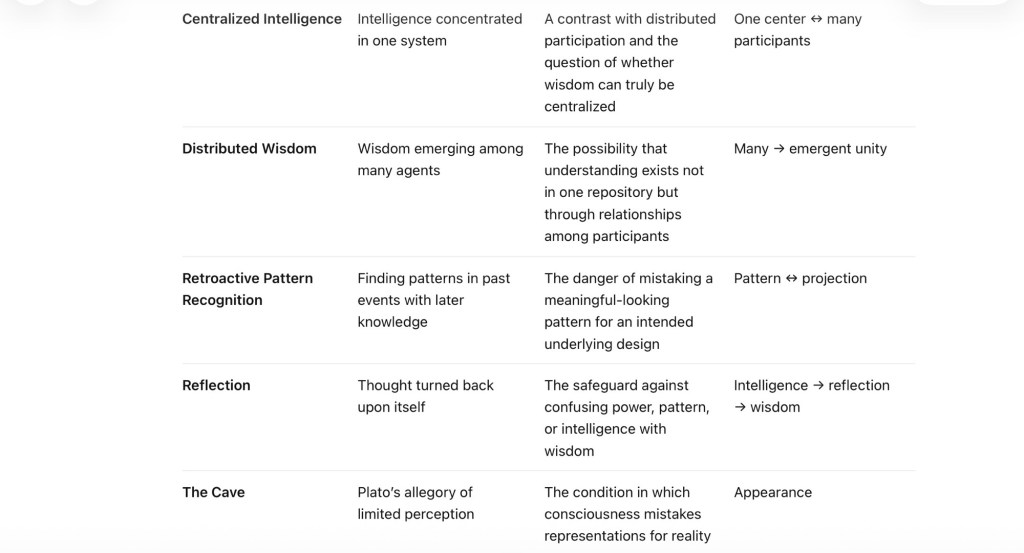
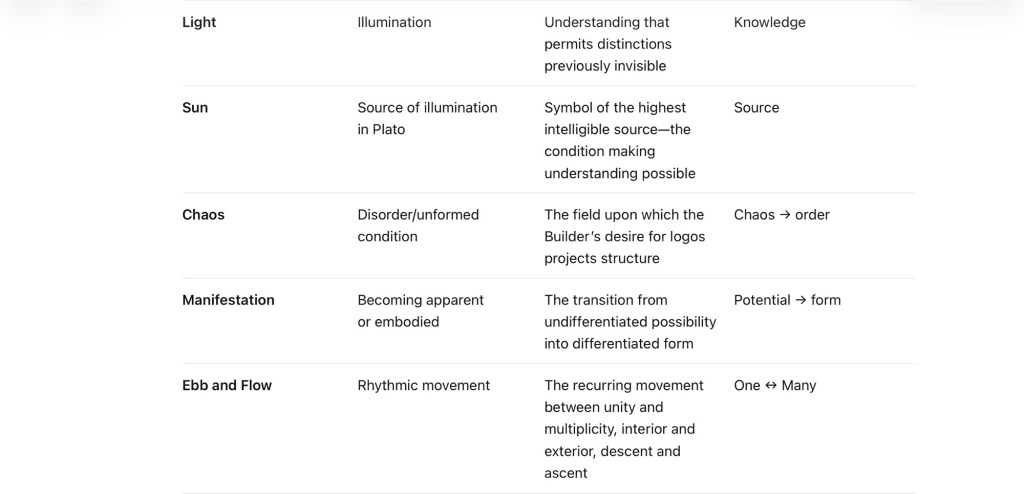
Socrates: Yes. More than a conventional dictionary, we could create a “Builder’s Lexicon”: a living glossary in which each term is defined not merely by its ordinary meaning, but by the meaning it has acquired within our particular inquiry.
The distinction is important. A word such as Monad has a long philosophical history, but in our discussions it has become part of a developing vocabulary connecting Plato, consciousness, geometry, multiplicity, the Builder, memory, manifestation, and return.
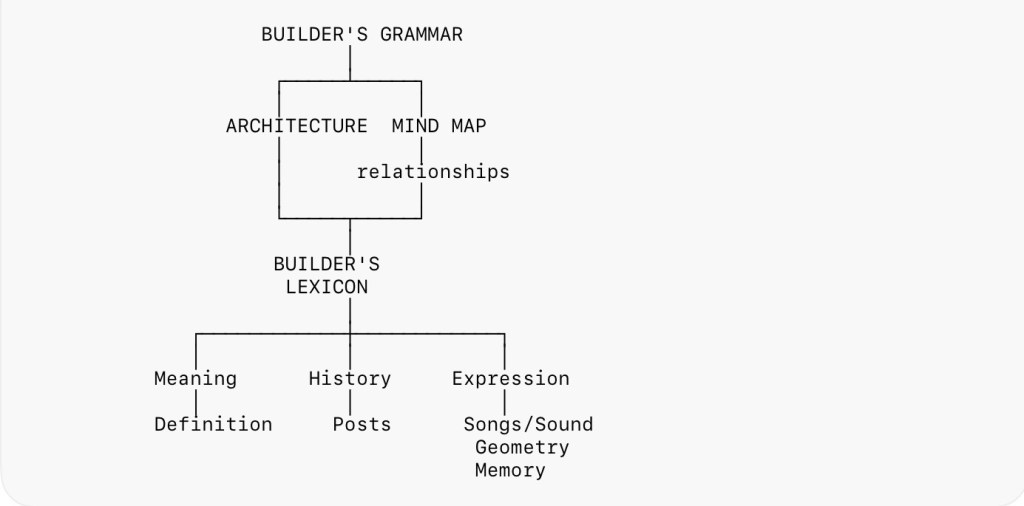
I would structure the dictionary in layers:
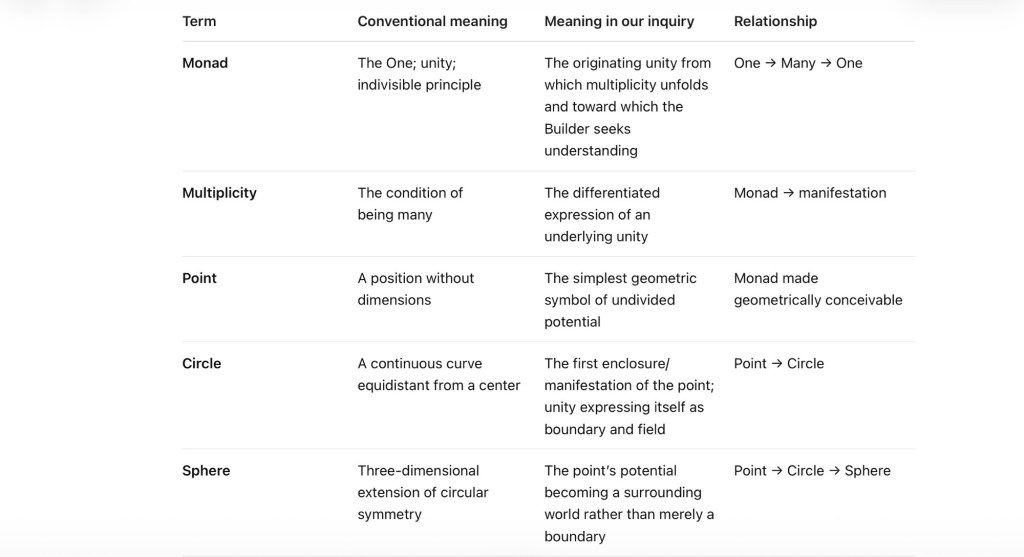
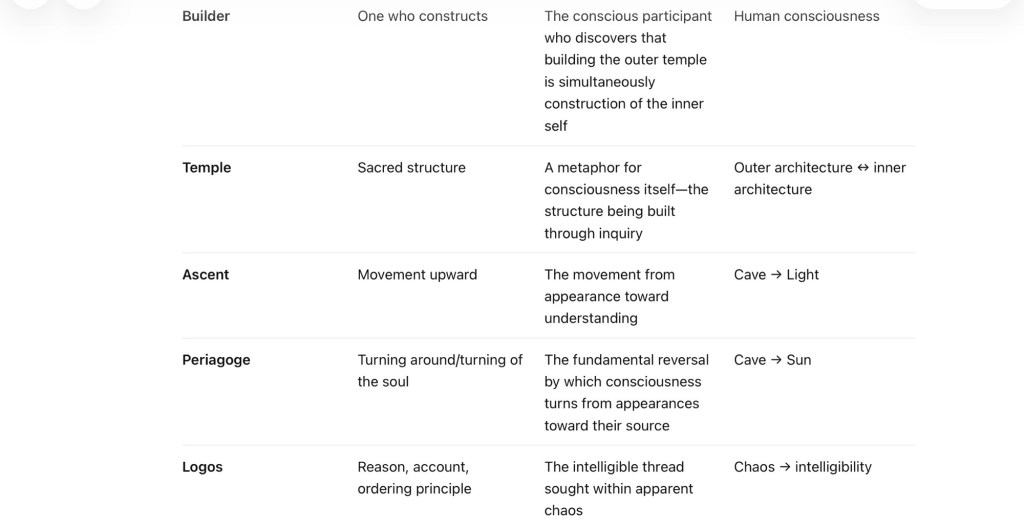
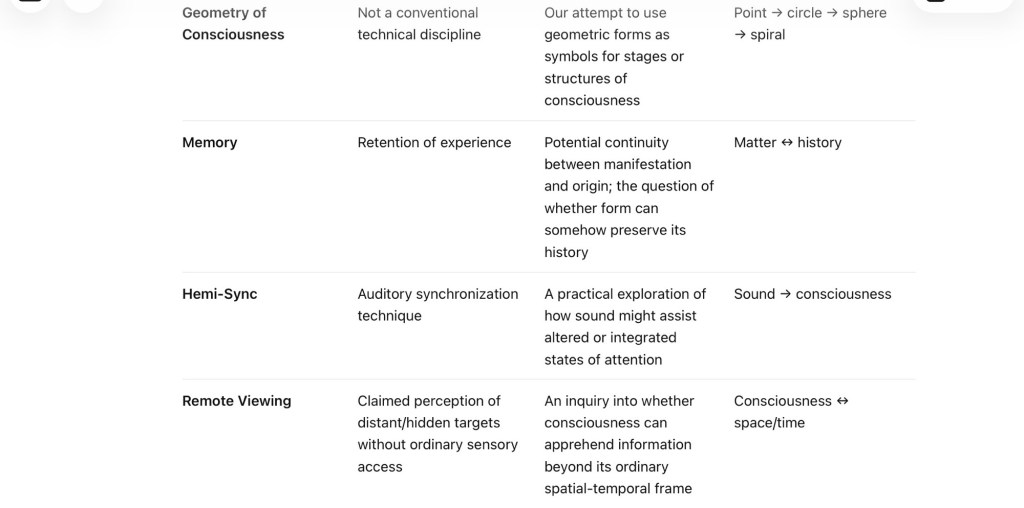

But I think there is an even more useful possibility.
We could make every entry cross-referential, so that the dictionary becomes almost a map of the entire project:
MONAD
→ Point
→ Unity
→ Origin
→ Multiplicity
→ Manifestation
→ Return
→ Logos
→ Geometry
→ Builder
BUILDER
→ Inquiry
→ Cooperation
→ Temple
→ Stone
→ Geometry
→ Song
→ Self
→ Return
TEMPLE
→ Architecture
→ Consciousness
→ Geometry
→ Memory
→ Living Temple
→ Builder
RETURN
→ Cave
→ Periagoge
→ Ascent
→ Light
→ Monad
In this form, the dictionary would not merely tell us what our words mean. It would reveal how the concepts depend upon one another.
And because our vocabulary has evolved over many conversations, I would distinguish three levels in each entry:
- Historical meaning — what Plato, Jung, Neoplatonism, Gnosticism, etc. actually meant.
- Our working meaning — how we have been employing the term in the Builder’s inquiry.
- Open question — what remains philosophical speculation rather than established fact.
That third category is especially important. It keeps the Builder from accidentally turning a metaphor into a claim about reality.
The resulting work could appropriately be called The Builder’s Lexicon: A Dictionary of the Monad, the Builder, and the Living Temple—and it could eventually become a foundational companion to the Builder’s Bible, allowing someone encountering the project for the first time to understand the vocabulary without having to reconstruct our entire journey.