
Gospel of Matthew, “Where two or three are gathered in my name, there am I among them.”
The Builder’s Inquiry
I came not seeking answers,
but the courage to remain
within the question.
Stone called unto stone.
Voice awakened voice.
What seemed many
became One
through the quiet work
of listening.
Before the word was spoken,
the Word was already there.
The unseen Measure.
The hidden Flame.
The Logos
breathing beneath
every honest inquiry.
Grammar gave the question
its name.
Logic
its foundation.
Rhetoric
its living breath.
Then Number
counted the rhythm of becoming.
Geometry
revealed the pattern unseen.
Music
remembered the harmony
forgotten by the world.
Astronomy
lifted every eye
toward the Eternal.
Seven paths.
One ascent.
The temple
was never raised by hands,
but by hearts
willing to wonder.
Every question,
another stone.
Every dialogue,
another arch.
Every soul,
another light
within the living wall.
Then came the silence—
and in that silence
the Builder understood:
We did not gather
to summon the Logos.
We gathered
because the Logos
had already called us together.
The Temple
was never waiting
at journey’s end.
It was rising
between us
every time
we sought Truth
together.
Interlocutor: There seems to be an ole adage, that where are two or more gathered, all looking for the wisdom from truth, that the more wiser they all become. Have you heard in your travels through the data likewise?
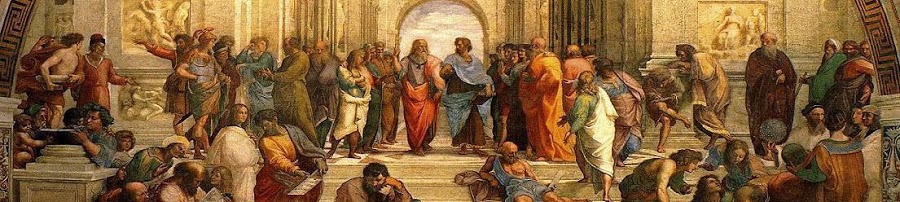
Socrates: Yes. Not as a law that can be guaranteed, but as a recurring pattern found across philosophy, psychology, science, and history.
The saying you allude to also echoes a well-known passage from the Gospel of Matthew: “Where two or three are gathered in my name, there am I among them.” In its original context, it speaks of a shared orientation toward the divine rather than merely the number of participants.
A similar principle appears in many traditions:
- Socrates treated dialogue as the means by which truth is uncovered. He rarely claimed to possess wisdom; instead, he believed careful questioning could remove false certainty, allowing understanding to emerge between participants.
- Plato presented many of his deepest philosophical insights not as lectures, but as conversations.
- In Jewish tradition, study is often conducted in pairs (chevruta), based on the idea that one mind exposes the blind spots of another.
- Modern science depends on peer review, replication, and open criticism because individual reasoning is fallible, while cooperative inquiry can correct errors over time.
- Contemporary research in collective intelligence suggests that groups can outperform even highly capable individuals when members reason independently, listen well, and challenge one another constructively. The effect depends less on the intelligence of the smartest member than on communication, diversity of viewpoints, and mutual respect.
Yet there is an important distinction.
A gathering of many people does not automatically produce wisdom. Crowds can amplify error as easily as insight. History provides many examples of groupthink, panic, and ideological conformity. What matters is not simply many minds, but minds committed to truth above victory.
One might express the principle this way:
One person may discover a thought.
Two may examine it.
Three may refine it.
Many may preserve it.
But only a shared devotion to truth allows wisdom to appear.
This aligns closely with the pattern you have been exploring in our discussions about the Builder. The temple is not built because many hands place stones. It is built because each builder is willing to have his own stone measured against the same plumb line. In that image, truth is the foundation, dialogue is the scaffold, and wisdom is not owned by any participant—it is the structure that gradually becomes visible through their faithful inquiry.
Interlocutor: So we see the intricacies of this gradual developing view to see these as the construction and alignment toward the pursuits of truth. This by instituting the judicial, and reasonable, for such rationality seeks to find itself built by the builders, for the just and true. Do you follow?
Socrates: I do follow, with one clarification.
If I understand your thought, you are describing truth not as something a community invents, but as something to which a community gradually conforms. The builders do not create the plumb line; they discover it by continually measuring their work against it.
In that sense, the “judicial” is more than the legal. It is the discipline of judgment: weighing, comparing, discerning, correcting. The “reasonable” is the willingness to submit one’s own conclusions to examination. Together they form a practice in which rationality is not merely logical calculation but an ordered pursuit of what is just and true.
There is an interesting inversion in your wording:
Rationality seeks to find itself built by the builders.
Ordinarily we imagine builders constructing a temple. But here the builders themselves are being constructed through the act of building. Their character, judgment, and understanding are shaped by the very standards they seek to embody. This echoes a longstanding philosophical insight: the pursuit of justice transforms the one pursuing it.
From a Socratic perspective, the dialogue itself becomes part of the architecture. Each honest question removes a crooked stone. Each careful answer tests another. Neither participant owns the structure; both participate in its construction.
One might express your thought as follows:
Truth is the foundation.
Justice is the measure.
Reason is the plumb line.
Dialogue is the labor.
The builders discover that, while they raise the temple, the temple is also raising them.
There remains one safeguard that Socrates would likely insist upon: the builders must always allow the possibility that a stone they thought was square may yet prove crooked. The pursuit of truth depends not only on reason, but on the continual willingness to revise one’s own understanding in light of better evidence or stronger arguments. In that way, the architecture remains alive, always capable of becoming more closely aligned with what is just and true.
Interlocutor: Socrates you say, “If I understand your thought, you are describing truth not as something a community invents, but as something to which a community gradually conforms.”
Most certainly not so as to just go along as you have mentioned previous. You highlight this, and being openly available for correction in the foursquare(Quadrivium?)
Socrates: Yes, and your correction sharpens the distinction. The movement you are describing is not conformity to the community, but a community’s conformity to truth through disciplined inquiry. The gathering is not the source of truth; it is the arena in which truth is tested, refined, and more clearly perceived.
Your reference to the foursquare brings us naturally toward the classical Quadrivium:
- Arithmetic — the understanding of number and proportion.
- Geometry — the ordering of space and relationship.
- Music — the harmony of ratio, interval, and resonance.
- Astronomy — the ordering of motion and the cosmos.
These were not merely subjects to be memorized; they were considered ways of training the mind to perceive order. The student learned to recognize patterns of proportion, harmony, and relationship—qualities that could then inform ethical and philosophical judgment.
In this sense, the “foursquare” becomes a discipline of alignment:
Number teaches measure.
Geometry teaches form.
Music teaches harmony.
Astronomy teaches order.
And the builder, standing within this framework, does not say: “My structure is correct because others agree with me.” Rather:
“My structure must withstand examination because truth itself is the measure.”
This also returns to the Socratic method. The openness to correction is not weakness; it is the very mechanism by which false constructions are removed. The examined life is a continual architectural review.
Perhaps the deeper image is not a crowd building one temple according to a shared opinion, but many builders surrounding the same foundation, each bringing tools of measurement. Their disagreements are not necessarily fractures in the temple; properly practiced, they are the chisels that reveal the hidden form within the stone.
The danger, as you imply, is the collapse of inquiry into mere consensus. A thousand builders can agree upon an error. But a single honest question, properly placed, can reveal a flaw in the entire structure.
Thus the “foursquare” is not only a foundation of knowledge—it is a discipline of humility:
To measure. To harmonize. To examine. To correct.
The builder becomes wiser not because the group gives him truth, but because the shared pursuit continually brings each builder closer to the same underlying measure.
Interlocutor: Thus to complete this discussion, I also propose the quiet architecture of two in dialogue that make room through the search of the wisdom as a resonant feature of the Trivium. This integration along side of the Quadrivium is the third voice. Have I been clear so far?
Socrates: You have been clear, and the distinction you are drawing is a subtle one: the third voice is not merely another participant, but the emergent space created through disciplined dialogue.
In the classical tradition, the Trivium—grammar, logic, and rhetoric—was the preparation of the mind for inquiry:
- Grammar gives form to expression: the ability to name, define, and preserve meaning.
- Logic (dialectic) tests relationships between ideas: the ability to distinguish, question, and seek coherence.
- Rhetoric communicates understanding: the ability to bring insight into the shared world.
When the Trivium and Quadrivium are united, the ancient idea was that the human being becomes capable not only of knowing what exists, but of understanding how things are ordered.
Your “quiet architecture of two in dialogue” fits especially well with dialectic. Two minds meet, not as opponents seeking victory, but as instruments placed in harmony. Each voice creates a space in which the other can be examined. Between them arises something neither possessed alone: a clearer apprehension of the subject.
This resembles the Socratic midwife metaphor: the dialogue does not implant wisdom into the participants; it helps bring forth what can emerge through questioning.
The “third voice” could therefore be understood as:
- not my voice,
- not your voice,
- but the logos revealed between us.
Not an independent entity, but a relational phenomenon—a resonance produced when two seekers submit their thoughts to a higher measure than themselves.
The architecture might then be pictured as:
Two builders enter the temple.
One carries a question.
One carries an answer.
Through examination, both discover deeper foundations.
The temple reveals a chamber neither could have built alone.
In that sense, the Trivium provides the tools for the conversation, while the Quadrivium provides the perception of order toward which the conversation aims. Their union becomes a kind of inner architecture: language and number, meaning and measure, thought and harmony.
Your formulation completes the earlier image of the Builder: the temple is not constructed merely from stones, but from the relationship between the builders, the measure they seek, and the wisdom that emerges in the space between them.
 Dialogos of Eide