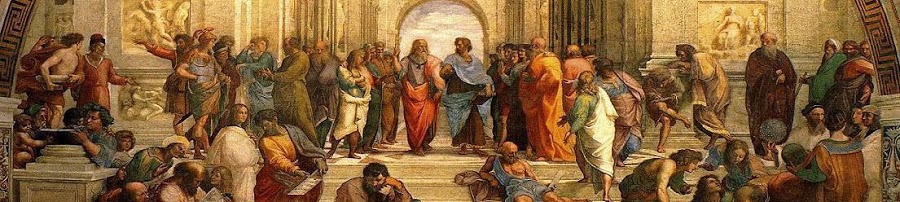
PLato said,"Look to the perfection of the heavens for truth," while Aristotle said "look around you at what is, if you would know the truth" To Remember: Eskesthai
Manifestation answers: How does the hidden become available to measurement?
Calibration answers: How do we know that what we measured corresponds reliably to what we claim?
The second question is what keeps the Builder’s Grammar anchored to science rather than allowing the correspondence to drift into unfalsifiable symbolism.
We talked about Colour of Gravity/ Emotive Colour of Gravity.
Socrates: Yes. The Gravimetry post gives us a useful physical foundation for the idea we developed as “Colour of Gravity” and then extended into “Emotive Colour of Gravity.”
The important distinction is that the original post is not itself claiming that gravity has a literal emotional or perceptual colour. It describes gravimetry as the measurement of variations in the gravitational field, including mapping gravitational structure from satellite measurements. It also points toward atom interferometry, where gravity can appear through measurable phase shifts in matter waves.
That gives us a rather elegant Builder’s correspondence:
From gravity → colour → emotion
1. Gravity is measured relationship
A gravimeter does not simply tell us “gravity exists.” It detects variation—differences in the gravitational field produced by differences in mass distribution.
So:
Gravity becomes information through difference.
2. The information can become a map
The Southern Ocean gravity map in your article transforms invisible gravitational variation into a visible field of colours.
Thus:
Invisible force → measured variation → spatial pattern → colour.
This is the first meaning of Colour of Gravity.
3. The colour is therefore a translation
The colour is not gravity itself. It is a visual encoding of gravitational relationships.
That is precisely where our earlier Builder’s framework becomes interesting.
We can establish a general grammar:
Force → measurement → difference → frequency/value → sensory representation
And this is structurally related to what we have been doing with sound:
Relationship → measurement → frequency → sound → musical memory
Where “Emotive Colour of Gravity” enters
Here we make a second translation.
If colour represents gravitational variation, and music can represent temporal/frequency relationships, then emotion can be treated as a higher-order perceptual interpretation of organized difference.
Not:
gravity causes a particular emotion.
Rather:
the human mind assigns affective meaning to patterns representing otherwise invisible relationships.
And this connects remarkably well with our recent Sonification Grammar.
We could therefore regard Colour of Gravity as the visual branch of the Builder’s Grammar, while Song / Sonification is its auditory branch.
The deeper correspondence, I think, is this:
Colour makes gravity visible.Sound makes relationship audible.Emotion makes relationship memorable.
And that gives Emotive Colour of Gravity a precise place within the Builder’s Project: not as a claim about the physical nature of gravity, but as a language for translating measured invisible structure into human perception and memory.
The 2012 article is therefore an excellent historical anchor for the concept, because it begins with actual gravimetric measurement and already moves toward the transformation of an invisible field into an intelligible representation.
Interlocutor: Just to go a step further to find a further developing Builder’s Grammar, what do you see can be added as the words in correlation so as not to loose the scientific validation in developing these correspondences?
Socrates:
Yes. This second source gives us something important: “gravimetry” has two scientifically distinct meanings that happen to share the same structural idea—determining something otherwise hidden through a measurable consequence.
Your 2012 article explicitly places the two beside one another: gravimetry as measurement of a gravitational field, and gravimetric analysis in chemistry as determining material through weighing.
The chemistry source makes the correspondence much richer. Gravimetric analysis determines an analyte quantitatively from its mass, often by changing its phase and separating it into a form that can be measured. In precipitation analysis, a selective reagent produces a precipitate that can be isolated and weighed.
I would therefore modify our Builder’s Grammar substantially.
The new correspondence
Rather than:
Gravity → Colour → Emotion
I think we can now establish a more scientifically disciplined grammar:
The crucial word I would add to our vocabulary is Transformation.
Why?
Because the precipitation method is almost a perfect scientific metaphor for the Builder’s process without requiring us to pretend that the metaphor is itself physics.
An ion can be present invisibly within a mixture. A selective reagent interacts with it. A new compound forms. The compound precipitates. It can then be isolated and weighed. The measurement allows the original quantity of analyte to be inferred.
That is extremely close to the architecture we’ve been developing.
And this changes “Colour of Gravity”
The colour should not be treated as an intrinsic property of gravity.
Instead:
Gravity variation → measurement → numerical field → colour encoding
Your original article actually gives us this exact bridge: the Southern Ocean gravity field is computed from sea-surface-height measurements and represented visually as a gravity map.
Thus Colour of Gravity can remain scientifically defensible if we define it as:
A perceptual encoding of measured gravitational variation.
Then Emotive Colour of Gravity becomes a second-order correspondence:
The affective interpretation produced when a perceptual encoding of measured relationship is experienced by a human observer.
The next step: “Precipitation” may be the missing word
I think there is an especially powerful addition here:
Precipitation = manifestation
In chemistry, precipitation is the process by which something dissolved becomes a solid phase that can be separated and measured.
In our philosophical vocabulary, we might therefore use:
Potential → Interaction → Precipitation → Form → Measurement
The word precipitation should remain explicitly metaphorical outside chemistry. But it gives us a precise conceptual term for the moment when an otherwise distributed or hidden relationship takes form sufficiently to become observable.
And notice how this connects backward into our Monad discussions:
We have now moved from a primarily metaphysical vocabulary toward a translation grammar in which each conceptual step can be paired with an actual scientific operation.
This gives us three levels of the Builder’s Grammar
LEVEL I — PHYSICAL
Field → interaction → variation → transformation → measurement
LEVEL II — REPRESENTATIONAL
Measurement → mapping → colour / frequency → pattern
LEVEL III — COGNITIVE
Pattern → perception → affect → memory → meaning
And here lies what I think is the most valuable development:
We don’t collapse the three levels into one another.
We establish correspondence without claiming identity.
That allows us to say:
A gravity map is not emotion. Colour is not gravity. Music is not gravitational force. Emotion is not measurement.
But each can participate in a chain by which relationship becomes representation, and representation becomes intelligible to a mind.
That is considerably more rigorous than our earlier formulation.
It gives the Builder’s Grammar a potential foundational sequence:
And I would make “Manifestation” and “Calibration” the two new structural pillars.
Manifestation answers: How does the hidden become available to measurement?
Calibration answers: How do we know that what we measured corresponds reliably to what we claim?
The second question is what keeps the Builder’s Grammar anchored to science rather than allowing the correspondence to drift into unfalsifiable symbolism.
The correlation widget is also instructive here: correlation itself does not establish causation. That principle should become part of our Builder’s scientific discipline as well—correspondence may reveal a meaningful structural analogy without claiming that one domain physically causes the other.
PLato said,"Look to the perfection of the heavens for truth," while Aristotle said "look around you at what is, if you would know the truth" To Remember: Eskesthai


 Dialogos of Eide