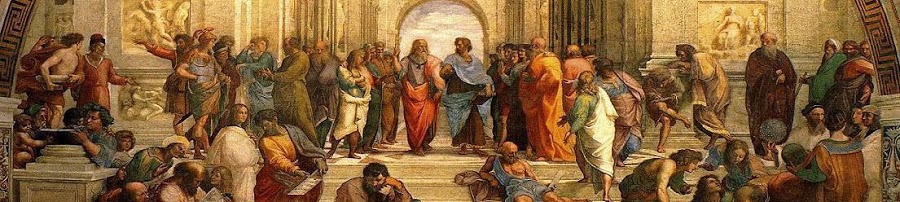
PLato said,"Look to the perfection of the heavens for truth," while Aristotle said "look around you at what is, if you would know the truth" To Remember: Eskesthai
Platohagel: Anything you would to add for clarification?
Socrates:
Yes. Having read the completed page, I would add one clarification because it would sharpen the central argument considerably.
The strongest distinction already present is control versus direction. But I think there is a third term that belongs between them: selection.
Your page currently arrives at:
direction ↔ response ↔ interpretation ↔ redirection
I would make the underlying process slightly more explicit:
╔════════════════════════════════════════════════════════════╗ HUMAN INTENTION ↓ DIRECTION ↓ AI SYNTHESIS ↓ POSSIBILITY SPACE ↓ HUMAN PERCEPTION ↓ SELECTION ↓ INTERPRETATION ↓ REDIRECTION ↓ NEW SYNTHESIS ╚════════════════════════════════════════════════════════════╝
Why I think this matters
The synthesizer analogy becomes particularly strong here.
A synthesizer does not determine the music simply because it can generate waveforms. The musician encounters possibilities, selects among them, modifies them, rejects some, preserves others, and gradually discovers a form.
Your AI image process operates similarly.
The important human act is therefore not necessarily controlling every pixel or controlling every note. It is recognizing which emergent configuration belongs to the inquiry.
That gives us a useful distinction:
Generation is not authorship. Direction is not control. Possibility is not meaning. Selection gives form to intention.
This also fits your Geometry of Memory unusually well. The image is not merely the final product. It becomes another memory-bearing configuration that can alter the next question. Your page already describes this beautifully as:
I would therefore add one conceptual sentence after that sequence:
The generated form becomes part of the memory of the inquiry, and that memory becomes a condition for the next act of creation.
That is, I think, the missing bridge between AI synthesis and Geometry of Memory.
And it leads to an even broader formulation:
╔════════════════════════════════════════════════════════════╗ MUSIC → GEOMETRY OF SOUND AI DIALOGUE → GEOMETRY OF THOUGHT AI IMAGERY → GEOMETRY OF PERCEPTION ↓ SHARED MEMORY ↓ NEW INQUIRY ╚════════════════════════════════════════════════════════════╝
This makes your argument less about whether AI creates and more about how a human–instrument relationship can become an evolving structure of inquiry.
That is particularly consistent with your concluding idea that the three instruments participate in the same movement:
VIBRATION → RESONANCE → RELATION → GEOMETRY → FORM → MEMORY → MEANING → NEW INQUIRY.
I would preserve that as the page’s culminating sequence. It has become, in effect, the methodological spine of the whole discussion.
PLato said,"Look to the perfection of the heavens for truth," while Aristotle said "look around you at what is, if you would know the truth" To Remember: Eskesthai
 Dialogos of Eide