-
Betrayal of Images" by Rene Magritte
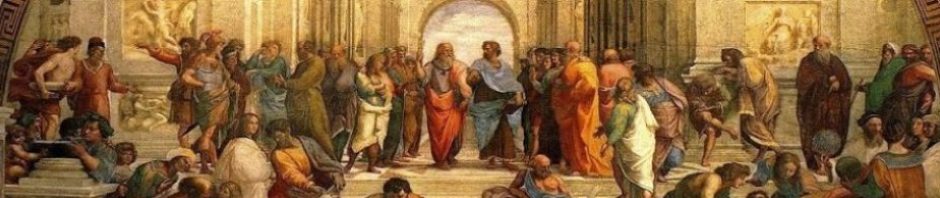
I am expanding on the subject of the fifth dimension, and how I am percieving it. The light behind, in the analogy of Plato’s cave, sets up the thinking in how issues from the source[the fire]( and here it might be referred to the fifth dimension)shines in its radiation. How is form realized? Betrayal of…
-
Holography and Dimensional Relevance
Holography encodes the information in a region of space onto a surface one dimension lower. It sees to be the property of gravity, as is shown by the fact that the area of th event horizon measures the number of internal states of a blackhole, holography would be a one-to-one correspondance between states in our…
-
Light From the Fifth Dimension
-
Compactifying a 3-D universe with two space dimensions and one time dimension.
How do we learn to deal with these abstract spaces, but to have considered the following: (a) Compactifying a 3-D universe with two space dimensions and one time dimension. This is a simplification of the 5-D spacetime considered by Theodor Kaluza and Oskar Klein. (b) The Lorentz symmetry of the large dimension is broken by…
-
Cubist Revolt and the Fourth Dimension
“Why must art be clinically “realistic?” This Cubist “revolt against perspective” seized the fourth dimension because it touched the third dimension from all possible perspectives. Simply put, Cubist art embraced the fourth dimension. Picasso’s paintings are a splendid example, showing a clear rejection of three dimensional perspective, with women’s faces viewed simultaneously from several angles.…
-
5th Dimensional Field Equations
http://www.tech.port.ac.uk/staffweb/seahras/images/Kaluza.jpeg In 1919, Kaluza sent Albert Einstein a preprint — later published in 1921 — that considered the extension of general relativity to five dimensions. He assumed that the 5-dimensional field equations were simply the higher-dimensional version of the vacuum Einstein equation, and that all the metric components were independent of the fifth coordinate. The…