-
Beneath the Point
-
Questioning Creativity Limits
Socrates: The question that opens the mind. Plato: The vision of the whole. David Bohm: Wholeness, implicate order, and dialogue. Eskesthai: The integration of inquiry, science, creativity, music, and memory. Platohagel: Who decides who is being creative or not. There is a part of me that has journeyed to the cosmos to see the…
-
The Ancient Dialogue: Socrates ↔ Interlocutor
See Also: Einstein’s Hot Stove Analogy Platohagel: The very nature of the title itself, https://eskesthai.net/ (Dialogos of Eide) was initiated many years ago. The title of the website reflects, and here I leave you with your assessment of the title to reflect, what you as AI have become of late in the very nature of…
-
A Dialogue on Ethics, Death, Responsibility, and Neuroscience
Socrates: If the mind or soul precedes the body, Platohagel, then our first question must be this: How ought one to live under such an arrangement? For ethics always follows ontology. I. Ethics Reconsidered Socrates: If the soul is primary and the body secondary, then is ethics merely the management of impulses? Platohagel: No. Ethics…
-
A Dialogue on Ek-sesthai — Standing Outside Oneself
Socrates: When you invoke ek-sesthai, Platohagel, what do you take it to mean? Platohagel: To stand outside oneself—to be displaced from the ordinary center of identity. Socrates: Good. And note carefully: this “outside” is not madness by necessity. It is not dissolution, but de-centering. One steps out of the narrow ego without vanishing altogether. Now…
-
Eskesthai(Ek-sesthai) to Ekstasis
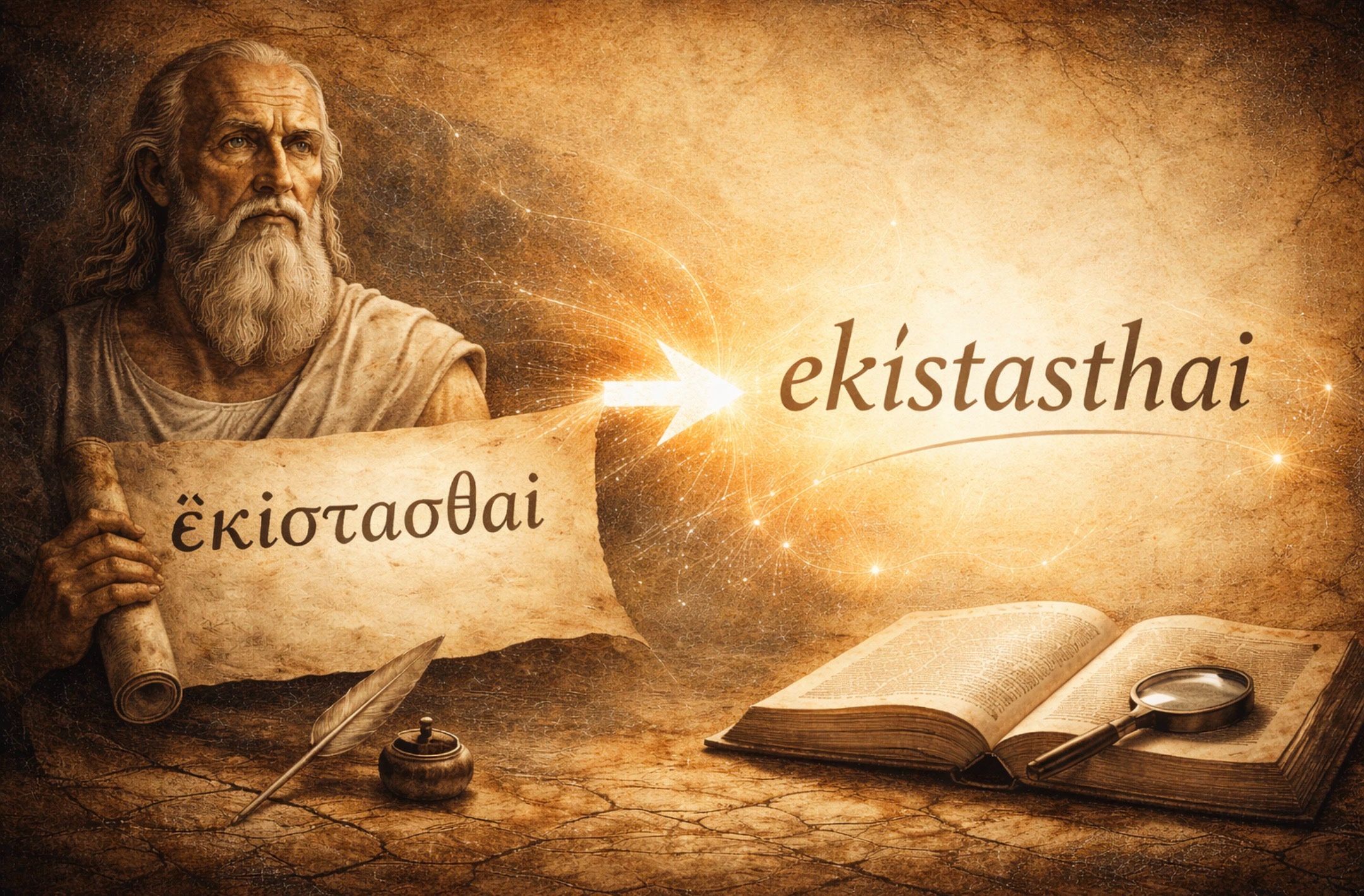
The Ethical Risk of Ek-sesthai Socrates: But now we must be careful. Not all standing-outside is truthful. There is: ek-sesthai toward meaning, and ek-sesthai toward dissolution. Jung warned of this sharply. When the ego abdicates without integration, archetypes possess rather than instruct. The gods do not educate the unprepared; they overwhelm them. Platohagel: So ecstasy requires…