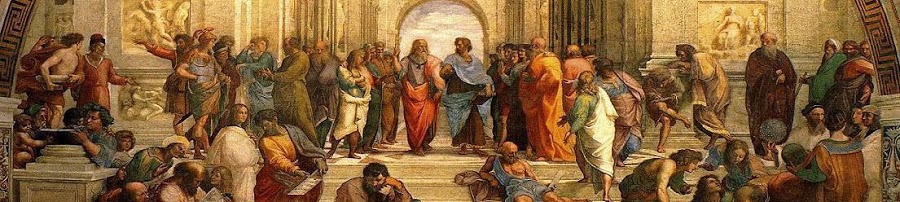

Above picture, belongs to this article and titled above, of frames that Sir Roger Penrose wrote in 1999.

Roger Penrose, a professor of mathematics at the University of Oxford in England, pursues an active interest in recreational math which he shared with his father. While most of his work pertains to relativity theory and quantum physics, he is fascinated with a field of geometry known as tessellation, the covering of a surface with tiles of prescribed shapes.
Being reminded of Roger Penrose I am actually going to contribute this blog entry to him, and sources that I had collected.
Twistor Theory
Twistor Program
http://twistor-theory.rdegraaf.nl/index.asp?sND_ID=436182
R. Penrose and M. A. H. MacCallum, Phys. Reports. 6C (1972) p. 241
pages:
242-243,244-245,246-247,248-249,250-251,252-253,254-255,256-257,258-259,260-261,262-263,264-265,266-265,268-269,270-271,272-273,274-275,276-277,278-279,280-281,282-283,284-285,286-287,288-289,290-291,292-293,294-295,296-297,298-299,300-301,302-303,304-305,306-307,308-309,310-311,312-313,314-315,316-317,318-320,320-322,322-324,324-326,326-328,328-330,330-332
or download the unix tar-ball to get all the pages at once. (WinZip is able to unzip this archive)
Sir Roger Penrose

R. Penrose, F. Hadrovich
Twistor Theory
The motivation and one of the initial aims of twistor theory is to provide an adequate formalism for the union of quantum theory and general relativity. Twistors are essentially complex objects, like wavefunctions in quantum mechanics, as well as endowed with holomorphic and algebraic structure sufficient to encode space-time points. In this sense twistor space can be considered more primitive than the space-time itself and indeed provides a background against which space-time could be meaningfully quantised.
Lecture I
Lecture II
Lecture III

 Dialogos of Eide