-
Point Being…It’s a Material World?
This provides for a beginning point of discussion about the parameters of our thinking in terms of the resolution to our experiences. Do they run further then the constraints we apply to them? In science your boxed in, and you replay all components in the hopes that you can extend or explain the problem and…
-
Fulleranes and Allotropes
“Composition VI”, 1913, Wassily Kandinsky The term “Composition” can imply a metaphor with music. Kandinsky was fascinated by music’s emotional power. Because music expresses itself through sound and time, it allows the listener a freedom of imagination, interpretation, and emotional response that is not based on the literal or the descriptive, but rather on the…
-
Theoretical Excellence
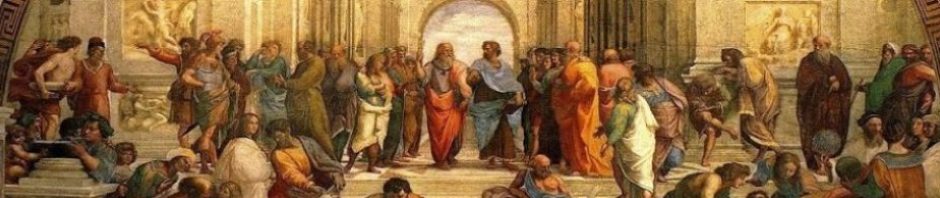
Although Aristotle in general had a more empirical and experimental attitude than Plato, modern science did not come into its own until Plato’s Pythagorean confidence in the mathematical nature of the world returned with Kepler, Galileo, and Newton. For instance, Aristotle, relying on a theory of opposites that is now only of historical interest, rejected…
-
Solidification of Geometrical Presence
While I might infer the “attributes of Coxeter here,” it is with the understanding such a dimensional perspective which has it’s counterpart in the result of what manifests as matter creations. Yet we have taken our views down to the “powers of ten” to think of what could manifest even before we see the result…
-
Hydrogen, and the Law of Octaves
<a href="http://www.edge.org/3rd_culture/vilenkin06/vilenkin06_index.html" target=_BLank title="The Edge-THE PRINCIPLE OF MEDIOCRITY [9.15.06]By Alexander Vilenkin”> Alex Vilenkin – Many Worlds in One article by Mark of Cosmic Variance drew my interest again after reading with a new perspective gained from understandng some implications about the “anthropic principle.” Sometimes I even still hold to the idea it is better not…