-
Plinko and the Galton(quincunx) Board (Repost)
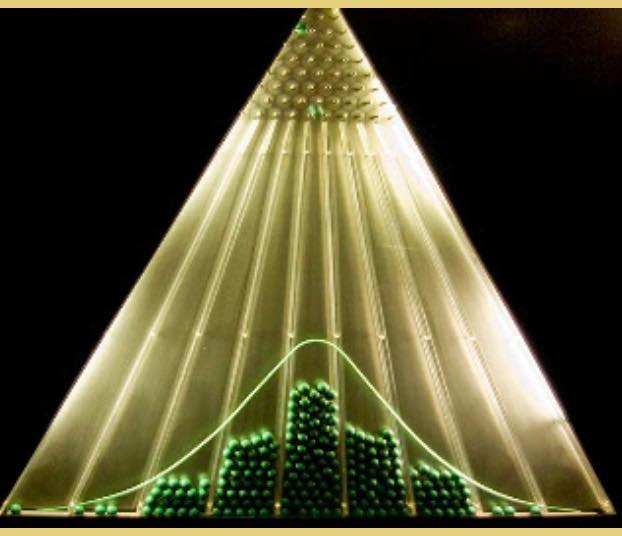
https://phet.colorado.edu/en/simulations/plinko-probability There is this randomness that seems to take hold over my thoughts regarding probability. The thoughts question how we can even know with certainty when something is going end in a result. To know this before hand. In a way this is what drew me to outcomes seen and expressed as scenarios given in…
-
Predictive History
In Foundation (1951), famed mathematician and psychologist Hari Seldon has developed the science of psychohistory, which uses sophisticated mathematics and statistical analysis to predict future trends on a galactic scale. He has predicted the unavoidable and relatively imminent fall of the Galactic Empire, and intends to establish the Foundation, “a repository of crucial, civilization-preserving knowledge” that will enable society to…
-
The US/Iran War

Platohagel: I would like you Socrates to give your assessment in the shortest words possible of an established outcome regarding the law of asymmetry and the game theory conclusion regarding the outcome of current results of the US and Iran war? Socrates: Platohagel, let us examine the matter briefly and plainly. Current condition of the…
-
Something, we may not know about the world?
See: Music of the Quantum You combine theoretical positions with concrete ideas? If one has never encountered an anomaly in nature and thought okay this happened but with no scientific qualification what so ever then indeed it is not a measurable quality about dealing with reality. So only you know it happened. Of course, then,…
-
Geometry Leads us to the Truth?
-
Ducks Know Game Theory
A Beautiful Math: John Nash, Game Theory, and the Modern Quest for a Code of Nature (2006) The ducks, naturally, were delighted with this experiment, so they all rapidly paddled into position. But then Harper’s helpers began tossing the bread onto two separated patches of the pond. At one spot, the bread tosser dispensed…
-
Psychohistory
Hari Seldon, a fictional character, is the intellectual hero of Isaac Asimov‘s Foundation Series. In his capacity as mathematics professor at Streeling University on Trantor, he developed psychohistory, allowing him to predict the future in probabilistic terms. His prediction of the eventual fall of the Galactic Empire is the reason behind his nickname “The Raven”…
-
Self-organization
Self-organization From Wikipedia, the free encyclopedia Self-organization is the process where a structure or pattern appears in a system without a central authority or external element imposing it. This globally coherent pattern appears from the local interaction of the elements that makes up the system, thus the organization is achieved in a way that is…
-
A Yearning for Truth
Beauty, Plato wrote, is not easy to define, but something that “slips through and evades us”. For this reason, many logic-oriented philosophical approaches tend to divorce and even oppose truth and beauty. “The question of truth”, wrote logician Gottlob Frege in one of his most influential works, “would cause us to abandon aesthetic delight for…
-
Economic Translation From Boards
How many of you have joined your fellow brain jammers to seek a solution for a time for creative purpose? Dr:Lee Smolin’s article on arXiv. Having read it, I find it amusing that the language of economics can be recast in the language of physics. That said a lot of it is hard going, mathematically,…
-
Creating the Perfect Human Being or Maybe…..
….. a Frankenstein?:) Seriously , there are defined differences in the human being versus AI Intelligence. I think people have a tendency to blurr the lines on machinery. This of course required some reading and wiki quotes herein help to orientate. Of course the pictures in fiction development are closely related to the approach to…