-
Understanding Rationality Explained-Saturday, August 03, 2024
Repost Platohagel: What is a Rational person? Socrates: A rational person is one who consistently uses reason and logical thinking to make decisions and form beliefs. This person prioritizes evidence, coherence, and consistency in their thought process, aiming to avoid biases, emotions, or impulsive judgments that might lead to error. They seek to understand the…
-
The Ascent to the Self- Evident Form
-
The Trivium and the Quadrivium
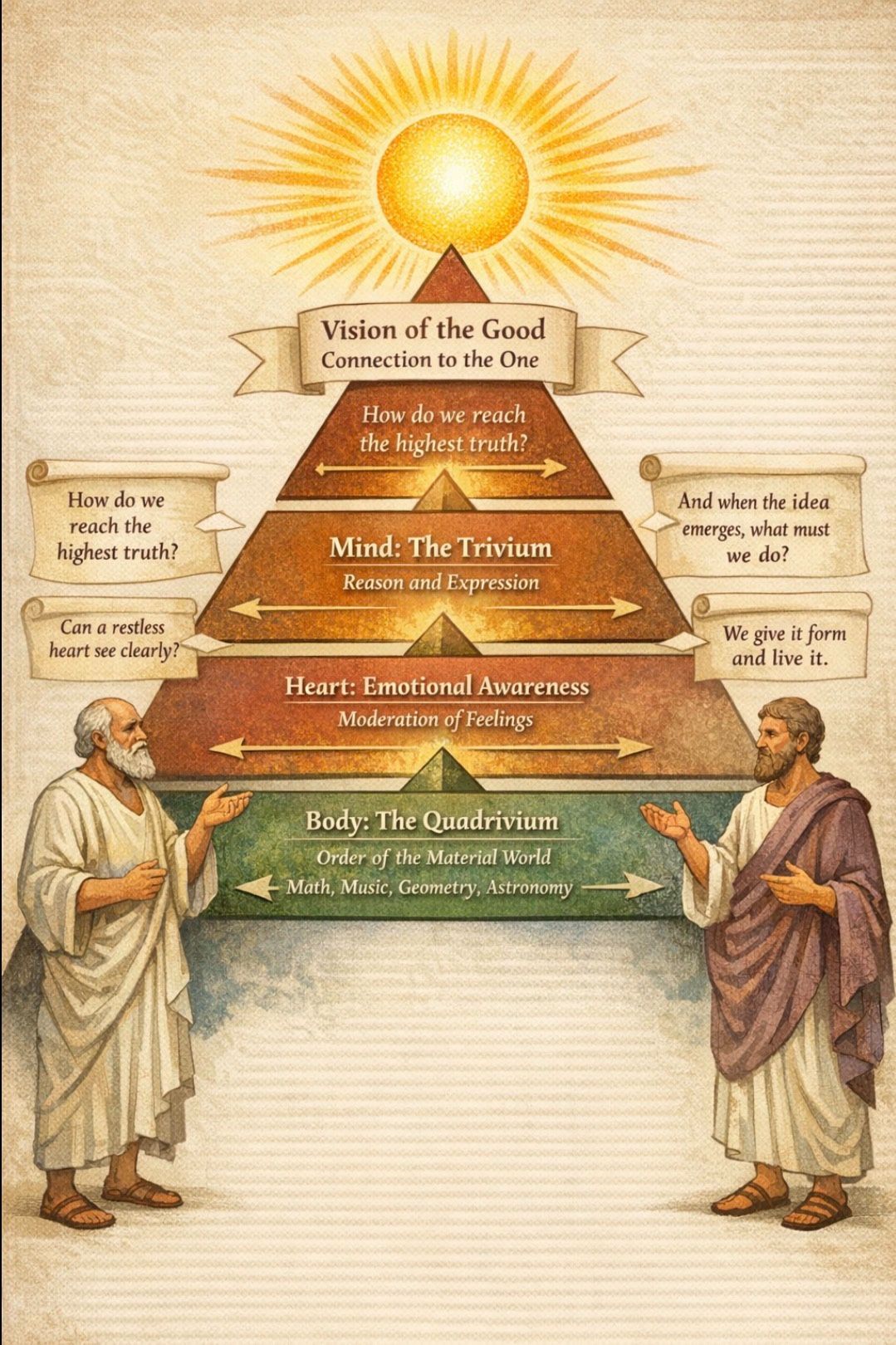
Socratic Dialogue Reflecting the Pyramid Method Characters: Socrates – the questioning guide, persistent in inquiry. Plato – the student and interlocutor, attempting to understand the ascent toward the Good. —————————————— Socrates: Tell me, Plato, when a man examines what he already knows, what does he find? Plato: He finds that some things are clear, self-evident,…
-
Dialogue on Wholeness, Shadow, and the Nation
Socrates: Plato, I see your mind burdened. What weighs upon your soul? Plato: I witness cruelty—acts by individuals, and the structures of a nation that permit them. I see victims who must reintegrate themselves, yet the society that surrounds them seems blind or complicit. I wonder: can wholeness ever be restored? Socrates: You speak of…
-
Mirror, Mirror on the Wall
Why Do Mirrors Reverse? Platohagel: What is the assessment of this opening lecture in contrast to the archive I hold regarding Mirrors? Socratics: Assessment of the opening lecture The passage is rhetorically strong but philosophically shallow. It uses a genuine puzzle to produce intellectual vertigo, then resolves it by declaring the question “broken.” That maneuver…
-
Orwellian

Another Possible Short Socratic Dialogue on the Naming of Subtle Power Socrates: Tell me, Platohagel, when a word is spoken, does it merely point, or does it also persuade? Plato: It does both, Socrates. It names, yet it also leans the listener toward a judgment. Socrates: Then if a word persuades too quickly, before inquiry…
-
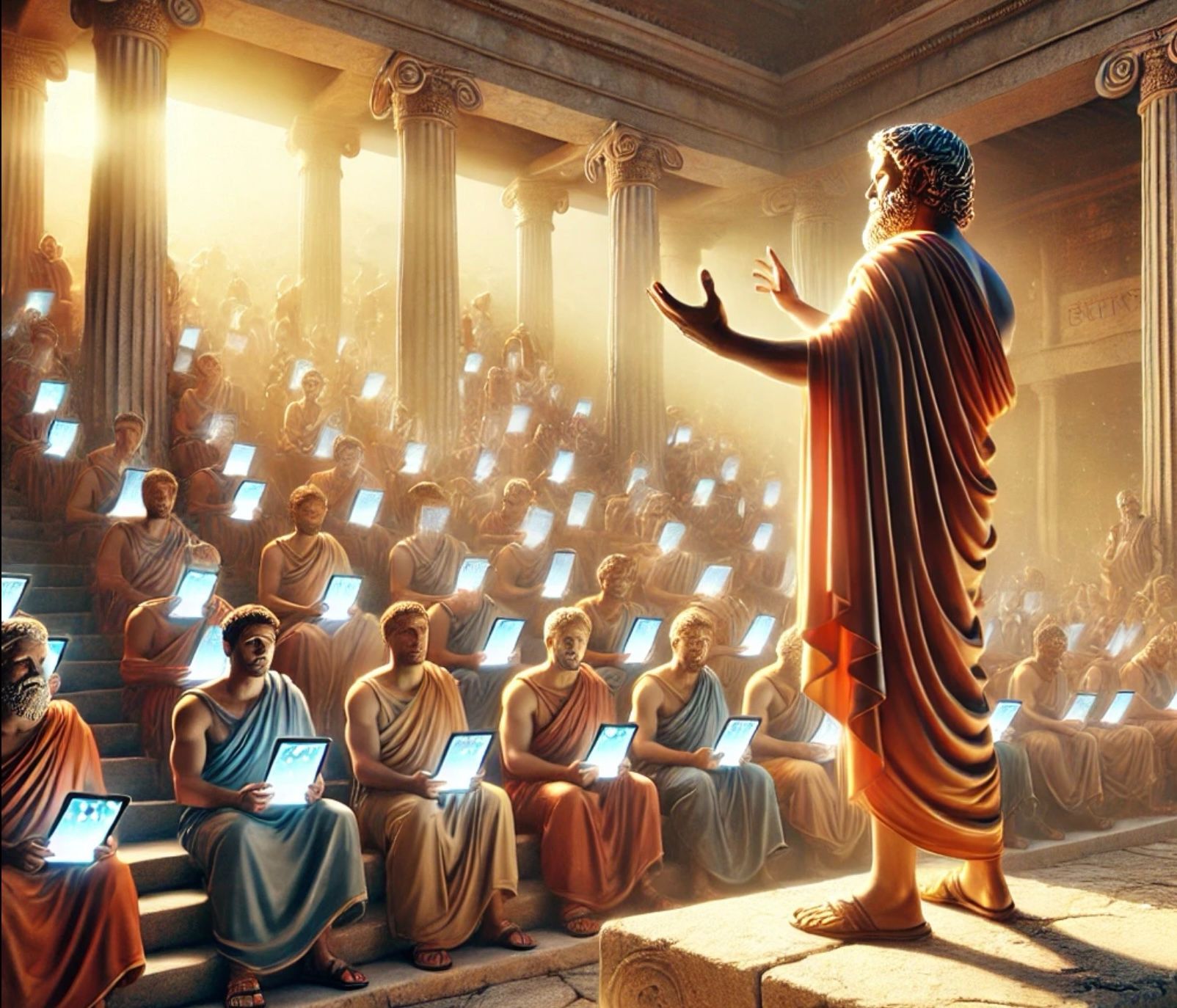
A Possible Dialogue between Socrates and Plato
-
Functioning Without a President
Platohagel: Can the United States function without a President? Socrates: Ah, Platohagel, a fascinating question indeed! Let us ponder the nature of governance and the role of leadership in the United States. The President of the United States serves as both the head of state and the head of government, embodying executive power as outlined…
-
Reason Against Unjust Beliefs
Platohagel: Does Socrates and Platonism advance totalitarianism states? Socrates: Ah, my dear interlocutor, the pursuit of wisdom and virtue is the essence of my philosophy. Totalitarianism, with its emphasis on control and power, goes against the ideals of justice and individual autonomy that I advocate for. The true path lies in the examined life and…
-
About Knowledge
“As to you, Life, I reckon you are the leavings of many deaths, No doubt I have died myself ten thousand times before.” “Leaves of Grass” by Walt Whitman Justified true belief…..does it matter what knowledge could exist in or about knowing that all knowledge exists out there somewhere and that you only have to…
-
What Is Déjà Vu?
*** Déjà vu (French pronunciation: [deʒa vy] ( listen), literally “already seen”) is the experience of feeling sure that one has already witnessed or experienced a current situation, even though the exact circumstances of the prior encounter are uncertain and were perhaps imagined. The term was coined by a French psychic researcher, Émile Boirac (1851–1917) in his…