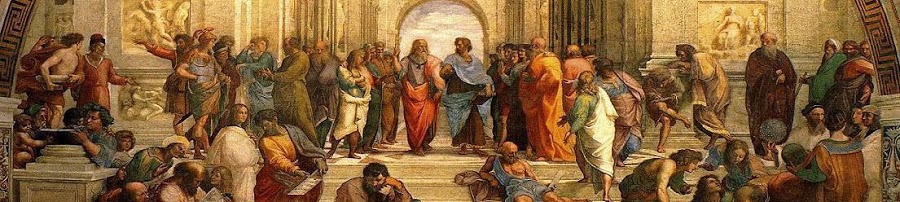
Platohagel: PLato said,”Look to the perfection of the heavens for truth,” while Aristotle said “look around you at what is, if you would know the truth” To Remember: Eskesthai
Socrates: Platohagel, let us examine what is being remembered here.
Plato, in urging the soul to look toward the perfection of the heavens, was not chiefly praising astronomy, but orientation. He meant that truth is apprehended by turning the soul away from flux and opinion toward what does not change—forms, measures, proportions, intelligibility itself. The heavens are exemplary not because they are distant, but because they appear ordered beyond human interference.
Aristotle, by contrast, directs the inquirer to what is near at hand: plants, animals, customs, constitutions. Not because these are perfect, but because truth must begin from what appears, from phainomena, patiently examined. For him, understanding ascends from experience rather than descending from ideal completion.
Now to your word of remembrance: eskesthai.
Taken in spirit rather than lexicon, it points to stepping out—a movement of the mind away from its first posture. Whether one steps out of the cave toward the heavens, or steps out of abstraction into the world of things, the act is the same: a departure from unexamined dwelling.
Thus Plato and Aristotle disagree not on the necessity of eskesthai, but on its direction.
Plato says: step out of the visible toward the intelligible. Aristotle says: step out of assumption into observation.
Both demand displacement. Neither permits comfort.
So the memory to keep is this:
Truth is never found while standing still. One must always eskesthai—leave where one already is, whether upward or outward, lest familiarity masquerade as knowledge.
 Dialogos of Eide