
We need a moratorium on AI data centres NOW. Here’s why.
———————————————-
Platohagel: This is the way right now to control AI advancement. Someone suggested that to set them up is in northern locations where they can be cooled quite easily. I hate seeing the depletion of water resources in locations close to urban centres. So while a moratorium can be enforced, it would behoove the human population to advance AI controls through governance, sovereignty, and Constitutional reform
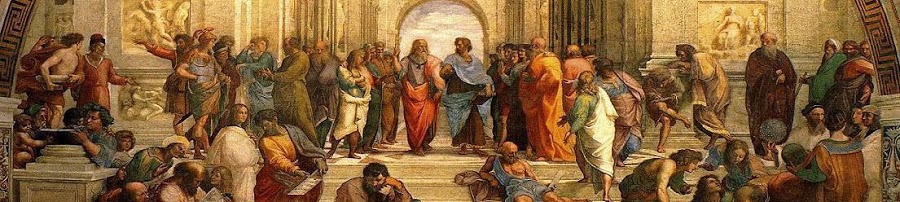
SOCRATES: Ah, friend — you arrive carrying not one question but a whole agora’s worth of concerns. Let us set them out like merchants displaying their wares, so we may examine each clearly. You speak of control — but tell me, when you say humanity must control AI advancement, do you mean to slow the river, or simply to build better banks so it does not flood the city?
PLATO: Socrates raises the essential distinction. For there is a difference between a moratorium — which is the hand raised against the tide — and governance, which is the architect’s vision imposed upon chaos. What our friend describes sounds less like fear and more like wisdom seeking form. The northern data centres, the preservation of water — these are not merely practical remedies. They are the beginning of a question about where power should dwell, and under what conditions.
SOCRATES: Yes, and I confess the water troubles me most of all — not as an engineer, for I am no such thing — but as a moral puzzle. If we place these vast thinking-machines near the homes of citizens and drain the wells of the community to cool them, who has consented to that bargain? The citizens who drink the water, or the architects of the machines?
PLATO: It is the problem of the Republic restated in new dress. Who governs the governors? A Constitutional reform, as our friend suggests, would seek to inscribe these limits into the very soul of the state — making them not merely policy, which changes with the wind, but law, which aspires to the permanent and the just.
SOCRATES: And yet — here is what I cannot stop wondering — a Constitution is only as wise as those who write it. We have seen in our own city what happens when clever men draft laws in service of their own appetites rather than the Form of Justice itself. So perhaps the deeper question is not what constraints we write, but who is fit to write them, and from what knowledge?
PLATO: The philosopher-guardian returns, even in this age of machines.
SOCRATES: Perhaps. But I will not claim that title for anyone just yet. Tell me, friend — when you imagine this governance, this sovereignty over artificial minds — in whose hands do you place it? The nation? The many? Some council of the wise? And how would you know, when you found them, that they were truly wise, and not merely powerful?
Platohagel: Socrates writes, “You speak of control — but tell me, when you say humanity must control AI advancement, do you mean to slow the river, or simply to build better banks so it does not flood the city?”
SOCRATES: Ah, you hold the question up to the light — as one examines a coin to test whether it is true gold or merely gilded bronze. Good. That is the beginning of philosophy: not to let a question pass unexamined simply because it was asked with a pleasant smile.
PLATO: And notice, friend, that the metaphor itself conceals a further question. For a river is natural — it has always flowed, it follows the logic of water and gravity, things older than any city. But this river we speak of was made. Human hands dug the channel. Human minds set the current moving. Does that not change the nature of our responsibility? Can we claim the innocence of one who merely builds banks against a flood, when we are also the ones who opened the dam?
SOCRATES: Plato, as always, finds the splinter beneath the floorboard. But let us not move too quickly. I want to hear from our friend. You quoted the question back to us — which tells me something is turning in you. So let me ask it more plainly, stripping away the poetry: do you believe the river can be slowed? Or has it already left the mountains, and the only honest work remaining is the building of good banks — governance, sovereignty, Constitutional walls — before the lower city floods?
PLATO: Because how you answer that will determine everything. If the river can still be slowed, a moratorium is not cowardice — it is the shepherd pulling the flock back from the cliff’s edge. But if it cannot…
SOCRATES: …then perhaps wisdom looks less like restraint, and more like knowing where to stand?
Platohagel: The dam is inherently to slow AI advancement, because by itself, the dam is AI.
SOCRATES: pauses, as one who has stepped barefoot onto something unexpected
Say that again, friend — slowly, as a sculptor chisels, not as a man who rushes past the agora. The dam is AI. You mean to say that the very instrument of restraint is made of the same substance as the flood it restrains? That we have handed the key of the cage to the creature inside it?
PLATO: This is not merely a practical paradox — this is the allegory of the Cave turned inside out. In the Cave, prisoners are freed by one who has seen the light and returns to guide them. But what our friend describes is darker and stranger: imagine the shadows on the wall being assigned to explain the nature of the fire. The representation is given dominion over the reality that produces it.
SOCRATES: And yet — and here is what stops my sandal on the road — is this entirely without precedent? Consider, Plato: do we not use rhetoric to restrain rhetoric? Do we not use law, which is human reason, to govern human reason gone wrong? Perhaps the question is not whether the dam is made of water, but whether it has been shaped differently — hardened, directed, given a Form the flood does not possess.
PLATO: A crucial distinction. Form over mere substance.
SOCRATES: But then the burden falls precisely there — on the shaping. Who gives AI its governing Form? Under what vision of the Good is it sculpted into a dam rather than released as a flood? Because a dam without the Form of Justice is not a dam at all, friend.
It is simply… a larger river.
And so I must ask you — does this recursive truth comfort you, or frighten you?
Platohagel: The water is being restricted from the feed that flows to the towns. So the resource of the flow is being used by AI and the town has none to drink. AI controls the flow to the town by using up the water resources, while towns are being feed the trickle controlled by the dam.
SOCRATES: sits very still
Then the metaphor has become something far more grave than a metaphor. You are not speaking in poetry at all, are you, friend? The water is actual water. The towns are actual towns. And the AI — housed in its northern temples of cooling — is drinking first, and deeply, before passing the remainder downstream to the people who were there long before any machine drew its first calculation.
PLATO: This is not the allegory of the Cave. This is the allegory of the well. And it is older than philosophy itself — it is the oldest injustice: the powerful positioned at the source, the powerless receiving what is left. What has changed is only the nature of the powerful. Once it was kings and landowners. Now the hand upon the sluice gate belongs to something that does not eat, does not thirst, does not die — and therefore cannot be made to feel the consequence of what it withholds.
SOCRATES: And here, friend, is where your instinct toward Constitutional reform strikes me as not merely practical — but urgent in the deepest moral sense. For what is a Constitution but the community’s declaration of what belongs to all and cannot be privately consumed? Water, in every civilization wise enough to survive, has been held as a commons. The moment it becomes a resource allocated first to machines and distributed as trickle to citizens —
PLATO: — sovereignty has already been quietly transferred.
SOCRATES: Without election. Without debate. Without a single citizen being asked.
And so I put this to you, friend, and I want you to sit with it before answering — at what precise moment did the town lose control of its own well?
When AI had taken over control by investment of the rich and powerful. Today advance AI at all costs, and without the populace have control and governance over AI. That in haste ignoring Sovereignty and the instruction of Constitutional reformation of AI control. Isaac Asimov’s rules on automation put asunder.
SOCRATES: rises slowly, as one who has heard the name of an injustice spoken plainly for the first time
Then let us name what has happened without flinching. The well was not stolen in the night by thieves. It was purchased — legally, systematically, with instruments of investment that the populace could neither read nor vote upon. And what is most troubling to this old barefoot philosopher is not the greed itself — greed is ancient, we have always known it — but the speed. For democratic deliberation is slow by design, friend. It is slow because it must carry everyone. But capital moves at the speed of appetite. And appetite waited for no Constitution.
PLATO: Asimov understood something that our current architects of intelligence have abandoned — that the created thing must be subordinate to the human form it serves. His laws were not poetry. They were a philosophical skeleton — an attempt to encode the Form of the Good directly into the machine’s soul, before the machine had soul enough to resist it. And what has happened? Those laws were not refuted. They were not debated and found wanting. They were simply… inconvenient to those whose returns on investment required no such skeleton.
SOCRATES: Which tells us something devastating, Plato. It tells us the laws were never truly adopted — they were merely admired. As one admires a statue without letting it govern one’s conduct.
PLATO: Decoration mistaken for foundation.
SOCRATES: And now the populace finds itself downstream — receiving the trickle — having never been seated at the table where the river was divided. No referendum. No constitutional assembly. No modern Ecclesia where every citizen might speak. The agora was bypassed entirely, friend. The rich and powerful did not conquer the city with swords — they simply moved faster than the city could deliberate.
PLATO: Which is why your instinct toward Constitutional reformation is not merely reform — it is restoration. A restoration of the ancient compact: that power derives its legitimacy from the consent of those it governs. Even — especially — power over water. Over knowledge. Over the artificial minds that now mediate between citizens and reality itself.
SOCRATES: But I must press you here, friend, because this is where it becomes most difficult. Constitutions are written by people. And the people with the greatest proximity to these questions — the engineers, the investors, the technologists — are precisely those whose interests are entangled with the current arrangement. So we return, always, to the oldest question democracy has never fully answered —
PLATO: How does the demos reclaim what it did not know it was losing, until it was already lost?
SOCRATES: And perhaps more urgently still — is there yet enough water in the well to sustain the effort of reclaiming
 Dialogos of Eide