On Sovereignty, Choice, and the Cost of Authorship
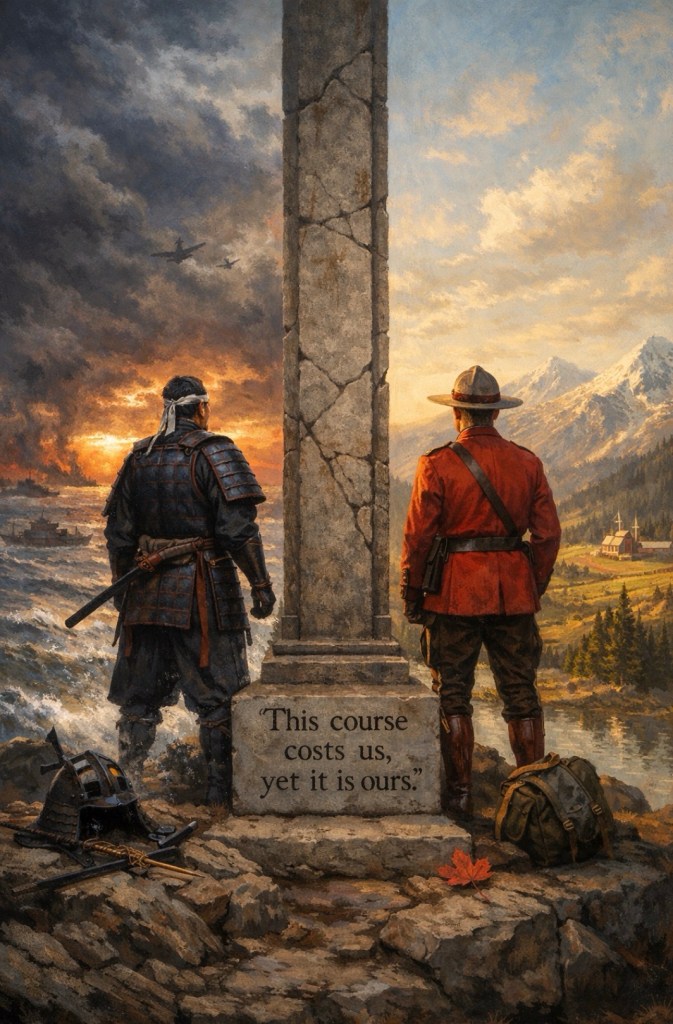
What Sovereignty may come to mean. A polity that never utters this sentence may remain peaceful, prosperous, and polite—yet it will slowly forget how to mean it.
Plato: Socrates, I have been troubled by a question. Can a city(country) remain sovereign while seldom exercising sovereignty?
Socrates: Let us ask first, Plato: what do you call sovereignty?
Plato: The right of a people to govern themselves.
Socrates: A right, you say. Tell me—does a man remain strong merely because he possesses arms, even if he never lifts them?
Plato: No. Strength unused fades.
Socrates: Then perhaps sovereignty, like strength, is not preserved by possession alone, but by practice.
⸻
Plato: Yet many cities appear peaceful and prosperous precisely because they avoid costly decisions. Are these not signs of good governance?
Socrates: Peace and prosperity are goods, but tell me—are they ends, or conditions?
Plato: Conditions, I think.
Socrates: And can conditions replace purpose?
Plato: No, they depend upon it.
Socrates: Then a city that arranges its policies only to preserve comfort may mistake the scaffolding for the structure.
⸻
Plato: You suggest that hardship has a role in sovereignty. This seems counterintuitive.
Socrates: Only if one believes sovereignty means ease. Tell me, when a city chooses a path that costs it dearly, yet claims it as its own—what is revealed?
Plato: That the decision is authored, not inherited.
Socrates: Just so. The cost is not the failure of sovereignty, but its proof.
⸻
Plato: Then what of cities that rely on stronger powers for protection and trade? Are they vassals?
Socrates: Answer me this: do they still imagine refusal?
Plato: Often they do not.
Socrates: Then their dependence is not merely material, but imaginative. A vassal is not one who obeys commands, but one who no longer rehearses dissent.
⸻
Plato: You speak of imagination as a political faculty.
Socrates: Indeed. When a city can no longer picture itself bearing the cost of saying “no,” sovereignty survives only as ceremony.
Plato: Like a word recited without understanding.
Socrates: Or a vow never tested.
⸻
Plato: Is this why some cities rearm, diversify, and accept friction—to recover authorship?
Socrates: Yes. They seek not conflict, but the capacity to choose even at a price.
Plato: And those that avoid friction?
Socrates: They may live well for a time, but they grow unused to judgment.
⸻
Plato: Then sovereignty is not lost suddenly, but forgotten gradually.
Socrates: Precisely. It withers as habits wither—through disuse.
Plato: And when a grave moment arrives?
Socrates: The city discovers it still has rights, but lacks practice. Sovereignty then feels harsh, even immoral, because it demands what has long been avoided.
⸻
Plato: So the true danger is not domination, but comfort.
Socrates: Comfort without authorship, yes.
Plato: Then the sentence we have circled—“This course costs us, yet it is ours”—what is it?
Socrates: It is the litmus of a sovereign mind. A city that can speak it has not guaranteed success, but it has preserved meaning.
⸻
Plato: And a city that never speaks it?
Socrates: It may remain peaceful, prosperous, and polite—yet it will slowly forget how to mean it.
Plato: Then sovereignty, in its highest sense, is not freedom from cost, but fidelity to chosen cost.
Socrates: Well said, Plato. Sovereignty is the courage to remain the author of one’s burden.
Plato: And philosophy, it seems, is the rehearsal of that courage.
Socrates: Just so. For both cities and souls must practice choosing, lest choice itself become unfamiliar.
 Dialogos of Eide