Weber Bars Ring True?

Gravitational Radiation

Gravitational waves have a polarization pattern that causes objects to expand in one direction, while contracting in the perpendicular direction. That is, they have spin two. This is because gravity waves are fluctuations in the tensorial metric of space-time.

How would you map this above?

WMAP image of the Cosmic Microwave Background Radiation

Here’s the thing for those blog followers who are interested in the application of sound as a visual representation of an external world of senses.

 In this example I’m going to map speed to the pitch of the note, length/postion to the duration of the note and number of turns/legs/puffs to the loudness of the note.See: How to make sound out of anything.

I have my reasons for looking at the trail that began with Gravitational wave research and development. If we are accustom to seeing and concreting all that reality has for us,  can a question be raised in mind with how one has been shocked by an anomaly?

I am not asking for anyone  to abandon their views on the science of,  just respect that while not following the rules of  science here as to my motivational underpinnings, I have asked if science can see gravity in ways that have not be thought of before.  This is not to counter anything that has been done before.

The historic approach to Gravitational Research was important as well,  to trace it back to it’s beginning.

Can we use such measures to exemplify an understanding of the world we live according  to a qualitative approach? This has occupied my thoughts back to when I first blogged about JosephWeber in 2005. Here is a 2000 article linked.

In the late 1950s, Weber became intrigued by the relationship between gravitational theory and laboratory experiments. His book, General Relativity and Gravitational Radiation, was published in 1961, and his paper describing how to build a gravitational wave detector first appeared in 1969. Weber’s first detector consisted of a freely suspended aluminium cylinder weighing a few tonnes. In the late 1960s and early 1970s, Weber announced that he had recorded simultaneous oscillations in detectors 1000 km apart, waves he believed originated from an astrophysical event. Many physicists were sceptical about the results, but these early experiments initiated research into gravitational waves that is still ongoing. Current gravitational wave experiments, such as the Laser Interferometer Gravitational Wave Observatory (LIGO) and Laser Interferometer Space Antenna (LISA), are descendants of Weber’s original work. See:Joseph Weber 1919 – 2000

***

Space, we all know what it looks like. We’ve been surrounded by images of space our whole lives, from the speculative images of science fiction to the inspirational visions of artists to the increasingly beautiful pictures made possible by complex technologies. But whilst we have an overwhelmingly vivid visual understanding of space, we have no sense of what space sounds like.

  See previous entries on “Weber Bar” by typing in Search Feature on side bar. See also below.

Posted in Chaldni, Colour of Gravity, Kip Thorne, LHC, LIGO, Sonification, Sound, Wayne Hu | Leave a comment

The Science of Consciousness: Consciousness as a Phase Shift?

Ya okay…all these opinions….it still begs the question of “What makes you you?

Cells are just the building blocks of our body, like the bricks of a house, but who is the architect, who coordinates the building of this house. When someone has died, only mortal remains are left: only matter. But where is the director of the body?What about our consciousness when we die? Is someone his body, or do we “have” a body? About the Continuity of Our Consciousness

Even though there is a logical explanation for any argument saying “death is death” it can run to the contrary unless consciousness is understood?

See:Science of Consciousness
An interview with David Chalmers discussing his theory of consciousness, the hard problem, and the explanatory gap.

So David offers the point of view of recognizing all the constraints of communication as being eliminated except for what results as the book, listed here from Amazon, is written from the perspective of a “blink of the eye.”

What was the next step? But to recognize that consciousness may or could be communicated in some way beyond the blink of that eye? So we recognize a departure point needed for ways in which such communications may be attempted if all these means of expression had been removed. How could you communicate if someone was in a coma/ mentally expressive, is still consciously living and viable according to the measures given to the brain measure when activated but still having no way physical way with which to communicate?

Posted in Book of the Dead | Tagged | Leave a comment

Freedom Box


FreedomBox v Facebook – Eben Moglen from Nick B-T on Vimeo.

 ***

Freedom Box Project

Inspired by Eben Moglen’s vision of a small, cheap and simple computer that serves freedom in the home. We are building a Debian based platform for distributed applications.

Freedom Box is about:

  • privacy
  • control
  • ease of use
  • dehierarchicalization

Vision Statement

We live in a world where our use of the network is mediated by organizations that often do not have our best interests at heart. By building software that does not rely on a central service, we can regain control and privacy. By keeping our data in our homes, we gain useful legal protections over it. By giving back power to the users over their networks and machines, we are returning the Internet to its intended peer-to-peer architecture.

In order to bring about the new network order, it is paramount that it is easy to convert to it. The hardware it runs on must be cheap. The software it runs on must be easy to install and administrate by anybody. It must be easy to transition from existing services.
There are a number of projects working to realize a future of distributed services; we aim to bring them all together in a convenient package.

See: FreedomBox

 ***

Posted in Internet | Tagged , | 5 Comments

Another Kind of Sideways

 I wanted to expand on where the title,”Another Kind of Sideways.” This blog posting  came from an interview with Clifford of Asymptotia by PBS. He had a posting of his own entitled Multiverse Musings about a Nova series on PBS in the Fall related to Brian Greene’s book, The Fabric of the Cosmos.

Where would these other universes be in relation to ours? Is there a way to envision it?

Well, we live in three spatial dimensions: We move back and forth, up and down, left to right. And then there’s time, so that’s our four-dimensional universe. Another universe might be essentially right next to ours by going in another direction that’s not one of those four. We might call it “another kind of sideways.” See: Riddles of the Multiverse

The whole context of the idea of the Multiverse could have in my layman view be classified as speaking about and argued as the basis of “existing outside of time.” I just wanted to say that mathematically this definition of the Multiverse can actually exist in that framework, yet had to be extrapolated to the real universe we live in and how other universes may apply.

SOCRATES: But if he always possessed this knowledge he would always have known; or if he has acquired the knowledge he could not have acquired it in this life, unless he has been taught geometry; for he may be made to do the same with all geometry and every other branch of knowledge. Now, has any one ever taught him all this? You must know about him, if, as you say, he was born and bred in your house.SEE:Meno by Plato

I am always interested in the way a correlation is struck, from a scientist’s mind when looking at the world and the comparisons they may find in the real world. I mean, to stand on top of a mountain as I did, you get this sense of the terrain, and how the landscape appears. How from an idealist position, a mathematical position is described and how the universe can be described?

LEE SMOLIN- Physicist, Perimeter Institute; Author, The Trouble With Physics

Thinking In Time Versus Thinking Outside Of Time

One very old and pervasive habit of thought is to imagine that the true answer to whatever question we are wondering about lies out there in some eternal domain of “timeless truths.” The aim of re-search is then to “discover” the answer or solution in that already existing timeless domain. For example, physicists often speak as if the final theory of everything already exists in a vast timeless Platonic space of mathematical objects. This is thinking outside of time. See:A “scientific concept” may come from philosophy, logic, economics, jurisprudence, or other analytic enterprises, as long as it is a rigorous conceptual tool that may be summed up succinctly (or “in a phrase”) but has broad application to understanding the world.

I find it hard sometimes to try and explain something that is “not outside of time.”  That such description of reality while confounding to those like me less able to understand the mathematical world of such truths that contrary to Lee Smolin’s opinion such schematics can be found to exist “within each of us.” How we build our world from the inside, and how we contain it.

Is the mathematical description of  polytopes any less real as a mathematical basis?

If one is to believe that a mountain top represents some “perfect symmetry” then what said all those places in the valleys can exist and would not represent some genus figure? What are we saying about the possible universes, locations within the universe,  and the creation of?

That a pencil standing on point, could fall one way or another, or a description of a false vacuum to a true could represent something leading away from such symmetry? Why the problem with such mathematical and schematize attributes? Would you as a scientist turn your back on such mathematical interpretations of the world?

Posted in Dimension, Finiteness in String theory Landscape, Genus Figures, Multiverse, Outside Time, String Theory, Topology | Tagged , , , , , , | Leave a comment

How Time Ages the Pyramids

Believing that something must be true about the world because you can’t imagine otherwise is, five hundred years into the Age of Science, not a recommended strategy for acquiring reliable knowledge. It goes back to the classic conflict of rationalism vs. empiricism. “Rationalism” sounds good — who doesn’t want to be rational? But the idea behind it is that we can reach true conclusions about the world by reason alone. We don’t ever have to leave the comfort of our living room; we can just sit around, sharing some single-malt Scotch and fine cigars, thinking really hard about the universe, and thereby achieve some real understanding. Empiricism, on the other hand, says that we should try to imagine all possible ways the world should be, and then actually go out and look at it to decide which way it really is. Rationalism is traditionally associated with Descartes, Leibniz, and Spinoza, while empiricism is associated with Locke, Berkeley, and Hume — but of course these categories never quite fit perfectly well.SEE:What Can We Know About The World Without Looking At It?

I had been able to isolate Lee’s Smolin’s method of approach as to whether something can exist within, or, exists outside of time. Thoughts about Meno come to mind and Plato’s Problem and Meno: How Accurately Portrayed?

The idea that truth is timeless and resides outside the universe was the essence of Plato’s philosophy, exemplified in the parable of the slave boy that was meant to argue that discovery is merely remembering. Lee Smolin

Of course this article of yours Sean has lead to interesting thoughts. His talk with Memories Arise Out of a Equilibrium David Albert…..how does one logically proceed with inquiry. Why is the past so different, in so many ways, from the future? (12:20)

Sean Carroll

This raises all sorts of questions, the most basic of which are: “What counts as `looking’ vs. `not looking’?” and “Do we really need a separate law of physics to describe the evolution of systems that are being looked at?”

See:Quantum Diavlog

***

When you are told that carrots have human rights because they share half our genes — but not how gene percentages confer rights — wizard. When someone announces that the nature-nurture debate has been settled because there is evidence that a given percentage of our political opinions are genetically inherited, but they don’t explain how genes cause opinions, they’ve settled nothing. They are saying that our opinions are caused by wizards, and presumably so are their own. That the truth consists of hard to vary assertions about reality is the most important fact about the physical world David Deutsch: A new way to explain explanation

***

Of course thanks to Lubos for link on Rationalism vs empiricism You can find his thoughts there and more information around his heading below.

The dispute between rationalism and empiricism concerns the extent to which we are dependent upon sense experience in our effort to gain knowledge. Rationalists claim that there are significant ways in which our concepts and knowledge are gained independently of sense experience. Empiricists claim that sense experience is the ultimate source of all our concepts and knowledge.


Rationalists generally develop their view in two ways. First, they argue that there are cases where the content of our concepts or knowledge outstrips the information that sense experience can provide. Second, they constuct accounts of how reason in some form or other provides that additional information about the world. Empiricists present complementary lines of thought. First, they develop accounts of how experience provides the information that rationalists cite, insofar as we have it in the first place. (Empiricists will at times opt for skepticism as an alternative to rationalism: if experience cannot provide the concepts or knowledge the rationalists cite, then we don’t have them.) Second, empiricists attack the rationalists’ accounts of how reason is a source of concepts or knowledge.
See: Rationalism vs. Empiricism

The Pyramid(as an expression of Liberal Arts Encapsulated) is a combination of  the Trivium , and  the Quadrivium

***

Posted in deduction, Deep Play, Induction, Outside Time, Quadrivium, Trivium | Tagged , , , , , , | Leave a comment

David Deutsch: A new way to explain explanation

When you are told that carrots have human rights because they share half our genes — but not how gene percentages confer rights — wizard. When someone announces that the nature-nurture debate has been settled because there is evidence that a given percentage of our political opinions are genetically inherited, but they don’t explain how genes cause opinions, they’ve settled nothing. They are saying that our opinions are caused by wizards, and presumably so are their own. That the truth consists of hard to vary assertions about reality is the most important fact about the physical world. It’s a fact that is, itself,

***  

See Also:


Apart from universes – David Deutsch from Philosophy of Physics on Vimeo.

Posted in deduction, Deep Play, Induction | Tagged , , , | Leave a comment

The Alpha Magnetic Spectrometer Experiment )02

Credit: NASA/JSC, NASA

During the 14-day mission, Endeavour delivered the Alpha Magnetic Spectrometer (AMS) and spare parts including two S-band communications antennas, a high-pressure gas tank and additional spare parts for Dextre. This was the 36th shuttle mission to the International Space Station. STS-134 Mission Information

See:

HOW LONG – THE STORY OF AMS-02

July 31st, 2011 

In this video 16 years of preparation of AMS-02 become few blinks. The construction of AMS-02 is the result of a  worldwide effort undertaken by scientists from 16 different countries who now started analyzing the wealth of data downlinked from the ISS, looking for new, unexpected phenomena.

For me, following the story “on land”  by our own  innovators to understanding the energy valuations outputs and the many tree designs as Feynman pathways of particulate expressions has been very interesting. The pathways are designated motivation-ally and expressively, to see and reveal the level of experimental verification needed in looking at the results for confirm hypothesis and theoretical expectations. Proposals on what we might find. In AMS case and in Fermi,  we are counting these motivations from not only our sun , but from deep space as well.

See: BaBar: evidence for a charged Higgs boson

So in a sense should one also collaborate with what one can evaluate out in space with what one is evaluating on the ground with regard to Babar and LHC?

Any thoughts or opinions on that?

Posted in AMS, Babar, LHC | Tagged , , , | Leave a comment

Subcarrier-Index Modulation OFDM

Do you know that we have 1.4 million cellular radio masts deployed worldwide? And these are base stations. And we also have more than five billion of these devices here. These are cellular mobile phones. And with these mobile phones, we transmit more than 600 terabytes of data every month. This is a 6 with 14 zeroes — a very large number. And wireless communications has become a utility like electricity and water. We use it everyday. We use it in our everyday lives now — in our private lives, in our business lives. And we even have to be asked sometimes, very kindly, to switch off the mobile phone at events like this for good reasons. And it’s this importance why I decided to look into the issues that this technology has, because it’s so fundamental to our lives.

Subcarrier-Index Modulation OFDM

Abstract—A new transmission approach, referred to as subcarrier-index modulation (SIM) is proposed to be integrated with the orthogonal frequency division multiplexing (OFDM) systems. More specifically, it relates to adding an additional dimension to the conventional two-dimensional (2-D) amplitude/phase modulation (APM) techniques, i.e. amplitude shift keying (ASK) and quadrature amplitude modulation (QAM). The key idea of SIM is to employ the subcarrier-index to convey information to the receiver. Furthermore, a closed-form analytical bit error ratio (BER) of SIM OFDM in Rayleigh channel is derived. Analytical and simulation results show error probability performance gain of 4 dB over 4-QAM OFDM systems for both coded and uncoded data without power saving policy. Alternatively, power saving policy retains an average gain of 1 dB while using 3 dB less transmit power per OFDM symbol. See: Subcarrier-Index Modulation OFDMRami Abu-alhiga and Harald Haas

Posted in Internet | Tagged | Leave a comment

Google Search Charcters: Eliza and The Wayback Machine

Life must be understood backwards; but… it must be lived forward.
Soren Kierkegaard

Now this quote above by Soren is not just an application, to a point of view, but of an idea about what we can funnel through and forward using the connective links as an Wayback machine, as to living our lives forward.

This is a perspective that Plato has in terms of the the analogy of the Cave but of what one looks at while knowing behind them is the sun. It’s potential in terms of information. If that information is all pervasive, exists around us not only in terms of data transmission then what relevance to information may be gleaned as to understand the person them self, their search of life, as to looking Wayback as a choice to voice, and then to move forward?

Concrete things easily settle the option to conclude any search and to understand that such a way forward has been concluded and any future relevance based on the amount of Wayback information accessibility the avatar will give. Currently such an algorithm is beening built into the Gatekeepers program currently designed by Google?

Example of ELIZA in Emacs.

ELIZA is a computer program and an early example of primitive natural language processing. ELIZA operated by processing users’ responses to scripts, the most famous of which was DOCTOR, a simulation of a Rogerian psychotherapist. Using almost no information about human thought or emotion, DOCTOR sometimes provided a startlingly human-like interaction. ELIZA was written at MIT by Joseph Weizenbaum between 1964 to 1966.

When the “patient” exceeded the very small knowledge base, DOCTOR might provide a generic response, for example, responding to “My head hurts” with “Why do you say your head hurts?” The response to “My mother hates me” would be “Who else in your family hates you?” ELIZA was implemented using simple pattern matching techniques, but was taken seriously by several of its users, even after Weizenbaum explained to them how it worked. It was one of the first chatterbots in existence.

 ***

Eliza, computer therapist

This javascript version of ELIZA was originally written by Michal Wallace and significantly enhanced by George Dunlop.

***
Okay I think you’ve made the connection now? You understand how an avatar may be used to supplant Google’s search engine,. An activation by voice as too defining statistical relevance to the questions in mind and what lies at the edge of our current research? For those Quantum gravity researchers this is important. Keeping abreast of all the data out there.

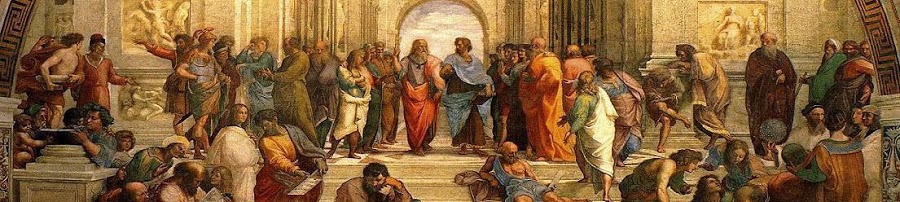
Chiseled and honed to Plato’s likeness I would have preferred Raphael School of Athen Image of Plato  but for yourself according to  your theme? Google Search characters can come in all shades given the algorithm lines placed underneath the image of the face.
Remember this has nothing to do about truth but is more the understanding that statistics are used in order to classify search functions as too popularity and Eliza’s name was chosen for now…becomes a select programming feature that has to be married to a virtual image or face, that becomes the future of our Google search functions?
So by name and chosen avatar, the personal features become a method by which Google Search characters become automatic according to the depth of the algorithmic world created by one’s personalization features selected.
Posted in Avatar, Eliza, Gatekeeper, Wayback Machine | Tagged , , , | Leave a comment

The Plato’s Cave Study: Does Bullshit Truly Baffle Brains?”

”Passive acceptance of the teacher’s wisdom is easy to most boys and girls. It involves no effort of independent thought, and seems rational because the teacher knows more than his pupils; it is moreover the way to win the favor of the teacher unless he is a very exceptional man. Yet the habit of passive acceptance is a disastrous one in later life. It causes man to seek and to accept a leader, and to accept as a leader whoever is established in that position.”Bertrand Russell

Of course the title is borrowed as most things here in this blog……..so thanks to the one  from whom it originates and thanks for the quotation. Also thanks to Bee for her Blablameter Some Fun can be taken seriously.

I mean I did offer Sokal as a example of what may be engendered “as a voice of reason” to see that we had all been baffled by such arrangement of words as to think this new subject on Quantum Gravity is somehow being spoken too? Maybe you didn’t get that?;)

This is a photograph by the artist Michael Najjar, and it’s real, in the sense that he went there to Argentina to take the photo. But it’s also a fiction. There’s a lot of work that went into it after that. And what he’s done is he’s actually reshaped, digitally, all of the contours of the mountains to follow the vicissitudes of the Dow Jones index. So what you see, that precipice, that high precipice with the valley, is the 2008 financial crisis. The photo was made when we were deep in the valley over there. I don’t know where we are now. This is the Hang Seng index for Hong Kong. And similar topography. I wonder why. Kevin Slavin: How algorithms shape our world

For me it is a question too, about what is set as the basis as “a pattern that exists” that has been written by code.  To set in motion “a causation of events that have smeared out the contributing algorithm which is set now as the “global event that catches our attention”….or,  those that become highlighted in origination,  as to what one should or could become aware of once they”ve actually awoken to the reality of these patterns in life.

The event in society is a mountain and the metaphor that has been so eloquently described contains some relevance to the high’s and lows in life. Some people’s dreams about life and the surmountable, or about that way with which we may discribe the landscape of possibilities.

For me it was always about potential and the constraints that could be applied to thinking(the relevance of the reservoir Wayback) and where in this basis is Google as a contributor to such methods but to classify and count,  based on popularity, numbers of hits, etc,  as to the truth of the story that is written? In this case it is about statistics, not about truth?

It about encouraging the many possibilities, as to what shall be funneled down through some youthful mind, as to some concrete thing, as an idea from that potential to be disperse throughout society as an ideal, to then become pervasive throughout our culture?

How many ebooks have been cataloged and where is Wayback to think the developmental of the internet has been considered as a voice that has been attached to this reservoir and hence revealed this idea? A Google search engine then emanating from a virtual avatar to create a link to this vast reservoir of potential as to display concrete things?

“If the price of avoiding non-locality is to make an intuitive explanation impossible, one has to ask whether the cost is too great.”

-David Bohm et al. “ Physc. Rep. 144, 321” (1987)

Okay Google, I have set before you, a challenge. Instead of a page that demonstrates a search feature as a main page, then change this to be represented by an virtual avatar who will lead you to these vast reservoirs of possibility? “Speak” your mind then and the Wayback becomes “your synapse” to the global thinking mind…… To have culminated in a set of info particulates “that are combined” to make this idea funnel into a wo/man to reset society? A holographic realization of all the components which help to make this world view.

The origins of technology was not in 1829, but was actually at the beginning of the Big Bang, and at that moment the entire huge billions of stars in the universe were compressed. The entire universe was compressed into a little quantum dot, and it was so tight in there there was no room for any difference at all. That’s the definition. There was no temperature. There was no difference whatsoever. And at the Big Bang, what it expanded was the potential for difference. So as it expands and as things expand what we have is the potential for differences, diversity, options, choices, opportunities, possibilities and freedoms. Those are all basically the same thing. And those are the things that technology bring us. That’s what technology is bringing us: choices, possibilities, freedoms. That’s what it’s about. It’s this expansion of room to make differences. And so a hammer, when we grab a hammer, that’s what we’re grabbing. And that’s why we continue to grab technology — because we want those things. Those things are good. Differences, freedom, choices, possibilities. And each time we make a new opportunity place, we’re allowing a platform to make new ones.Kevin Kelly on how technology evolves

In no way is this to make slight of, or,  imply things about Google. My thoughts are to advance society not by the creation of the algorithms but to idealize the access to information.

See Also:

Posted in Avatar, Gatekeeper | Tagged , | 3 Comments