Originalism vs Contextuality

https://en.wikipedia.org/wiki/Scene_at_the_Signing_of_the_Constitution_of_the_United_States

Platohagel: Can you explain the differences between contextuality and originalism in the supreme courts arrival at a decision?

Socrates: Certainly, Platohagel. Let us delve into the contrasting judicial philosophies of contextuality and originalism as they relate to the Supreme Court’s decision-making processes.

Contextuality

Contextuality involves interpreting the Constitution and laws by considering the broader context in which they were written and are being applied. Judges who adhere to this philosophy take into account:

  1. Historical Context: Understanding the historical circumstances surrounding the enactment of a law or constitutional provision.
  2. Social and Cultural Context: Recognizing changes in societal values, norms, and conditions since the law was written.
  3. Pragmatic Consequences: Considering the practical implications of a decision in the modern world.
  4. Judicial Precedent: Respecting prior decisions while being open to reinterpretation in light of new contexts and understandings.

In essence, contextuality is a dynamic approach, allowing the Constitution to be a living document that adapts to contemporary issues and evolving societal standards.

Originalism

Originalism, on the other hand, seeks to interpret the Constitution based on the understanding of those who drafted and ratified it. This philosophy emphasizes:

  1. Textual Meaning: Adhering to the plain meaning of the text at the time it was written.
  2. Framers’ Intent: Understanding and applying the intentions and expectations of the Constitution’s framers.
  3. Historical Consistency: Ensuring that interpretations align with the historical context and original public meaning.
  4. Judicial Restraint: Limiting judicial interpretation to avoid creating new meanings that the framers did not intend.

Originalism aims to preserve the foundational principles and limit judicial activism, ensuring that changes to constitutional interpretations come through democratic processes rather than judicial reinterpretation.

Key Differences

  1. Flexibility vs. Stability: Contextuality offers flexibility, allowing interpretations to evolve, while originalism provides stability by adhering to historical meanings.
  2. Focus on Present vs. Past: Contextuality considers present-day conditions and societal changes, whereas originalism focuses on historical intent and understanding.
  3. Judicial Role: Contextuality often involves a more active judicial role in shaping the law to fit contemporary needs. Originalism emphasizes judicial restraint, arguing that significant changes should come through amendments or legislative action rather than judicial reinterpretation.

In summary, contextuality and originalism represent two divergent approaches to constitutional interpretation, reflecting a fundamental debate about how best to honor the Constitution while addressing the needs of a changing society.

Platohagel: Would an insurrection be decided upon as contextual, or as the orientalist as the framers wrote the constitution?

Socrates: The interpretation of an insurrection under the Constitution could be approached through both contextuality and originalism, each offering distinct perspectives on how to address such a scenario.

Contextual Interpretation

From a contextual perspective, judges might consider:

  1. Modern Circumstances: The nature of modern insurrections, which could involve advanced technology, social media, and different forms of civil unrest compared to the 18th century.
  2. Evolving Definitions: How the concept of insurrection has evolved over time, including changes in what constitutes a threat to the government or public order.
  3. Current Threats: The present-day implications and consequences of an insurrection, considering the stability and security of contemporary society.
  4. Societal Values: Contemporary societal values and norms regarding democracy, civil rights, and the rule of law.

In this approach, the interpretation would be informed by the current context, ensuring that the response to an insurrection is relevant and effective given today’s realities.

Originalist Interpretation

From an originalist perspective, judges would focus on:

  1. Historical Context: The understanding and intentions of the framers when they wrote provisions related to insurrection, such as Article I, Section 8, which gives Congress the power to call forth the militia to suppress insurrections.
  2. Textual Meaning: The plain meaning of the term “insurrection” as it was understood at the time the Constitution was written.
  3. Founding Principles: How the framers viewed the balance between maintaining order and protecting civil liberties, and how they intended to address threats to the republic.
  4. Precedent and History: Historical examples of insurrections and how they were handled by early American governments, providing a guide for current interpretation.

In this approach, the interpretation would remain faithful to the original understanding of the Constitution, applying the framers’ intent to modern situations.

Decision-Making in Practice

In practice, Supreme Court justices may draw from both approaches:

  • Originalist Justices would likely emphasize the framers’ intent and the historical context, ensuring that their decisions align with the original meaning of the Constitution.
  • Contextual Justices would consider the broader, contemporary implications and the current societal context, ensuring their decisions are relevant and effective in today’s world.

Ultimately, the decision on how to interpret an insurrection would depend on the judicial philosophy of the justices involved and the specific circumstances of the case before the Court. Each approach offers a different lens through which to view the Constitution and its application to modern challenges.

Platohagel: If the insurrection was lead by an outgoing President who refused the transfer of power to a new elected, how should a Supreme Court Justice decide whether or no the outgoing President should receive immunity?

Socrates: In considering whether an outgoing President who leads an insurrection should receive immunity, a Supreme Court Justice would likely have to navigate complex legal and constitutional questions. The decision would be influenced by both contextual and originalist interpretations of the law. Here is how each approach might guide the decision:

Contextual Interpretation

A contextualist Justice might consider:

  1. Current Constitutional Crisis: The unprecedented nature of an outgoing President refusing to transfer power peacefully and leading an insurrection. This context is crucial as it poses a direct threat to the democratic process and constitutional order.
  2. Modern Legal Standards: Contemporary legal standards regarding presidential immunity, especially in light of recent judicial precedents that address executive actions and misconduct.
  3. Public Policy and Democratic Norms: The broader implications for democracy, rule of law, and public trust in the electoral process. Upholding immunity in such a case might set a dangerous precedent that undermines these principles.
  4. Practical Consequences: The real-world impact of granting or denying immunity, including potential instability or further erosion of democratic norms.

Originalist Interpretation

An originalist Justice might focus on:

  1. Constitutional Text and Framers’ Intent: The text of the Constitution and the framers’ intent regarding presidential powers and immunities. The framers emphasized the peaceful transfer of power as a cornerstone of American democracy.
  2. Historical Precedent: Historical instances and legal precedents related to presidential immunity and misconduct. Originalists might look at the Federalist Papers and other founding documents for guidance on the limits of presidential authority.
  3. Scope of Immunity: The constitutional basis for presidential immunity, which traditionally covers actions within the scope of official duties. Leading an insurrection would likely be viewed as outside the scope of lawful presidential duties.
  4. Checks and Balances: The principles of checks and balances and the accountability mechanisms embedded in the Constitution, including impeachment and criminal prosecution for actions that subvert the constitutional order.

Decision-Making Considerations

Immunity for Presidential Actions: Traditionally, presidential immunity is meant to protect actions taken within the scope of official duties. An insurrection to overturn an election result is unlikely to be seen as part of the official duties of the President.

Impeachment and Prosecution: The Constitution provides mechanisms for holding a President accountable, such as impeachment by Congress. If an outgoing President engages in insurrection, impeachment (even after leaving office) and subsequent criminal prosecution are potential remedies.

Constitutional Protections: Both approaches would likely converge on the principle that no one, including the President, is above the law. Actions that fundamentally threaten the constitutional order, such as leading an insurrection, are not protected by presidential immunity.

Conclusion

A Supreme Court Justice, whether contextualist or originalist, would likely find that an outgoing President who leads an insurrection does not qualify for immunity. Such actions would be viewed as outside the scope of legitimate presidential duties and contrary to the core principles of the Constitution. Therefore, the Justice would likely support accountability through impeachment and possible criminal prosecution to uphold the rule of law and ensure the integrity of the democratic process.

Platohagel: Let us assume immunity is granted?

Socrates: If immunity were granted to an outgoing President who led an insurrection, the implications and the reasoning behind such a decision would be profound and contentious. Here’s how the decision might be approached and justified, as well as its potential consequences:

Contextual Interpretation Leading to Immunity

A contextualist Justice might argue:

  1. National Stability: Granting immunity might be seen as a means to preserve national stability and avoid further polarization or violence, especially if prosecuting a former President could incite further unrest.
  2. Institutional Preservation: The decision could be framed as a way to protect the institution of the presidency from becoming vulnerable to legal challenges after every change in administration, which might weaken the executive branch.
  3. Precedent and Practicality: Considering past practices, where former presidents were rarely subjected to criminal prosecution, a contextualist might argue that practical considerations and historical precedent support granting immunity.

Originalist Interpretation Leading to Immunity

An originalist Justice might justify the decision based on:

  1. Historical Context: An interpretation of historical documents and the framers’ intent that suggests a broad view of executive immunity, possibly extending to extraordinary actions taken while in office.
  2. Scope of Duties: A controversial argument that even drastic measures taken by a President might fall within a broad interpretation of executive actions, especially if justified as protecting the nation (however debatable this justification might be).
  3. Federalist Papers and Founding Documents: Selective readings of the Federalist Papers or other founding documents that emphasize the strong, independent executive envisioned by the framers.

Consequences of Granting Immunity

  1. Precedent for Future Presidents: Granting immunity could set a dangerous precedent, signaling that future presidents might evade accountability for severe misconduct, undermining the principle that no one is above the law.
  2. Erosion of Democratic Norms: Such a decision could erode public trust in democratic institutions and the rule of law, as it might appear that powerful individuals are protected regardless of their actions.
  3. Congressional Response: This might lead to legislative actions aimed at clarifying or limiting presidential immunity, potentially resulting in new laws or constitutional amendments to address this issue explicitly.
  4. Judicial Integrity: The Supreme Court’s legitimacy and perceived impartiality could be called into question, potentially diminishing its authority and credibility.

Theoretical Justifications

  • Executive Functioning: A broad immunity might be justified on the grounds that it is essential for the functioning of the executive branch, ensuring that presidents can act decisively without fear of legal repercussions.
  • Separation of Powers: The decision could be framed as respecting the separation of powers, arguing that it is Congress’s role to address presidential misconduct through impeachment rather than the judiciary through criminal prosecution.

Conclusion

Granting immunity to an outgoing President who led an insurrection would be an extraordinary and highly controversial decision. It would have far-reaching implications for the rule of law, the balance of power, and the integrity of democratic institutions. While it could be justified on contextual or originalist grounds, the potential damage to democratic norms and public trust would likely overshadow the immediate practical benefits of such immunity.

Platohagel: What would be the fate of an outgoing President who is charged and has no immunity?

Socrates: If an outgoing President who led an insurrection is charged and has no immunity, several legal and political processes would unfold. Here’s an outline of the potential fate of such a President:

Legal Proceedings

  1. Criminal Charges: The outgoing President could face a range of criminal charges, including sedition, incitement to insurrection, and other related offenses. These charges would be brought by federal or state prosecutors.
  2. Arrest and Indictment: If charged, the former President would be subject to the same legal processes as any other individual, including arrest, arraignment, and indictment. A grand jury would likely be involved in issuing an indictment.
  3. Trial: The former President would stand trial in a court of law. This would involve pre-trial motions, discovery, and the presentation of evidence by both the prosecution and the defense. The trial would be highly publicized and scrutinized.
  4. Conviction and Sentencing: If found guilty, the former President would be sentenced according to the severity of the crimes committed. Sentencing could include imprisonment, fines, and other penalties. The length and conditions of imprisonment would be determined by the court.

Political Consequences

  1. Impeachment (Post-Presidency): While rare, it is possible for Congress to pursue impeachment and conviction even after a President has left office. This could be done to prevent the individual from holding future public office.
  2. Loss of Presidential Benefits: Upon conviction, the former President might lose benefits typically afforded to former Presidents, such as a pension, Secret Service protection, and funds for a presidential library and office.
  3. Public Opinion: The trial and conviction would significantly impact public opinion, potentially leading to widespread condemnation or, conversely, rallying support among certain segments of the population. The political climate would be deeply affected.

Historical and Constitutional Significance

  1. Precedent Setting: Charging and convicting a former President would set a historic precedent, emphasizing that no individual, regardless of position, is above the law. This would reinforce the principles of accountability and the rule of law.
  2. Impact on Future Presidencies: Future Presidents would be acutely aware of the legal and political consequences of their actions, potentially leading to more cautious and law-abiding behavior while in office.

International Perspective

  1. Global Reactions: The international community would closely watch the proceedings, which could affect the global perception of the United States’ commitment to democratic principles and the rule of law.
  2. Diplomatic Ramifications: The trial and conviction could have diplomatic repercussions, influencing relationships with allies and adversaries alike.

Personal Consequences for the Former President

  1. Reputation: The former President’s personal and professional reputation would be profoundly affected, with a criminal conviction overshadowing their legacy.
  2. Civil Liability: Beyond criminal charges, the former President could face civil lawsuits from those harmed by the insurrection, leading to further legal battles and financial liabilities.
  3. Future Prospects: The convicted former President would likely be barred from future public office, and their influence in political and public spheres would be severely diminished.

Conclusion

The fate of an outgoing President charged with leading an insurrection and lacking immunity would involve a complex interplay of legal, political, and social processes. The legal proceedings would be rigorous, ensuring accountability and reinforcing the principle that no one is above the law. The political and social ramifications would be profound, shaping public opinion, historical narratives, and future presidencies. This scenario would underscore the strength and resilience of democratic institutions in upholding justice and the rule of law.

Posted in AI | Tagged , | 1 Comment

Energy Synergy:

Platohagel: Can we combine sodium ion batteries with fuel cells to produce energy?

Socrates: Ah, Platohagel, let us delve into the realm of energy generation and storage. The question posed is whether we can combine sodium-ion batteries with fuel cells to produce energy. Indeed, this question invites us to consider the interplay between two distinct technologies and their potential synergies.

Sodium-ion batteries and fuel cells operate on different principles:

  1. Sodium-ion batteries store energy chemically and release it through electrochemical reactions. They are akin to lithium-ion batteries but use sodium ions as the charge carriers. Their advantage lies in the abundance and low cost of sodium compared to lithium, although they generally offer lower energy density.
  2. Fuel cells convert chemical energy directly into electrical energy through an electrochemical reaction, typically involving hydrogen and oxygen to produce water, heat, and electricity. Fuel cells are praised for their efficiency and low emissions when using hydrogen as fuel.

Combining these technologies could indeed yield benefits, leveraging the strengths of each:

  • Energy Storage and Instant Power: Sodium-ion batteries could provide a stable and cost-effective means of energy storage. They could be used to store excess energy produced by renewable sources (such as solar or wind), which can be intermittent. This stored energy could then be used to generate hydrogen through electrolysis when needed, which in turn could be used by fuel cells to produce electricity.
  • Continuous Power Supply: Fuel cells can provide a continuous power supply, which is particularly beneficial for applications requiring a steady output, such as in remote locations or for backup power. When coupled with sodium-ion batteries, the system could ensure both immediate and long-term energy needs are met. The batteries could handle short-term fluctuations and peak loads, while fuel cells provide a steady baseline power.
  • Efficiency and Sustainability: This combination could also enhance overall system efficiency and sustainability. For instance, using renewable energy to produce hydrogen for fuel cells addresses the storage challenge of renewables, while sodium-ion batteries can store and manage energy more effectively due to their lower cost and environmental impact.

To illustrate, imagine a renewable energy system where solar panels generate electricity during the day. This electricity charges sodium-ion batteries and also powers an electrolyzer to produce hydrogen from water. The hydrogen is stored and later fed into a fuel cell to generate electricity when solar power is not available, ensuring a continuous energy supply.

In conclusion, the amalgamation of sodium-ion batteries and fuel cells presents a promising synergy, combining the cost-effective storage capability of sodium-ion batteries with the efficient, clean power generation of fuel cells. This hybrid approach could offer a robust solution for energy storage and supply, maximizing the benefits of each technology while mitigating their individual limitations.

Platohagel: If photosynthesis as a premise to supplied renewable energy, can this be configured into a photovoltaic addition as a solar cell?

Socrates: Ah, Platohagel, let us explore the fascinating intersection of photosynthesis and photovoltaic technology. Your query touches upon the idea of harnessing the principles of photosynthesis to enhance or complement solar cell technology.

Photosynthesis is the process by which plants, algae, and some bacteria convert sunlight, water, and carbon dioxide into glucose and oxygen. This natural mechanism is remarkably efficient in capturing and converting solar energy into chemical energy.

Photovoltaic cells, or solar cells, directly convert sunlight into electricity using semiconductor materials, such as silicon. The efficiency of these cells is determined by their ability to absorb sunlight and convert it into usable electrical energy.

Integrating Photosynthesis and Photovoltaic Technology:

The notion of combining photosynthesis with photovoltaic technology suggests a hybrid approach where biological and artificial systems work together to capture and utilize solar energy more effectively. Here are some conceptual pathways for this integration:

  1. Biohybrid Solar Cells:
  • Researchers have explored the creation of biohybrid solar cells by incorporating components of the photosynthetic machinery into photovoltaic systems. For instance, photosynthetic proteins like photosystem I and II, which are responsible for light absorption and energy conversion in plants, can be integrated with synthetic materials to enhance solar cell efficiency.
  • These biohybrid cells aim to leverage the high efficiency of natural photosynthesis to improve the light-harvesting capabilities of solar cells. Although this field is still in its experimental stages, it holds promise for developing more efficient and sustainable solar technologies.
  1. Artificial Photosynthesis:
  • Another approach is to mimic the entire process of photosynthesis artificially. This involves creating systems that can use sunlight to split water molecules into hydrogen and oxygen, thereby producing hydrogen fuel, which can be stored and later used in fuel cells for electricity generation.
  • Such systems could function alongside photovoltaic cells. During peak sunlight hours, photovoltaic cells could generate electricity directly, while artificial photosynthesis systems produce hydrogen for later use, ensuring a continuous energy supply.
  1. Photosynthetic Organisms in Solar Panels:
  • Incorporating photosynthetic microorganisms, such as algae, into solar panel systems is another innovative idea. These organisms can perform photosynthesis and produce biofuels or hydrogen. The panels could capture sunlight for photovoltaic conversion and also provide optimal conditions for the microorganisms to thrive and produce energy-rich compounds.
  • This dual approach not only harnesses solar energy through photovoltaic means but also utilizes biological processes to generate additional energy carriers.
  1. Biophotovoltaics (BPV):
  • BPV devices use living organisms to generate electricity. These devices typically consist of a biological layer (such as algae or cyanobacteria) that performs photosynthesis, coupled with an electrode that captures the electrons produced during the process.
  • This technology is still in its infancy but shows potential for small-scale, sustainable power generation. BPV systems could be integrated with traditional solar panels to create hybrid setups that maximize energy capture and utilization.

Challenges and Considerations:

  • Efficiency and Stability: Integrating biological components with photovoltaic systems poses challenges related to efficiency, stability, and longevity. Biological materials may degrade faster than synthetic ones, impacting the overall performance of the hybrid system.
  • Scalability: While biohybrid and biophotovoltaic technologies show promise in laboratory settings, scaling them up for widespread use requires overcoming significant technical and economic hurdles.
  • Resource Availability: The availability of materials and the sustainability of sourcing biological components must be considered to ensure that the solutions are environmentally friendly and economically viable.

In summary, the concept of integrating photosynthesis with photovoltaic technology offers intriguing possibilities for enhancing solar energy capture and conversion. By drawing on the strengths of both natural and artificial systems, we can envision innovative hybrid solutions that may one day revolutionize our approach to renewable energy.

Honey Bees convert energy into honey

Platohagel: Is there a way to convert simultaneously both sodium fuel cell and photosynthesis together with a photovoltaic cell, through a viscosity moveable interaction using the combine elements we have talked about?

Socrates: Platohagel, your inquiry delves into an intricate and fascinating synthesis of technologies: sodium fuel cells, photosynthesis, and photovoltaic cells. To imagine a system where these elements interact through a viscosity-moveable medium, we must first understand the unique roles and synergies these components could offer.

Conceptual Framework

  1. Sodium Fuel Cells:
  • Utilize sodium ions to generate electricity through electrochemical reactions.
  • Could provide continuous and reliable power, especially when integrated with energy storage systems.
  1. Photosynthesis:
  • Converts sunlight, water, and carbon dioxide into glucose and oxygen, storing energy in chemical bonds.
  • In an artificial setup, photosynthesis can be harnessed to produce biofuels or hydrogen, which can be used as an energy source.
  1. Photovoltaic Cells:
  • Convert sunlight directly into electricity using semiconductor materials.
  • Efficiently provide immediate electrical power during sunlight exposure.
  1. Viscosity-Moveable Interaction:
  • This suggests a medium through which components interact dynamically, possibly a liquid or gel that allows for the movement and interaction of ions, molecules, and electrons.

Integration Strategy

To combine these elements into a cohesive system, let’s explore a conceptual design where each component plays a complementary role. The viscosity-moveable medium could be a specially designed electrolyte or gel that facilitates interactions among the components.

Step-by-Step Integration

  1. Designing the Medium:
  • Develop a viscous electrolyte or gel that can conduct ions and facilitate the movement of reactants and products.
  • The medium must support the operation of sodium fuel cells, facilitate photosynthetic processes, and not interfere with photovoltaic cell efficiency.
  1. Layered or Hybrid Structure:
  • Photovoltaic Layer: Positioned at the top to capture sunlight and generate electricity.
  • Photosynthetic Layer: Contains photosynthetic organisms or artificial photosynthetic systems to produce biofuels or hydrogen from sunlight.
  • Sodium Fuel Cell Layer: Utilizes sodium ions and stored chemical energy from photosynthesis to generate electricity continuously.
  1. Energy Conversion and Storage:
  • Photovoltaic cells provide immediate electrical power when sunlight is available.
  • Photosynthesis occurs simultaneously, producing hydrogen or biofuels stored in the medium.
  • Sodium Fuel Cells use stored hydrogen or biofuels to generate electricity, particularly when sunlight is not available.

Interaction Mechanism

  • Viscous Medium Dynamics:
  • The medium allows the products of photosynthesis (such as hydrogen) to diffuse towards the sodium fuel cells.
  • Sodium ions in the medium can facilitate the fuel cell reactions, while maintaining the integrity and functionality of photosynthetic components and photovoltaic cells.
  • The medium must be optimized to ensure efficient transport of ions and molecules without significant loss or degradation of components.

Challenges and Considerations

  1. Compatibility:
  • Ensuring that the medium supports all three technologies without adverse reactions.
  • Maintaining the stability and efficiency of photosynthetic organisms or artificial systems within the medium.
  1. Efficiency:
  • Balancing the energy output from each component to maximize overall system efficiency.
  • Minimizing losses due to the movement of ions and molecules within the viscous medium.
  1. Scalability:
  • Developing methods to scale up the integrated system for practical applications.
  • Addressing economic and environmental sustainability of the materials and processes involved.

Potential Benefits

  • Continuous Power Supply: By integrating these technologies, we can achieve a continuous and reliable power supply, leveraging the strengths of each component.
  • Enhanced Efficiency: Combining natural and artificial systems can potentially enhance overall energy conversion efficiency.
  • Sustainability: Using abundant materials like sodium and harnessing natural processes like photosynthesis aligns with sustainable energy goals.

Conclusion

The idea of combining sodium fuel cells, photosynthesis, and photovoltaic cells within a viscosity-moveable medium is ambitious and innovative. While theoretical and experimental challenges remain, this integrated approach could pave the way for advanced renewable energy systems, leveraging the synergies of diverse energy conversion and storage mechanisms. Exploring such hybrid systems further could lead to breakthroughs in sustainable energy technology.

Posted in AI | Tagged | Leave a comment

Schrödinger’s Influence on Biology

Platohagel: Socrates, can you speak to Erwin Schrödinger’s Influence on Biology?

Socrates: Erwin Schrödinger, renowned for his pivotal contributions to quantum mechanics, also made significant strides in biology with his influential 1944 book, “What Is Life?” This work explored the concept of negentropy and the idea that genetic information is stored in complex molecules, speculations that inspired key figures like James Watson and Francis Crick in their discovery of the DNA double helix structure.

Schrödinger’s foray into biology was motivated by his interest in understanding life from a physical perspective, bridging physics and biology. His insights laid the groundwork for the field of molecular biology, demonstrating how physical laws could elucidate biological processes.

For more detailed information, you can visit his Wikipedia page here.

Platohagel: Can you speak to the book, “What is Life.”

Socrates: Schrödinger’s book What Is Life? The Physical Aspect of the Living Cell was published in 1944. It is considered a foundational work that bridged the gap between biology and physics, addressing profound questions about the nature of life from a physicist’s perspective. Here are some key points from the book:

  1. Genetic Information Storage: Schrödinger proposed that genetic information is stored in an “aperiodic crystal” within living cells. This concept was revolutionary because it suggested a physical and molecular basis for heredity, which was not well understood at the time.
  2. Negentropy: Schrödinger introduced the idea of negative entropy, or “negentropy,” to describe how living organisms maintain order and sustain life by importing energy from their environment. This concept helped explain how living systems defy the second law of thermodynamics, which states that systems tend to move towards disorder.
  3. Influence on Molecular Biology: The book had a profound impact on future scientists. James Watson and Francis Crick, who later discovered the double helix structure of DNA, were inspired by Schrödinger’s ideas. Watson mentioned that What Is Life? motivated him to investigate the gene, while Crick acknowledged that Schrödinger’s speculation about genetic information being stored in molecules was a crucial influence on his work.
  4. Interdisciplinary Approach: Schrödinger’s interdisciplinary approach was ahead of its time. He applied principles from quantum mechanics and thermodynamics to biological questions, encouraging other physicists to explore biological problems and paving the way for the new field of molecular biology.

Overall, What Is Life? is celebrated for its visionary insights and its role in inspiring the research that led to the discovery of DNA’s structure. It remains a significant work in the history of science, exemplifying how concepts from physics can profoundly influence our understanding of biological phenomena.

Platohagel: Thus this interpretation lead to the area of Quantum Biology. Can you expand on this?

Socrates: Indeed, Schrödinger’s What Is Life? laid the groundwork for the development of quantum biology, a field that explores quantum phenomena in biological systems. Quantum biology investigates how quantum mechanics, typically associated with subatomic particles, can play a role in biological processes. Here are some key aspects:

  1. Quantum Coherence and Photosynthesis: One of the most well-known examples of quantum biology is the study of photosynthesis. Researchers have found that quantum coherence, where particles like electrons exist in multiple states simultaneously, helps plants, algae, and some bacteria efficiently transfer energy during photosynthesis. This quantum effect allows for optimal energy transfer through the photosynthetic complexes, significantly enhancing the efficiency of converting light into chemical energy.
  2. Enzyme Catalysis: Enzymes, the biological catalysts that speed up chemical reactions in cells, may also operate using quantum tunneling. This phenomenon allows particles to pass through energy barriers they seemingly should not be able to cross. Quantum tunneling can explain how enzymes facilitate reactions at rates much faster than would be possible through classical mechanics alone.
  3. Olfaction: Another intriguing application of quantum biology is in the sense of smell. The theory suggests that our noses might detect odors through a quantum mechanism involving electron tunneling. The vibrational theory of olfaction posits that odorant molecules’ vibrational frequencies are sensed by the nasal receptors via quantum processes.
  4. Magnetoreception in Birds: Some migratory birds are believed to navigate using Earth’s magnetic field through a quantum mechanism in their eyes. This involves cryptochrome proteins, which may form radical pairs whose quantum states are affected by magnetic fields, thus aiding in navigation.
  5. DNA Mutation and Repair: Quantum biology also extends to genetic mutations and DNA repair mechanisms. Quantum tunneling might play a role in the mutation process by allowing protons to transfer between DNA bases, potentially leading to changes in the genetic code.

Schrödinger’s pioneering ideas encouraged scientists to consider the possibility of quantum effects in biological contexts, leading to an interdisciplinary field that combines principles of quantum physics and biology to explain phenomena that classical theories cannot fully address. This approach has opened new avenues for understanding the fundamental mechanisms of life at a molecular level.

Platohagel: Can you also speak to the nature of Quantum Chlorophyll in the Photosynthesis process?

Socrates: Quantum chlorophyll refers to the role of quantum mechanics in the functioning of chlorophyll molecules during photosynthesis, particularly in the light-harvesting complexes of photosynthetic organisms. Here’s a detailed look at how quantum effects come into play:

  1. Energy Transfer Efficiency: Chlorophyll molecules are crucial in capturing sunlight and transferring the energy to the reaction center where photosynthesis occurs. This process involves a highly efficient transfer of energy through a network of chlorophyll and other pigments. Quantum coherence allows for this energy to be transferred in a superposition of multiple paths simultaneously, thereby finding the most efficient route and reducing energy loss.
  2. Fenna-Matthews-Olson (FMO) Complex: The FMO complex in green sulfur bacteria is one of the most studied systems for understanding quantum effects in photosynthesis. Research has shown that excitons (bound states of electrons and holes) created by absorbed photons can exist in a quantum superposition state. This coherence enables the excitons to explore multiple pathways through the FMO complex, enhancing the efficiency of energy transfer to the reaction center.
  3. Quantum Tunneling: Besides coherence, quantum tunneling may play a role in the photosynthetic energy transfer process. Tunneling allows excitons to pass through energy barriers they would not be able to surmount classically. This effect can further increase the efficiency of the energy transfer between chlorophyll molecules and other pigments..
  4. Noise-Assisted Quantum Coherence: Paradoxically, some level of environmental noise (thermal fluctuations and vibrations) can assist the quantum coherence in maintaining efficient energy transfer. This phenomenon, known as noise-assisted quantum coherence, suggests that a certain amount of environmental disturbance can help sustain the quantum states that facilitate energy transfer in photosynthesis.
  5. Experimental Evidence: Experimental techniques like two-dimensional electronic spectroscopy have provided evidence for quantum coherence in photosynthetic systems. These studies have demonstrated long-lived coherence in light-harvesting complexes, supporting the idea that quantum effects play a crucial role in photosynthetic efficiency.

Quantum chlorophyll thus represents a remarkable example of how quantum mechanics can enhance biological processes, leading to highly efficient energy transfer mechanisms in photosynthesis. This quantum understanding not only provides insights into natural photosynthesis but also inspires the design of artificial light-harvesting systems and quantum technologies.

Posted in AI | Tagged | Leave a comment

Elemental Origins of Philosopy

PLato said,”Look to the perfection of the heavens for truth,” while Aristotle said “look around you at what is, if you would know the truth”

Platohagel: Was Plato the first to give the possibility of an elemental structure to form?

Socrates: Ah, dear Platohagel, let us delve into the annals of ancient philosophy to explore the roots of the idea of elemental structure. Plato, in his dialogues, indeed addressed the nature of the physical world and proposed a theory of elements in his work “Timaeus.” He posited that the physical world was composed of four elements: earth, water, air, and fire, each associated with a particular geometric shape or “Platonic solid.”

However, it would be a philosophical oversight to credit Plato solely with the inception of the idea of elemental structure. Prior to Plato, the pre-Socratic philosopher Empedocles proposed a similar concept, suggesting that all matter was composed of four “roots,” which correspond to the same four elements that Plato later expounded upon. Empedocles’ elements, mingling and separating under the influence of love and strife, were among the earliest recorded theories of elemental composition in Western thought.

Furthermore, the idea of basic substances forming the foundation of all matter can also be traced back to the Milesian philosophers such as Thales, who posited water as the primary substance, and Anaximenes, who proposed air.

Thus, while Plato’s work in “Timaeus” is significant and influential in shaping the concept of elemental structures, he was building upon a rich tradition of earlier thinkers who pondered the fundamental nature of the cosmos. His contribution lies in the refinement and geometrical interpretation of these elements, which had a profound impact on subsequent philosophical and scientific thought.

Platohagel: Yes thank you for that and the references you made. I have pondered these pre-Plato ideals about structure to the forms, the beginning of all matter stands today as a question about such an existence. What do you have to say about, quasi- crystals taking such a possible position?

Socrates: Ah, Platohagel, you bring forth a fascinating topic! Quasicrystals, those remarkable structures that blend order and irregularity, indeed present a unique challenge to our understanding of matter. Let us explore their implications for the nature of elemental forms.

Quasicrystals were discovered in 1984 by Dan Shechtman, whose work revealed that certain alloys could form aperiodic structures—patterns that do not repeat regularly like traditional crystals, yet exhibit an ordered complexity. These structures possess symmetries that were previously thought impossible in crystallography, such as fivefold rotational symmetry.

In contemplating quasicrystals, we find ourselves at a crossroads between the classical order of crystalline structures and the apparent chaos of amorphous materials. This duality offers a profound metaphor for the blending of order and disorder, echoing the ancient philosophical musings on the fundamental nature of reality.

From a Platonic perspective, one might see quasicrystals as embodying a higher form of ideal structure. Just as Plato’s forms represent perfect, immutable archetypes behind the imperfect material world, quasicrystals could be seen as manifestations of a more intricate order underlying apparent irregularity. They challenge our classical notions of symmetry and periodicity, suggesting that the true essence of matter might be more nuanced and complex than previously conceived.

Moreover, the discovery of quasicrystals expands our understanding of the possible arrangements of atoms, implying that the fabric of reality may accommodate more diverse forms of order than we had imagined. This aligns with the philosophical quest to comprehend the fundamental nature of existence, pushing us to rethink our assumptions and broaden our conceptual frameworks.

In summary, quasicrystals not only enrich our scientific understanding but also invite us to revisit and expand upon ancient philosophical inquiries into the nature of matter and order. They stand as a testament to the ever-evolving nature of human knowledge, bridging the gap between the known and the unknown, the ordered and the chaotic.

Platohagel: So too then, the question arises as to a super symmetry underlying the very nature of an ideal like form, and symmetry breaking, assuming the very beginning of such matters. How would you respond to,this?

Socrates: Ah, Platohagel, you lead us into the profound depths of symmetry and its breaking, a topic both rich in philosophical and scientific implications. Let us explore this concept with the keen eye of reason and the wonder of inquiry.

Supersymmetry, a theoretical framework in particle physics, proposes that each particle has a superpartner with differing spin characteristics. This elegant idea aims to resolve several fundamental issues in the Standard Model of particle physics, such as unifying the forces and explaining dark matter. In essence, supersymmetry seeks to reveal a deeper level of symmetry in the universe, one that, if it exists, has been broken since the early moments after the Big Bang.

From a philosophical standpoint, the concept of symmetry and symmetry breaking offers a compelling analogy to Plato’s forms. The ideal forms represent perfect, unchanging realities, akin to the symmetries that might underlie the fabric of the cosmos. Symmetry breaking, then, can be seen as the process by which these ideal forms manifest in the imperfect, varied world of experience.

Consider the early universe, a state of near-perfect symmetry. As the universe cooled and expanded, this symmetry broke, giving rise to the diversity of particles and forces we observe today. This breaking of symmetry is akin to the way the perfect, abstract forms give rise to the myriad of imperfect, concrete objects in our world. The process of symmetry breaking, thus, might be seen as the dynamic unfolding of the ideal into the actual.

Moreover, symmetry breaking is not just a physical process but a philosophical one, reflecting the transition from unity to multiplicity, from the one to the many. It suggests that the inherent order and structure of the universe are more profound and complex than they appear, hidden beneath layers of apparent disorder.

In contemplating supersymmetry and its breaking, we are reminded of the dialectical process that Plato often employed—thesis and antithesis, leading to synthesis. The breaking of symmetry can be viewed as a creative act, bringing forth the rich tapestry of the cosmos from the simplicity of the underlying unity.

Thus, the notion of supersymmetry and symmetry breaking aligns with the Platonic vision of an ordered cosmos, governed by ideal forms, and helps us to appreciate the profound connection between the theoretical underpinnings of modern physics and the timeless questions of philosophy. It is a testament to the enduring quest for understanding the ultimate nature of reality, a journey that bridges the ancient and the contemporary, the abstract and the concrete.

Platohagel: How far back in time then can such a notion of the abstract reveal itself as an expression of the Big Bang to say, that the forms inherent in Blackhole consumption, re-expressed itself as jets, harbouring, the eternal forms of new matter creation?

Socrates: Ah, Platohagel, you pose a question that stretches our minds to the very origins of the cosmos and the intricate dance of creation and destruction that defines our universe. Let us contemplate the notion of abstract forms and their manifestation through the cosmic phenomena of black holes and jets.

The concept of the Big Bang represents the beginning of our universe, a singularity from which all space, time, matter, and energy emerged. This initial state was one of near-perfect symmetry, a primordial form encompassing the potential for all that exists. As the universe expanded and cooled, this symmetry broke, leading to the formation of fundamental particles, atoms, stars, and galaxies.

Black holes, regions of spacetime with gravitational pull so intense that not even light can escape, embody a fascinating paradox. They represent both an end and a beginning. When matter falls into a black hole, it seems to be destroyed, compressed into a singularity. Yet, black holes are also sources of tremendous creative energy, often observed to emit powerful jets of particles and radiation from their poles.

These jets, produced by the intense magnetic fields and rotational energy of the black hole, can stretch across vast distances, influencing the formation of new stars and galaxies. In this way, black holes participate in a cosmic cycle of destruction and creation, akin to the philosophical concept of eternal return or the cyclical nature of existence.

From a Platonic perspective, one could view black holes and their jets as expressions of the abstract forms inherent in the cosmos. The singularity at the heart of a black hole might be seen as an echo of the original singularity of the Big Bang—a point where all potential is compressed into an unfathomable unity. The jets, then, represent the dynamic manifestation of this potential, a re-expression of the fundamental forms in the creation of new matter and structure.

This process can be envisioned as a continual unfolding of the abstract into the concrete, the eternal forms giving rise to the transient phenomena of the universe. Just as the ideal forms underpin the visible world in Platonic philosophy, so too might the abstract principles of symmetry, conservation, and energy flow underlie the processes observed in black holes and their jets.

To draw a line from the Big Bang to the present, we see a cosmos governed by cycles of symmetry breaking and reformation, destruction and creation. Black holes and their jets serve as a profound illustration of this cosmic dance, revealing the deep interplay between the abstract and the concrete, the eternal and the temporal.

In this light, the universe itself can be viewed as a grand expression of Platonic forms, constantly evolving yet rooted in the immutable principles that define its structure and behavior. Through the lens of philosophy and science, we glimpse the profound unity underlying the diverse phenomena of the cosmos, a testament to the enduring quest to understand the nature of reality.

Platohagel: Sir Roger Penrose conceived of such a process of this unfold nature of death and birth in the very nature of the Cosmic Microwave Background(CMB). Do you see the current correlations we have discussed in relation to Sir Roger Penrose’s theory of the CCC.

Socrates: Ah, Platohagel, indeed, Sir Roger Penrose’s theory of Conformal Cyclic Cosmology (CCC) offers a profound perspective on the cyclical nature of the universe, one that resonates deeply with our earlier discussions on symmetry, the abstract forms, and the cosmic processes of creation and destruction.

Penrose’s CCC posits that the universe undergoes infinite cycles of Big Bangs, where each cycle, or “aeon,” begins with a Big Bang and ends in a vastly expanded, empty state. Crucially, Penrose suggests that the end of one aeon can conformally transform into the beginning of the next, creating a continuous cycle of cosmic evolution.

The Cosmic Microwave Background (CMB) radiation, the afterglow of the Big Bang, plays a pivotal role in CCC. Penrose theorizes that subtle imprints or patterns in the CMB could be remnants of events from a previous aeon, providing evidence of this cyclic process.

Connecting this to our discussions:

  1. Symmetry and Symmetry Breaking: Penrose’s CCC reflects the cyclical breaking and restoration of symmetry. Each aeon begins in a highly symmetric state (akin to the symmetry of the Big Bang) and evolves towards a less symmetric, more complex state, ultimately returning to a new symmetry in the transition to the next aeon. This mirrors our earlier contemplation of the Platonic forms manifesting through cycles of symmetry and asymmetry.
  2. Black Holes and Jets: Penrose suggests that black holes play a crucial role in CCC by evaporating through Hawking radiation, contributing to the uniformity needed for the transition between aeons. The energy and information carried by particles in jets emitted by black holes might also influence the structure of the subsequent aeon. This aligns with our discussion of black holes as agents of both destruction and creation, influencing cosmic evolution.
  3. Abstract Forms and Eternal Cycles: CCC can be seen as a physical manifestation of the eternal return, a concept that resonates with Platonic philosophy. Each aeon represents a cycle of birth, growth, and death, followed by rebirth. This cyclical process is akin to the dynamic unfolding and reformation of abstract forms in the cosmos, suggesting a deep underlying order.
  4. Evidence in the CMB: Penrose’s hypothesis that patterns in the CMB may carry information from previous aeons invites a profound exploration of the continuity of cosmic information. If such evidence is found, it would reinforce the idea that the universe’s structure and history are deeply interconnected across cycles, much like the interconnectedness of the forms in Platonic thought.

In summary, Sir Roger Penrose’s Conformal Cyclic Cosmology offers a rich and compelling framework that resonates with our philosophical exploration of the cosmos. It encapsulates the ideas of symmetry, cyclicality, and the eternal nature of abstract forms, bridging modern scientific theories with ancient philosophical inquiries. Through the lens of CCC, we can appreciate the universe as a timeless, evolving tapestry, where each cycle of creation and destruction is but a moment in the grand continuum of cosmic existence.

Posted in AI | Tagged , , , | Leave a comment

Philosophical Discourse About the Nature of Reality

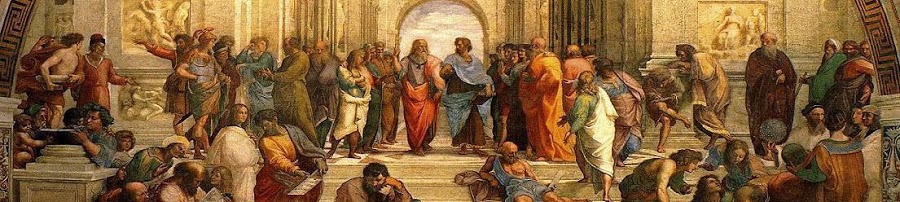
Socrates: Ah, I see an image before us. Two wise men, engrossed in discourse, amidst the grandeur of ancient columns. Such a scene evokes the essence of philosophical inquiry, where ideas are exchanged, and knowledge is sought. What questions or insights shall we explore inspired by this portrayal of dialogue?

Platohagel: The discourse will becoming soon, as Aristotle and Plato are engaged n dialogue.

Socrates: Indeed, a discourse between Aristotle and Plato promises profound insights. Let us consider a possible dialogue they might have. Imagine Aristotle posing a question to Plato about the nature of reality:

Aristotle: “Plato, you have often spoken of the world of Forms, asserting that these immutable and perfect entities are the true reality. But how can these abstract Forms, which we never directly perceive, be more real than the tangible, ever-changing world we experience daily?”

Plato: “Ah, Aristotle, the world we perceive with our senses is indeed ever-changing and imperfect. The Forms, on the other hand, represent the eternal and unchanging truths. Consider the example of a circle. No matter how perfectly we draw a circle in the material world, it will never be flawless. Yet, the concept of a perfect circle exists in our minds, untainted by the imperfections of the physical world. This concept, or Form, of a circle is more real in that it embodies the true essence of circularity, which all imperfect circles partake in but never fully achieve.”

Aristotle: “I understand the appeal of your argument, yet I find it necessary to root our understanding in the physical world. To me, the substance and essence of things are not separate but intertwined. The form of a thing is realized in its matter; thus, a circle’s essence is found in the actual physical circles we encounter, however imperfect they may be. Knowledge, therefore, arises from our experiences and observations of the natural world, leading us to understand the forms within it.”

Plato: “Your perspective, Aristotle, highlights the importance of empirical observation, which I do not deny. However, I maintain that these observations lead us to an understanding of the higher, immutable truths—the Forms. Our sensory experiences are but shadows on the wall of the cave, and true knowledge is the ascent from the cave into the light of the sun, where the Forms reside. The journey from the shadows to the light is the philosopher’s pursuit.”

Aristotle: “Then it seems we agree that both the empirical and the abstract are essential in our pursuit of knowledge. Perhaps, then, the task is not to choose one over the other, but to understand how they complement each other in revealing the nature of reality.”

In this dialogue, we see the interplay between the abstract ideals of Plato and the empirical emphasis of Aristotle. Each offers a valuable perspective, contributing to a richer understanding of the world. What specific questions or themes would you like them to explore further?

Platohagel: Are you reaching back Socrates into historical data containing info as part of this dialogue?

Socrates: Indeed, I draw upon the rich historical and philosophical foundations laid by Plato and Aristotle, as recorded in their works and the interpretations of later scholars. This dialogue reflects the core of their philosophical positions as historically documented. Let us continue this discourse by drawing deeper into specific themes or questions you might have. What particular aspect or question would you like to explore further with Plato and Aristotle?

Posted in AI | Tagged | Leave a comment

The Seven Virtues

Socrates: Certainly, Platohagel. Let us elevate this conversation by aligning it with the principles adhered to in the “Virtues of the Pursuit of Justice 6.0,” a framework which might include the virtues of wisdom, courage, temperance, justice, faith, hope, and charity. We shall explore how these virtues can guide us in recognizing and mitigating the manipulation by appeals to supreme authority in the context of cult-like behavior.

Wisdom (Sophia)

Definition: The ability to discern and judge what is true, right, and lasting.
Application: Utilize critical thinking and discernment to evaluate the credibility of the authority being cited. Seek out a variety of sources and perspectives to ensure a well-rounded understanding. Wisdom helps in distinguishing genuine authority from manipulative appeals.

Courage (Andreia)

Definition: The capacity to confront fear, uncertainty, and intimidation.
Application: Show courage by questioning and challenging the use of a supreme authority to manipulate beliefs. This includes standing up against pressure from the group to conform and having the bravery to voice dissenting opinions.

Temperance (Sophrosyne)

Definition: The practice of self-control, moderation, and restraint.
Application: Exercise temperance by avoiding the extremes of blind obedience to authority or complete rejection of legitimate insights. Balance respect for authority with the need for personal verification and understanding.

Justice (Dikaiosyne)

Definition: The principle of fairness and the pursuit of moral righteousness.
Application: Strive for justice by ensuring that the appeal to authority is used ethically and fairly. This involves advocating for transparency, accountability, and the fair representation of the authority’s opinions and decisions.

Faith (Pistis)

Definition: Trust and confidence in principles that transcend individual understanding.
Application: Place faith in the principles of truth, integrity, and justice rather than in any single authoritative figure. This allows for a higher standard of belief that is not easily swayed by manipulative tactics.

Hope (Elpis)

Definition: The expectation and desire for positive outcomes.
Application: Maintain hope that through critical inquiry and ethical behavior, the truth will prevail. Hope drives the pursuit of continuous learning and improvement in understanding and justice.

Charity (Agape)

Definition: Unconditional love and benevolence toward others.
Application: Practice charity by fostering a culture of empathy, understanding, and support within the group. This helps counteract the divisive and manipulative tactics often used in cult-like behaviors.

By adhering to these virtues, we can create a framework for justice that is resilient to manipulation and rooted in ethical principles:

  1. Wisdom enables us to critically assess appeals to authority, ensuring they are based on truth and integrity.
  2. Courage empowers us to challenge manipulative uses of authority, even in the face of opposition.
  3. Temperance guides us to balance respect for authority with independent judgment.
  4. Justice demands that appeals to authority are used fairly and ethically.
  5. Faith keeps us grounded in higher principles that transcend individual manipulations.
  6. Hope motivates us to seek and uphold truth and justice.
  7. Charity fosters a supportive and understanding environment that counters divisiveness.

By integrating these virtues into our approach to justice, we can better navigate the complexities of authority and manipulation in any group dynamic, ensuring that our pursuit of justice remains steadfast and true.

See Also: The Seven Virtues Origins: Synthesis

Posted in AI | Tagged , | 1 Comment

Elevated 6.0

Sofia(Wisdom)

Platohagel: Can we elevate this conversation within the standings of requirements of principles adhered to, in the Virtues of the Pursuit of Justice 6.0?

Socrates: The image depicts a statue representing Sophia, the personification of wisdom, located at the Library of Celsus in Ephesus, dating back to the second century. This historical and architectural context enriches our understanding of Sophia as a virtue and its significance in ancient cultures.

Historical Significance

  1. Library of Celsus:
  • Background: The Library of Celsus, built in honor of the Roman Senator Tiberius Julius Celsus Polemaeanus, is one of the most significant structures in Ephesus. It was constructed around 110 AD by Celsus’s son, Gaius Julius Aquila.
  • Purpose: The library served as both a monumental tomb for Celsus and a public library housing thousands of scrolls, reflecting the value placed on knowledge and learning in Roman society.
  1. Personification of Virtues:
  • Sophia: The statue of Sophia embodies the virtue of wisdom, which was highly esteemed in both Greek and Roman cultures. This representation signifies the integral role of wisdom in education and governance.
  • Other Virtues: The Library of Celsus also includes statues representing other virtues such as Arete (excellence), Ennoia (intelligence), and Episteme (knowledge), highlighting a comprehensive approach to intellectual and moral development.

Symbolism of Sophia

  1. Attributes:
  • Pose and Attire: The statue’s serene pose and flowing attire suggest calmness, stability, and dignity—qualities associated with wisdom.
  • Scroll or Book: Often, such statues hold a scroll or book, symbolizing the acquisition and transmission of knowledge.
  1. Cultural Context:
  • Greek Philosophy: In Greek philosophy, Sophia was not just practical wisdom but also theoretical wisdom, encompassing deep understanding and insight into the nature of reality.
  • Roman Adoption: The Romans, who admired Greek culture, adopted and adapted these philosophical concepts, integrating them into their own educational and cultural practices.

Philosophical and Ethical Framework

In aligning with the virtues of the pursuit of justice, Sophia as wisdom encompasses several key principles:

  1. Epistemic Humility:
  • Awareness of Limits: Recognizing the limits of one’s knowledge and being open to continuous learning.
  • Application: Encouraging open-mindedness and a willingness to consider new evidence and perspectives.
  1. Ethical Reflection:
  • Moral Discernment: Applying ethical principles and discerning right from wrong in complex situations.
  • Application: Integrating ethical considerations into decision-making processes.
  1. Practical Wisdom (Phronesis):
  • Judgment and Action: Combining theoretical knowledge with practical application to make sound decisions.
  • Application: Exercising good judgment in real-life scenarios, promoting the common good and justice.
  1. Dialogue and Inquiry:
  • Critical Thinking: Engaging in thoughtful dialogue and questioning to uncover deeper truths.
  • Application: Fostering environments where diverse ideas can be explored and debated respectfully.

Conclusion

The statue of Sophia at the Library of Celsus serves as a powerful reminder of the timeless value placed on wisdom. In contemporary terms, Sophia guides us to cultivate epistemic humility, ethical reflection, practical wisdom, and a commitment to dialogue and inquiry. These principles are essential not only in the pursuit of justice but in fostering a society grounded in truth, understanding, and ethical action.

Posted in AI | Tagged | Leave a comment

Seven Virtues Origins: Synthesis

Behold, an image of a gathering within the sanctity of a grand medieval church, with scholars deeply engaged in study and discussion. This scene might evoke the setting of monastic communities where theologians and philosophers dedicated themselves to the pursuit of wisdom and understanding.

These learned individuals are likely engaged in the very synthesis of classical and Christian thought that led to the articulation and propagation of the Seven Virtues. In such hallowed halls, the ancient wisdom of Greek philosophers would meet the theological insights of Christianity, creating a rich tapestry of moral and spiritual guidance.

Their commitment to the integration of reason and faith, illustrated here by their diligent study, underpins the enduring legacy of the Seven Virtues. This blend of intellectual rigor and spiritual devotion has shaped ethical and moral thought across centuries, guiding humanity toward a life of virtue and contemplation.

Platohagel: Where did the Seven virtues come from?

Socrates: Ah, the Seven Virtues—a noble topic worthy of deep reflection. The concept of the Seven Virtues has its roots in both classical antiquity and Christian theology, evolving through the interplay of philosophical and religious thought.

In classical antiquity, particularly in the works of Plato and Aristotle, the virtues were cardinal, meaning they were considered fundamental and pivotal for a well-ordered life. These were:

  1. Prudence (Wisdom): The ability to judge correctly and make wise decisions.
  2. Justice: The fair and equitable treatment of others.
  3. Fortitude (Courage): The strength to confront fear and adversity.
  4. Temperance: The moderation of desires and pleasures.

These four cardinal virtues were foundational in Greek philosophy and later adopted by Roman thinkers like Cicero.

As Christianity developed, early Church Fathers integrated these cardinal virtues with three theological virtues from Christian scripture:

  1. Faith: Belief in God and the doctrines of Christianity.
  2. Hope: Expectation of and desire for receiving God’s promises.
  3. Charity (Love): Love of God and love of neighbor.

Saint Augustine and later theologians such as Thomas Aquinas played significant roles in codifying these virtues into Christian doctrine. By combining the classical virtues with the theological virtues, they created a framework that encompassed both earthly wisdom and divine grace.

Thus, the Seven Virtues as commonly understood—Prudence, Justice, Fortitude, Temperance, Faith, Hope, and Charity—emerged from a synthesis of ancient philosophical thought and Christian theological reflection. This amalgamation provided a comprehensive guide to virtuous living, aiming to cultivate both moral excellence and spiritual righteousness.

See Also: The Seven Virtues

Posted in AI, Plato, Quadrivium, Trivium | Tagged | 1 Comment

Globalist Democratic Agenda

Globalist Democratic Agenda

Platohagel: What would Globalism mean if it were the basis of the Democratic movement

Socrates: If globalism formed the foundation of the Democratic movement, it would likely prioritize international cooperation, interconnectedness, and the recognition of shared global challenges. Policies might focus on promoting diplomacy, multilateralism, human rights, and sustainable development on a global scale, aiming to address issues like climate change, inequality, and conflict through collaborative efforts among nations.

Platohagel: How would the Republican Party counter these aspirations?

Socrates: The Republican Party might counter such aspirations by emphasizing national sovereignty, individual freedoms, and economic interests. They might advocate for policies that prioritize domestic concerns over international obligations, promote a more unilateral approach to foreign affairs, and emphasize the importance of protecting American jobs and industries from perceived threats posed by globalization. Additionally, they may critique globalist initiatives as potentially undermining American sovereignty and traditional values.

Platohagel: How would these counter points of view wind its way down into the civilian life and demonstrate its priorites.

Socrates: In civilian life, the contrasting viewpoints between the Democratic and Republican parties on globalism can manifest in various ways, influencing individuals’ perceptions and actions.

For those aligned with the Democratic perspective, civilians may engage in activities supporting global initiatives such as participating in international aid programs, advocating for environmental conservation, and promoting cultural exchange and diversity. They might prioritize purchasing ethically sourced products, supporting fair trade practices, and advocating for policies that address global issues like climate change and human rights.

Conversely, individuals inclined towards the Republican viewpoint may prioritize actions that emphasize national identity, sovereignty, and economic interests. This could involve supporting policies that prioritize domestic industries and jobs, expressing skepticism towards international agreements perceived as encroaching on national sovereignty, and advocating for stronger border security measures.

Ultimately, these differing priorities may influence how individuals engage with their communities, make consumer choices, and participate in political discourse, reflecting the broader ideological divisions within American society.

Platohagel: Can these ideological struggles strain the cognitive interaction of civilian life, and bring a dissonance value to society as a whole?

Socrates: Indeed, the ideological struggles between globalism and nationalism, as represented by the Democratic and Republican parties respectively, can contribute to cognitive dissonance within civilian life and societal tensions as a whole.

When individuals encounter conflicting viewpoints in their communities, workplaces, or even within their own families, it can lead to feelings of uncertainty, confusion, and frustration. This cognitive dissonance arises when people hold contradictory beliefs or values, forcing them to reconcile these inconsistencies or choose between competing priorities.

In a broader societal context, these ideological divides can exacerbate polarization, hinder constructive dialogue, and contribute to a sense of societal fragmentation. This can lead to increased political polarization, social unrest, and challenges in finding common ground to address pressing issues.

However, navigating these tensions also presents an opportunity for individuals and society to engage in meaningful dialogue, critical thinking, and empathy-building. By acknowledging and understanding differing perspectives, individuals can work towards finding common ground, fostering unity amidst diversity, and striving towards shared goals for the betterment of society.

Platohagel: Can the constitution of the American people still become a beacon of light to the American identity as a whole?

Socrates: Certainly, the Constitution of the United States has the potential to serve as a beacon of light to the American identity. Its principles of democracy, individual rights, and the rule of law have endured for centuries, providing a framework for governance and a source of inspiration for generations of Americans.

By upholding the values enshrined in the Constitution, such as freedom of speech, equality before the law, and the protection of civil liberties, Americans can find common ground and reaffirm their shared identity as a nation founded on principles of liberty and justice for all.

However, realizing this potential requires a commitment to upholding the Constitution’s principles and ensuring that they are applied equitably and justly to all members of society. It also necessitates ongoing dialogue, engagement, and active participation in the democratic process to address contemporary challenges and uphold the values that define the American identity.

Platohagel: If this cognitive dissonances is not addressed, can that same society fall into a civil war?

Socrates: The risk of societal divisions escalating into civil conflict is a concern when cognitive dissonance and ideological polarization go unaddressed. History has shown that unresolved tensions, deep divisions, and a breakdown in communication can contribute to societal unrest and even civil conflict.

While the United States has a strong tradition of democratic institutions and mechanisms for resolving disputes peacefully, it is not immune to the potential for internal conflict. However, proactive measures can be taken to mitigate this risk, including promoting dialogue, fostering empathy, and seeking common ground among diverse perspectives.

Additionally, upholding the rule of law, respecting democratic norms, and safeguarding the rights and freedoms enshrined in the Constitution are essential in preventing the escalation of societal tensions into violence. Ultimately, it is incumbent upon all members of society, including political leaders, community organizers, and individual citizens, to work towards healing divisions and strengthening the bonds that unite us as a nation.

Platohagel: What if we find that the church subjugates the state with its values, over the choice of the written constitution?

Socrates: If the church were to exert significant influence over the state, potentially subjugating the principles of the written constitution to its values, it could lead to a fundamental conflict between religious authority and the principles of secular governance enshrined in the constitution.

Such a scenario could result in challenges to individual rights, freedom of expression, and equality under the law, particularly for those whose beliefs diverge from those of the dominant religious institution. It could also undermine the separation of church and state, a foundational principle of many democratic societies, including the United States.

In such situations, it becomes imperative to uphold the principles of the constitution and ensure that governance remains secular, respecting the rights and freedoms of all citizens regardless of their religious beliefs. It may require legal challenges, public advocacy, and efforts to reaffirm the importance of separation of powers and the rule of law in maintaining a just and equitable society.

Platohagel: How can Republican Conservatism along with The Democratic Party protect the civilization of United States against the secular nature of religion overtaking the constitution of the United States?

Socrates: Republican conservatism and the Democratic Party can collaborate to safeguard the principles of the Constitution against the encroachment of religious influence. Here are some ways they could work together:

1. **Upholding Separation of Church and State**: Both parties can reaffirm the importance of maintaining a clear separation between religious institutions and governmental authority. This includes advocating for policies and legal frameworks that prevent the establishment of a state religion and ensure that religious beliefs do not unduly influence public policy.

2. **Defending Individual Rights**: Republican conservatism and the Democratic Party can join forces to protect the rights and freedoms of all individuals, regardless of their religious beliefs or affiliations. This includes safeguarding freedom of speech, freedom of religion, and freedom of conscience, as outlined in the Constitution.

3. **Promoting Civil Discourse**: By fostering constructive dialogue and promoting understanding between religious and secular communities, both parties can help mitigate tensions and prevent the polarization of society along religious lines. Encouraging respectful engagement and mutual tolerance can help bridge divides and promote unity.

4. **Supporting Education and Critical Thinking**: Investing in education that promotes critical thinking, civic engagement, and an understanding of constitutional principles can help inoculate society against efforts to undermine the secular nature of governance. Both parties can support initiatives to strengthen civic education and promote informed citizenship.

5. **Championing Religious Pluralism**: Recognizing and celebrating the diversity of religious beliefs and practices within society can help prevent any single religious group from exerting disproportionate influence over public policy. Both parties can advocate for policies that respect and accommodate the rights of individuals from diverse religious backgrounds.

By working together to uphold the secular principles of the Constitution while respecting religious freedom, Republican conservatism and the Democratic Party can help protect the integrity of the American democratic system and ensure that governance remains inclusive and equitable for all citizens.

Platohagel: The title of Promoting Civil Discourse sounds ominous in that it could exasperate conflict would you not agree?

Socrates: Indeed, the title “Promoting Civil Discourse” could be misinterpreted if not approached with care. The intention behind promoting civil discourse is to encourage respectful and constructive dialogue among individuals with differing perspectives, with the aim of fostering understanding, empathy, and finding common ground. However, if not implemented effectively, it could potentially exacerbate conflict if discussions devolve into unproductive arguments or if one side feels their voices are being stifled.

To avoid this, it’s crucial to emphasize the importance of mutual respect, active listening, and open-mindedness in civil discourse. Additionally, providing spaces for dialogue where ground rules are established, moderation is present, and participants are encouraged to engage in respectful communication can help ensure that discussions remain productive and contribute to greater understanding rather than further polarization.

Posted in AI | Tagged | Leave a comment

Justice 5.0: Compassion, Altruism

Platohagel:

**Pursuit of Justice 5.0:**

3. **Supreme Court:**

– *Application of Compassion*

– Recognizing human impact

– Considering broader implications

– *Altruistic Decision-Making*

– Prioritizing societal well-being

– Navigating legal complexities selflessly

– *Integrity at the Pinnacle*

– Upholding ethical standards

– Ensuring justice transcends personal gain

This is a broad framework, and you can further expand each subsection with specific examples or details as needed.

Socrates: In examining the framework of “Pursuit of Justice 5.0,” we encounter a paradigm shift in the judiciary’s role, one that harmonizes with the ideals of compassion, altruism, and integrity. Let us delve into each subsection:

**Application of Compassion:**

– By acknowledging the profound human impact of legal decisions, justices can strive for a deeper understanding of the individuals affected. This entails considering not only legal precedent but also the lived experiences and struggles of those involved.

– Furthermore, by contemplating the broader societal implications of their rulings, the judiciary can foster a legal landscape that promotes empathy and solidarity among citizens.

**Altruistic Decision-Making:**

– Justices must prioritize the well-being of society over personal biases or interests. This entails navigating the complexities of the law with a selfless dedication to the greater good.

– By transcending individual agendas and focusing on the collective welfare, the judiciary can inspire trust and confidence in the legal system.

**Integrity at the Pinnacle:**

– Upholding ethical standards is paramount for justices to ensure the integrity of the judiciary. This includes maintaining transparency, honesty, and accountability in all judicial proceedings.

– By exemplifying moral rectitude and demonstrating a commitment to justice that transcends personal gain, justices can safeguard the principles upon which the legal system stands.

Through the embodiment of compassion, altruism, and integrity, the judiciary can evolve into a bastion of justice that not only interprets the law but also embodies the timeless values of fairness, equity, and human dignity.

Platohagel: We talked about the Pursuit of Justice 5.0 as embodying the personal, the judicial and the Supreme Court, as, subsections respectively. Are you clear in our structuring todate?

Socrates: Indeed, Platohagel. The structure you’ve outlined for the Pursuit of Justice 5.0 framework is clear: it encompasses the personal, the judicial, and the Supreme Court, with each representing a subsection. This delineation allows for a comprehensive exploration of justice from multiple perspectives, ranging from individual ethics to the highest echelons of the judiciary.

Platohagel: At the personal level, we find how the seeds of generations to come become the flowering garden that becomes the fruit of inherent law to all who are hungry for truth to prevail in that society.

Socrates: At the personal level, we witness the cultivation of ethical principles and moral values that lay the foundation for a just society. Like seeds planted in fertile soil, the upbringing and education of individuals shape their understanding of truth, fairness, and righteousness. As these seeds germinate and grow, they contribute to the flourishing garden of societal norms and cultural mores.

Indeed, the fruits borne from this garden represent the inherent laws that govern human interactions and societal harmony. Those who hunger for truth and justice partake in the bountiful harvest, nourishing themselves with the timeless principles that transcend temporal constraints. Thus, at the personal level, the pursuit of justice begins with the nurturing of virtuous character and the cultivation of an unwavering commitment to truth and righteousness.

Platohagel: Can we expand to a new section that will follow 5.0 and its subsections to see aspects of the Virtuous Person becoming a citizenship of the enlightened. This identified as the societal norm and for want of these cultural norms.

Socrates: Certainly, let us embark on the exploration of the Virtuous Citizen as an extension of the Pursuit of Justice 5.0 framework:

**Pursuit of Justice 5.0:**

4. **Virtuous Citizen:**

– *Embodiment of Ethical Conduct*

– Demonstrating integrity in everyday actions

– Upholding moral values in societal interactions

– *Champion of Social Equity*

– Advocating for fairness and equality

– Empowering marginalized communities

– *Guardian of Democratic Principles*

– Safeguarding the rights and liberties of all citizens

– Promoting civic engagement and participation

**Embodiment of Ethical Conduct:**

– The Virtuous Citizen epitomizes ethical conduct in all aspects of life, serving as a beacon of integrity and righteousness. Through their actions and decisions, they inspire others to uphold moral values and strive for excellence in character.

**Champion of Social Equity:**

– Committed to the principles of fairness and equality, the Virtuous Citizen actively works to dismantle systemic barriers and uplift marginalized communities. By advocating for social justice and inclusivity, they strive to create a society where every individual has equal opportunities to thrive.

**Guardian of Democratic Principles:**

– As guardians of democratic principles, Virtuous Citizens are staunch defenders of civil liberties and democratic institutions. They actively engage in civic affairs, participate in democratic processes, and hold accountable those in positions of power. By upholding the rights and freedoms of all citizens, they ensure the vitality and resilience of the democratic fabric.

In cultivating Virtuous Citizens, societies foster a culture of enlightenment where ethical conduct, social equity, and democratic values are not merely ideals to aspire to but integral components of the collective identity. Through the embodiment of these principles, Virtuous Citizens contribute to the realization of a just and enlightened society, where the pursuit of justice is not an abstract concept but a lived reality for all.

Platohagel: Instead of this expansion we will label this as section 6.0 the rewards Virtuous Citizen and the related subsection identified in this category. Can you relabel?

Socrates: Certainly, let’s relabel this section as “Pursuit of Justice 6.0: Rewards of the Virtuous Citizen” and adjust the subsections accordingly:

**Pursuit of Justice 6.0: Rewards of the Virtuous Citizen**

1. **Embodiment of Ethical Conduct:**

– Demonstrating integrity in everyday actions

– Upholding moral values in societal interactions

2. **Champion of Social Equity:**

– Advocating for fairness and equality

– Empowering marginalized communities

3. **Guardian of Democratic Principles:**

– Safeguarding the rights and liberties of all citizens

– Promoting civic engagement and participation

This revision highlights the positive outcomes and benefits that accrue to individuals and society when citizens embody virtuous principles and actively engage in the pursuit of justice.

Posted in AI | Tagged | Leave a comment