There was Light

Maxwell’s equations are also about half an inch long. For example, Maxwell’s equations say that the “four-dimensional divergence of an antisymmetric, second-rank tensor equals zero.” That’s Maxwell’s equations, the equations for light. And in fact, at Berkeley, you can buy a T-shirt which says, “In the beginning, God said the four-dimensional divergence of an antisymmetric, second rank tensor equals zero, and there was Light, and it was good.”

A lot of times it is not easy to “focus” on other then, legitmate toy models of Feynman? Anything arising from the Planck Epoch had to be understood as it arose through to cosmic expression?

If you do not follow this history, you will never understand what Nima Arkani-Hamed, Sava Dimopoulos, and Gia Dvali been doing with extra dimensions. There is a conceptual feature here that I have spoken too in regards to gravity that few understand.

Posted in Gravity | Tagged | Leave a comment

A Quantum-Mechanical Discription of Gravity

I do not know how much more generalized these views could have become from those who now look to what the physicists and theoreticians are doing in their questions for explaining the nature of the reality we are encountering.

If few recognize it, then it is showing us strong signals of what is to come. Some will leap ahead?

“Nothing to me would be more poetic; no outcome would be more graceful … than for us to confirm our theories of the ultramicroscopic makeup of spacetime and matter by turning our giant telescopes skyward and gazing at the stars,” Greene said.

The Elegant Universe, by Brian Greene, pg 231 and Pg 232

“But now, almost a century after Einstein’s tour-de-force, string theory gives us a quantum-mechanical discription of gravity that, by necessity, modifies general relativity when distances involved become as short as the Planck length. Since Reinmannian geometry is the mathetical core of genral relativity, this means that it too must be modified in order to reflect faithfully the new short distance physics of string theory. Whereas general relativity asserts that the curved properties of the universe are described by Reinmannian geometry, string theory asserts this is true only if we examine the fabric of the universe on large enough scales. On scales as small as planck length a new kind of geometry must emerge, one that aligns with the new physics of string theory. This new geometry is called, quantum geometry.”

There are two obvious routes to quantum gravity. The first, and most beaten path so far, is to formulate general relativity into a quantum field theory in which the gravitational force is carried by the exchange of gravitons. The problem is that gravitons carry mass and energy, which are the source of the gravitational field in the first place. This leads to infinities that render calculations meaningless.

Amelino-Camelia points to Glast determinations in regards to LQG, yet there is a deepr sense of what can be revealled?

Posted in Brian Greene, General Relativity, geometries, Glast, Gravity, Nothing, Quantum Gravity, String Theory | Tagged , , , , , , , | Leave a comment

New Non-geometrical Generalization of the Principles of CFT Found?

There is always a certain expectancy, when it comes having formulated the theoretical work, that further developement along these lines presenst the opportunities for such things to exist.

A new non-geometrical generalization of the principles of CFT will be found, and it will allow to extend the success of S-matrices etc. to the non-perturbative realm. A geometry-like original of dualities – such as E_k in supergravity – will be clarified. Non-perturbative physics on general backgrounds will become calculable, and supersymmetry breaking will be shown to be very different in details than previously anticipated. Realistic N=1 4D vacua with SUSY breaking will be connected and the potential will pick up a rather small number of priviliged points – close to the “heterotic strings on Calabi-Yau three-folds” and/or “M-theory on G2 manifolds” and/or “intersecting brane models with some warping”. Two years after the beginning of the revolution, the people will calculate the masses of the heaviest quarks, the (small) QCD theta-angle, and other things, and they will predict the first new physics beyond the SM, which will be only confirmed several years later experimentally.

Meanwhile, the structure of M-theory in 11D will be solved exactly, and the position of poles of the scattering amplitudes in 11D will be known more or less exactly.

Alternatively, theorists won’t be that fast, and the revolution will start experimentally in 2007, most likely with the LHC. A rather simple pattern of masses of superpartners will be found, together with supersymmetry, and it will match one of the popular SUSY scenarios within string theory. Alternatively, small black holes or excited strings are gonna be seen, and their precise patterns will be used to reversely engineer the shape of branes and hidden dimensions.

Posted in Black Holes, Branes, geometries, M Theory, Quarks, String Theory, Supersymmetry | Tagged , , , , , , | Leave a comment

Self-Organization of Matter

Everyone knows that human societies organize themselves. But it is also true that nature organizes itself, and that the principles by which it does this is what modern science, and especially modern physics, is all about. The purpose of my talk today is to explain this idea.

So why is it so difficult to accept the idea that if a Professor is walking across the room, that many of his students would congregate.:) Just as they would in any other attempts at defining the nature of this reality?

Hooft, Witten and now Lauglin himself understands, that we have face to face with a problem? By arguing “stuff”, would we have divested ourselves of recognition of this Third Superstring Revolution? Of course not.:)

Likewise, if the very fabric of the Universe is in a quantum-critical state, then the “stuff” that underlies reality is totally irrelevant-it could be anything, says Laughlin. Even if the string theorists show that strings can give rise to the matter and natural laws we know, they won’t have proved that strings are the answer-merely one of the infinite number of possible answers. It could as well be pool balls or Lego bricks or drunk sergeant majors.

Witten’s statement has then brought myself to recognize strings will manifest as a emergent property of spacetime. It is a conceptual reocgnition, that does not falter under the guise of irrelevant possibilties, but one facet of a concerted effort.

Posted in Hooft, Laughlin, Self-Organization, Witten | Tagged , , , | Leave a comment

Are Strings as Spacetime an Emergent Phenomena?

One thing I can tell you, though, is that most string theorist’s suspect that spacetime is a emergent Phenomena in the language of condensed matter physics.

Above Witten asks a legitmate question, and so does Gerard t’Hooft as shown in previous links. How would you change computerization to handle these new perceptions of previous experimental processes?

I have watched this gentlemen/woman develope this site(below) over the years and the the exchange of information from other forums. I learnt to appreciate the perspective that were forming.

There was a radical change in my perceptions, that to me ask that we reconsider the discription of all that we had learnt in regards to quantum mechanics, so that we look at the way we had develope concepts and experimental processes under this new language. It did not say, do away with all experimental processes, but asked us to look at them in another way?

Beyond String Theory

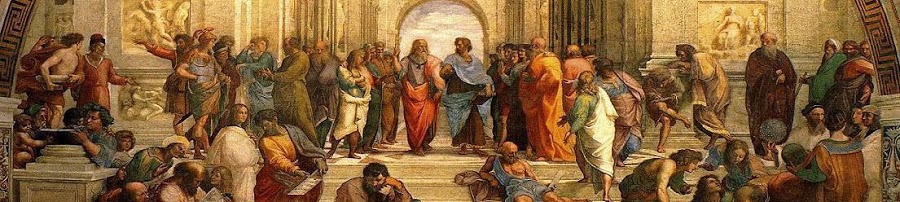
The Greek Pythagoras, for instance, was able to use abstract but simple mathematics to describe a natural phenomenon very precisely. He discovered the fractions that govern the harmonious musical notes. For example, a stretched string on a violin that produces a C note when you strike it, will give a C an octave higher when you divide its length by two. (Similarly, when we cut of a quarter of the length of the original srting, the new string will sound like an E note) This is a famous early example of the use of mathematics to describe a physical phenomenon accurately. Pythagoras used the mathematics of fractions to describe the frequency of musical notes. In the ages that followed, of Galilei, Kepler, Newton and Einstein, mathematics became the prime language to depict nature. The mathematics of numbers, sets, functions, surfaces etcetera turned out to be the most useful tool for those people that felt the urge to understand the laws governing nature.
Posted in Concepts, Einstein, Mathematics, Sound, String Theory, Witten | Tagged , , , , , | 3 Comments

Longitudinal and Transverse Information about the Energy Deposition Pattern

The calorimeter design for GLAST produces flashes of light that are used to determine how much energy is in each gamma-ray. A calorimeter (“calorie-meter”) is a device that measures the energy (heat: calor) of a particle when it is totally absorbed. CsI(Tl) bars, arranged in a segmented manner, give both longitudinal and transverse information about the energy deposition pattern. Once a gamma ray penetrates through the anticoincidence shield, the silicon-strip tracker and lead converter planes, it then passes into the cesium-iodide calorimeters. This causes a scintillation reaction in the cesium-iodide, and the resultant light flash is photoelectrically converted to a voltage. This voltage is then digitized, recorded and relayed to earth by the spacecraft’s onboard computer and telemetry antenna. Cesium-iodide blocks are arranged in two perpendicular directions, to provide additional positional information about the shower.

I am enamoured by the ideas of Nature, that such sublteness could have been defined in the cosmo with this exchange of information. That we are now looking at these events in the cosmo with some understanding, using measurements, where previously held comments about what we had understood in that same cosmo, had not shown to be of any use?

For the well informed, and those who venture into the Blog of Petter Woit, we find, that even Sean Carrol must caution Peter and thus I do the same, here, not just in regards to supersymmetry( my previous posts in early historical journey laid out in the question of Gerard t’Hooft), the ways in which interpret and map these dynamical situations?

A question is left in my mind as Gerard postulates that same universe. How would the fundamentals of quantum mechanics speak to what we had understood here.

Without some guidance and tutorial thoughts for introspection one would have to wonder about the artistic interpretation we assign the energy of this dynamical universe?

Posted in Calorimeters, Earth, Gamma, Glast, Supersymmetry | Tagged , , , , | Leave a comment

The Looking Glast

To test the claim, Gninenko has proposed a new experiment at CERN. He and his colleagues would confine orthopositronium to a sensitive heat-measuring device, called a calorimeter. The device would be under a strict vacuum to isolate its contents from collisions with other matter, which could confound the findings. Under ordinary conditions, the orthopositronium constituents—an electron and a positron—produce a specific amount of energy when they annihilate each other. But that energy simply wouldn’t be there if the orthopositronium had oscillated into its undetectable mirror form.

Posted in CERN, False Vacuum, Glast, Symmetry | Tagged , , , | Leave a comment

Universal Error Correction in Quantum Computation

Physicists have succeeded in entangling five photons for the first time. Although four photons have been entangled before, five is the minimum number needed for universal error correction in quantum computation. Moreover, the same team has demonstrated a process called “open-destination teleportation” for the first time (Z Zhao et al. 2004 Nature 430 54). The results represent a major breakthrough in efforts to exploit the laws of quantum mechanics in quantum information processing.

By taking advantage of quantum phenomena such as entanglement, teleportation and superposition, a quantum computer could, in principle, outperform a classical computer in certain computational tasks. Entanglement allows particles to have a much closer relationship than is possible in classical physics. For example, two photons can be entangled such that if one is horizontally polarized, the other is always vertically polarized, and vice versa, no matter how far apart they are. In quantum teleportation, complete information about the quantum state of a particle is instantaneously transferred by the sender, who is usually called Alice, to a receiver called Bob. Quantum superposition, meanwhile, allows a particle to be in two or more quantum states at the same time

Posted in Entanglement, Particles | Tagged , | Leave a comment

Do We Need a Radically New Spacetime/Quantum Worldview

Whether such a “quantum computer” can realistically be built with a value of L that is large enough to be of practical use is a topic of much debate. However, the mere possibility has led to an explosive renaissance of interest in the host of curious and classically counterintuitive properties associated with entangled states. Other phenomena that rely on nonlocal entanglement, such as quantum teleportation and various forms of quantum cryptography, have also been demonstrated in the laboratory

Posted in Entanglement | Tagged | Leave a comment

2004 Promises to be an Exceptionally Exciting Year in General Relativity and Gravitation

But you shouldn’t imagine the mood as one of breathless anticipation. At least for the physicists present, a better description would be something like “skeptical curiosity”. None of them seemed to believe that Hawking could suddenly shed new light on a problem that has been attacked from many angles for several decades. One reason is that Hawking’s best work was done almost 30 years ago. A string theorist I know said that thanks to work relating anti-deSitter space and conformal field theory – the so-called “AdS-CFT” hypothesis – string theorists had become convinced that no information is lost by black holes. Thus, Hawking had been feeling strong pressure to fall in line and renounce his previous position, namely that information is lost. A talk announcing this would come as no big surprise.

I couldn’t help but look through previous discussion on the subject here to try and get caught up on who thinks what, and what has been accomplished.

2004 promises to be an exceptionally exciting year in General Relativity and Gravitation: the LIGO/VIRGO/GEO/TAMA network of detectors has begun generating scientific results, ushering in the era of gravitational wave astronomy. These detectors will search for gravitational wave signals of the collision of black holes, neutron star mergers and other astronomical events previously undetectable. The fundamentally new science of gravitational wave astronomy opens up a new window on the universe. Up until now, astronomy has relied on observations of electromagnetic wave signals (e.g. visible light, radio waves). The detection of gravitational waves offers a completely new perspective on the universe: they will enable us to “hear” the cosmic orchestra as well as to see it! GR17 will provide the scientific community with one of the earliest opportunities to discuss the first scientific results of this era.

Posted in astronomy, Black Holes, Collision, General Relativity, LIGO, String Theory | Tagged , , , , , | Leave a comment