Holography and Dimensional Relevance

Holography encodes the information in a region of space onto a surface one dimension lower. It sees to be the property of gravity, as is shown by the fact that the area of th event horizon measures the number of internal states of a blackhole, holography would be a one-to-one correspondance between states in our four dimensional world and states in higher dimensions. From a positivist viewpoint, one cannot distinquish which discription is more fundamental.

Pg 198, The Universe in Nutshell, by Stephen Hawking

One had to understand what Einstein did for us, and the progression through to Riemann views. Once you get to the point of discerning geometrodynamics as a feature of that dynamical world of the fifth dimension, we soon understand what feature of the bulk has been assigned to the dimensions lower.

The higher dimensional significance of the world I am saying is beyond the forms we are accustom too.


Beyond forms

Probability of all events(fifth dimension)
vvvvvvvvvvvvv Future-Time
vvvvvvvvvvv |
vvvvvvvvv |
vvvvvvv |
vvvvv |
vvv |
v |
<<<<<<<<<<<>>>>>>>>>>now -------|
flash fourth dimension with time |
A |
AAA |
AAAAA |
AAAAAAA |
AAAAAAAAA |
AAAAAAAAAAA |
AAAA ___AAAAA |
AAAAA/__/|AAAAA____Three dimension
AAAAAA|__|/AAAAAA |
AAAAAAAAAAAAAAAAAAA |
|
___ |
/__/ brane--------two dimension
\ /
.(U)1=5th dimension

I hope this helps explain. It certainly got me thinking, drawing it:)

Posted in Dimension, Einstein, Gravity, Stephen Hawking | Tagged , , , | Leave a comment

Quantum Gravity Models

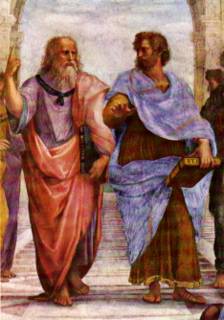
PLato saids,”Look to the perfection of the heavens for truth,” while Aristotle saids “look around you at what is if you would know the truth

Quantum Gravity

I guess we have a choice here?

Between the models of what would be percieved of, as higher dimensional realms, in terms of abstract model building, that is being produced by LQG and String/M Theory respectively?

If we were to accept forms of reality, then what artistic renditions would have made us realize that a deeper perspective exists.

What historical data would have been place before introspective artists and we reconcile that the cubists have found some satisfaction in the monte carlo explanation of membranes shown in the developing work of John Baez?

John Baez: Higher-Dimensional Algebra

and Planck-Scale Physics

A spin network

Using the relationships between 4-dimensional quantum gravity and topological quantum field theory, researchers have begun to formulate theories in which the quantum geometry of spacetime is described using `spin foams’ — roughly speaking, 2-dimensional structures made of polygons joined at their edges, with all the polygons being labelled by spins [6,11,16,23,24]. The most important part of a spin foam model is a recipe assigning an amplitude to each spin foam. Much as Feynman diagrams in ordinary quantum field theory describe processes by which one collection of particles evolves into another, spin foams describe processes by which one spin network evolves into another. Indeed, there is a category whose objects are spin networks and whose morphisms are spin foams! And like , this category appears to arise very naturally from purely -categorical considerations.

Posted in geometries, Gravity, M Theory, Particles, Quantum Gravity, String Theory | Tagged , , , , , | Leave a comment

Light From the Fifth Dimension

From a supersymmetrical stand point, this would have to make sense shining from a hyperdimensional (fifth dimensional) realm.

Plato’s cave reveals the light from these higher dimensions, and the shadows on the wall, lead to eucldidean perspectives?

Posted in Dimension, Plato's Cave | Tagged , | Leave a comment

Pythagoras Could be Called the First Known String Theorist

Pythagoras could be called the first known string theorist. Pythagoras, an excellent lyre player, figured out the first known string physics — the harmonic relationship. Pythagoras realized that vibrating Lyre strings of equal tensions but different lengths would produce harmonious notes (i.e. middle C and high C) if the ratio of the lengths of the two strings were a whole number. Pythagoras discovered this by looking and listening. Today that information is more precisely encoded into mathematics, namely the wave equation for a string with a tension T and a mass per unit length m. If the string is described in coordinates as in the drawing below, where x is the distance along the string and y is the height of the string, as the string oscillates in time,

Posted in Mathematics | Tagged , | Leave a comment

Plato: Mathematics Would Reveal the Structure of the World

We should ask why Plato’s theory is so progressive, why Aristotle’s is so archaic, and why Plato is usually given so little credit for his theory. The answer to all these is the same: Plato comes up with this kind of theory because of his Pythagorean faith that mathematics would reveal the structure of the world. Aristotle had no such faith, regarding mathematics only as a calculating device (the common opinion in the Middle Ages). In turn, Plato is usually overlooked by down-to-earth philosophers and historians of science because his Pythagorean number mysticism seems to them of a piece with the rest of his philosophy, which they regard as, in general, a mysticism unworthy of consideration. Yet modern science, which is distinctively mathematical, was set on its way by just those scientists, like Galileo Galilei and Johannes Kepler, who shared Plato’s mystical faith in mathematics. That is the most conspicuous in Kepler, whose flights of fancy, which included a science fiction book about life on the Moon (the Somnium or “Dream”), are found together with the most serious, hard mathematical breakthrough in the formulation of modern astronomy short of Isaac Newton’s own theory of universal gravitation: Kepler’s Three Laws of planetary motion.

This view of God seems to be prevalent in todays views that I have yet to produce John Baez’s view, as has been previously suggested.

Posted in astronomy, Earth, Mathematics | Tagged , , | Leave a comment

Physical Reality as a Four Dimensional Existence

Since there exist in this four dimensional structure [space-time] no longer any sections which represent “now” objectively, the concepts of happening and becoming are indeed not completely suspended, but yet complicated. It appears therefore more natural to think of physical reality as a four dimensional existence, instead of, as hitherto, the evolution of a three dimensional existence.

On the Effects of External Sensory Input on Time Dilation.” A. Einstein, Institute for Advanced Study, Princeton, N.J.

Abstract: When a man sits with a pretty girl for an hour, it seems like a minute. But let him sit on a hot stove for a minute and it’s longer than any hour. That’s relativity.

As the observer’s reference frame is crucial to the observer’s perception of the flow of time, the state of mind of the observer may be an additional factor in that perception. I therefore endeavored to study the apparent flow of time under two distinct sets of mental states.

Methods: I sought to acquire a hot stove and a pretty girl. Unfortunately, getting a hot stove was prohibitive, as the woman who cooks for me has forbidden me from getting anywhere near the kitchen. However, I did manage to surreptitiously obtain a 1924 Manning-Bowman and Co. chrome waffle iron, which is a reasonable equivalent of a hot stove for this experiment, as it can attain a temperature of a very high degree. Finding the pretty girl presented more of a problem, as I now live in New Jersey. I know Charlie Chaplin, having attended the opening of his 1931 film City Lights in his company, and so I requested that he set up a meeting with his wife, movie star Paulette Goddard, the possessor of a shayna punim, or pretty face, of a very high degree.

Discussion: I took the train to New York City to meet with Miss Goddard at the Oyster Bar in Grand Central Terminal. She was radiant and delightful. When it felt to me as if a minute had passed, I checked my watch to discover that a full 57 minutes had actually transpired, which I rounded up to one hour. Upon returning to my home, I plugged in the waffle iron and allowed it to heat up. I then sat on it, wearing trousers and a long white shirt, untucked. When it seemed that over an hour had gone by, I stood up and checked my watch to discover that less than one second had in fact passed. To maintain unit consistency for the descriptions of the two circumstances, I rounded up to one minute, after which I called a physician.

Conclusion: The state of mind of the observer plays a crucial role in the perception of time.

Einstein scholars disagree, but the pretty girl/hot stove experiment also may have led to another of his pithy remarks, namely: “If we knew what it was we were doing, it would not be called research, would it?” Then again, Einstein was a bit of a wag. Consider his explanation of wireless communication: “The wireless telegraph is not difficult to understand. The ordinary telegraph is like a very long cat. You pull the tail in New York, and it meows in Los Angeles. The wireless is the same, only without the cat.” This quote reportedly kept Schrödinger awake well past his bedtime.

http://www.sciam.com/article.cfm?articleID=0001AA08-864C-1D4

Posted in Concepts, Einstein, Hot Stove | Tagged , , | Leave a comment

Quantum Harmonic Oscillator

Let us see how these great physicists used harmonic oscillators to establish beachheads to new physics.

Albert Einstein used harmonic oscillators to understand specific heats of solids and found that energy levels are quantized. This formed one of the key bridges between classical and quantum mechanics.

Werner Heisenberg and Erwin Schrödinger formulated quantum mechanics. The role of harmonic oscillators in this process is well known.

Paul A. M. Dirac was quite fond of harmonic oscillators. He used oscillator states to construct Fock space. He was the first one to consider harmonic oscillator wave functions normalizable in the time variable. In 1963, Dirac used coupled harmonic oscillators to construct a representation of the O(3,2) de Sitter group which is the basic scientific language for two-mode squeezed states.

Hediki Yukawa was the first one to consider a Lorentz-invariant differential equation, with momentum-dependent solutions which are Lorentz-covariant but not Lorentz-invariant. He proposed harmonic oscillators for relativistic extended particles five years before Hofstadter observed that protons are not point particles in 1955. Some people say he invented a string-model approach to particle physics.

Richard Feynman was also fond of harmonic oscillators. When he gave a talk at the 1970 Washington meeting of the American Physical Society, he stunned the audience by telling us not to use Feynman diagrams, but harmonic oscillators for quantum bound states. This figure illustrates what he said in 1970.

We are still allowed to use Feynman diagrams for running waves. Feynman diagrams applicable to running waves in Einstein’s Lorentz-covariant world. Are Feynman’s oscillators Lorentz-covariant? Yes in spirit, but there are many technical problems. Then can those problems be fixed. This is the question. You may be interested in reading about this subject: Lorentz group in Feynman’s world.

Can harmonic oscillators serve as a bridge between quantum mechanics and special relativity

?

Posted in Dirac, Einstein, Harmonic Oscillator, Heisenberg, Particles | Tagged , , , , | Leave a comment

Compactifying a 3-D universe with two space dimensions and one time dimension.

How do we learn to deal with these abstract spaces, but to have considered the following:

(a) Compactifying a 3-D universe with two space dimensions and one time dimension. This is a simplification of the 5-D space­time considered by Theodor Kaluza and Oskar Klein. (b) The Lorentz symmetry of the large dimension is broken by the compactification and all that remains is 2-D space plus the U(1) symmetry represented by the arrow. (c) On large scales we see only a 2-D universe (one space plus one time dimension) with the “internal” U(1) symmetry of electromagnetism.

After doing some reading I needed to support what was being expounded on here, so I found the following for consideration.

Einstein’s special relativity was developed along Kant’s line of thinking: things depend on the frame from which you make observations. However, there is one big difference. Instead of the absolute frame, Einstein introduced an extra dimension. Let us illustrate this using a CocaCola can. It appears like a circle if you look at it from the top, while it appears as a rectangle from the side. The real thing is a three-dimensional circular cylinder. While Kant was obsessed with the absoluteness of the real thing, Einstein was able to observe the importance of the extra dimension

Posted in Compactification, Dimension, Einstein, Kaluza, Klein, Symmetry | Tagged , , , , , | Leave a comment

Plato’s Cave and Heisenberg, 21st Century with Witten

Breaking Symmetry

Here I sit in Brane world and the idea of “Pants” reaching different dimenisons seems intrigueing to me. Far beyond the views that one see from the light shining, from the open mouth of the cave, some far reaching ideas are manfesting into the world we see today. How weak then, the gravity in a world that has become solidly defined? Who entropic disorder has spoken to this solid and that solid, and from the light it all began?

Entropic Systems and Black Holes

The laws of thermodynamics, including the fact that heat energy will never flow from a colder to a hotter location, support the belief in entropy: in a closed system, energy will eventually wind down to zero

But wait by its very action, it’s collapse, the supersymmetrical reality is envisioned as heat begins to generate. So we have within this universe, a method by which moments that had been defined in our beginnings, might now find itself expressed agin in the cosmo(a closed system?)

For me if we had UNDERSTOOD THE TRUE EXPLANATION OF THE STATE OF THE UNIVERSE FROM SUPERSYMMETRICAL BEGINNINGS, THEN SUCH A VIEW FROM THE CAVE WOULD HAVE DEFINED THESE MOMENTs FOR ME, AS PLATO IN SOLID FORMS THAT CRYSTALs WOULD HAVE DESIgen according to the five elements?

And now, I said, let me show in a figure how far our nature is enlightened or unenlightened: –Behold! human beings living in a underground den, which has a mouth open towards the light and reaching all along the den; here they have been from their childhood, and have their legs and necks chained so that they cannot move, and can only see before them, being prevented by the chains from turning round their heads. Above and behind them a fire is blazing at a distance, and between the fire and the prisoners there is a raised way; and you will see, if you look, a low wall built along the way, like the screen which marionette players have in front of them, over which they show the puppets.

Plato’s Republic

[Glaucon]True, he said; how could they see anything but the shadows if they were never allowed to move their heads?

[Socrates]And of the objects which are being carried in like manner they would only see the shadows?

[Glaucon]Yes, he said.

Posted in Black Holes, Entropy, Gravity, Heisenberg, Plato's Cave, Socrates, Socratic Method, Symmetry, Symmetry Breaking, Witten | Tagged , , , , , , , , , | Leave a comment

The Sound of Gravitational Waves

Lets say that there was this challenge between the fixations of matter defined states and the Pythagorean values of sound. Have we identified the two camps exploring quantum gravity?

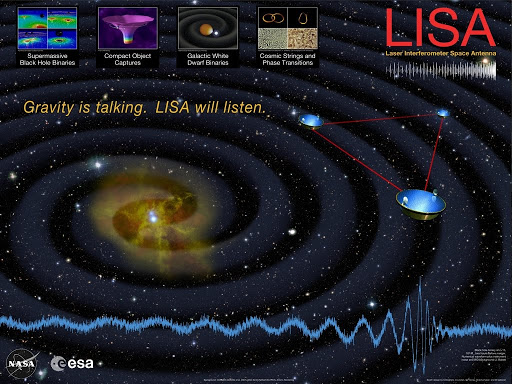
We can’t actually hear gravational waves, even with the most sophisticated equipment, because the sounds they make are the wrong frequency for our ears to hear. This is similar in principle to the frequency of dog whistles that canines can hear, but are too high for humans. The sounds of gravitional waves are probably too low for us to actually hear. However, the signals that scientists hope to measure with LISA and other gravitational wave detectors are best described as “sounds.” If we could hear them, here are some of the possible sounds of a gravitational wave generated by the movement of a small body inspiralling into a black hole.

Posted in Gravity, Quantum Gravity, Sound | Tagged , , | Leave a comment