A binaural beat is an auditory illusion perceived when two different pure-tone sine waves, both with frequencies lower than 1500 Hz, with less than a 40 Hz difference between them, are presented to a listener dichotically, that is one through each ear.[1] For example, if a 530 Hz pure tone is presented to a subject’s right ear, while a 520 Hz pure tone is presented to the subject’s left ear, the listener will perceive the auditory illusion of a third tone, in addition to the two pure-tones presented to each ear. The third sound is called a binaural beat, and in this example would have a perceived pitch correlating to a frequency of 10 Hz, that being the difference between the 530 Hz and 520 Hz pure tones presented to each ear.[2]
History
The term ‘binaural’ literally signifies ‘to hear with two ears’, and was introduced in 1859 to signify the practice of listening to the same sound through both ears, or to two discrete sounds, one through each ear. It was not until 1916 that Carl Stumpf (1848-1936), a German philosopher and psychologist, distinguished between dichotic listening, which refers to the stimulation of each ear with a different stimulus, and diotic listening, the simultaneous stimulation of both ears with the same stimulus.[3][4]
Later, it would be become apparent that binaural hearing, whether dichotic or diotic, is the means by which the geolocation and direction of a sound is determined.[5][6]
Scientific consideration of binaural hearing began before the phenomenon was so named, with the ideas articulated in 1792 by William Charles Wells (1757–1817), a Scottish-American printer, and physician at Saint Thomas’ Hospital, London. Wells sought to theoretically examine and explain aspects of human hearing, including the way in which listening with two ears rather than one might affect the perception of sound, which proceeded from his research into binocular vision.[7][8]
Subsequently, between 1796 and 1802, Giovanni Battista Venturi (1746 – 1822), an Italian physicist, savant, man of letters, diplomat, and historian of science, conducted and described a series of experiments intended to elucidate the nature of binaural hearing.[9][10][11][12] It was in an appendix to a monograph on color that Venturi described experiments on auditory localization using one or two ears, concluding that “the inequality of the two impressions, which are perceived at the same time by both ears, determines the correct direction of the sound.”[13][14]
However, none of Venturi’s contemporaries at the end of the eighteenth and beginning of the nineteenth centuries considered his original work worthy of citation or attention, with the exception of Ernst Florens Friedrich Chladni (1756–1827), a German physicist and musician, who is widely cited as the father of acoustics. After investigating the behavior of vibrating strings and plates, and examining the way in which sound appeared to be perceived, Chladni acknowledged Venturi’s work, agreeing with him that the ability to determine the location, and direction of sound depended upon detected differences in a sound between both ears, including amplitude and frequency, subsequently denoted by the term ‘interaural differences’.[15][16][17]
Other significant historic investigations into binaural hearing include those of Charles Wheatstone (1802–1875), an English scientist, whose many inventions included the concertina and the stereoscope, Ernst Heinrich Weber (1795–1878), a German physician cited as one of the founders of experimental psychology; and August Seebeck (1805–1849), a scientist at the Technische Universität, Dresden, remembered for his work on sound and hearing. Like Wells, these researchers attempted to compare and contrast what would become known as binaural hearing with the principles of binocular integration generally, and binocular color mixing specifically. They found that binocular vision did not follow the laws of combination of colors from different bands of the spectrum. Rather, it was found that when presenting a different color to each eye, they did not combine, but often competed for perceptual attention.[18][19][20][21]
Meanwhile, of Wheatstone conducted experiments in which he presented a different tuning fork to each ear, stating:
It is well known, that when two consonant sounds are heard together, a third sound results from the coincidences of their vibrations; and that this third sound, which is called the grave harmonic, is always equal to unity, when the two primitive sounds are represented by the lowest integral numbers. This being premised, select two tuning-forks the sounds of which differ by any consonant interval excepting the octave; place the broad sides of their branches, while in vibration, close to one ear, in such a manner that they shall nearly touch at the acoustic axis; the resulting grave harmonic will then be strongly audible, combined with the two other sounds; place afterwards one fork to each ear, and the consonance will be heard much richer in volume, but no audible indications whatever of the third sound will be perceived.[22]
Wheatstone’s reference to the perceptual fusion of harmonically related tones were directly related to the principles examined by Wells. However, both their observations were ignored and remained uncited by contemporaraneous and subsequent German researchers of the following decades.
Venturi’s experiments were repeated and confirmed by Lord Rayleigh (1842–1919), almost seventy-five years later.[23][24][25][26][27][28][29][30]
Other investigators of the late eighteenth and early nineteenth centuries, who were contemporaries of Lord Rayleigh, also investigated the significance of binaural hearing. These included Louis Trenchard More (1870-1944), a professor of physics, and Harry Shipley Fry (1878-1949), a lecturer in chemistry, both at the University of Cincinnati; H. A. Wilson and Charles Samuel Myers, both professors of science at King’s College London; and Alfred M. Mayer (1836 – 1897), an American physicist, each of whom conducted experimental investigations with intent to discover the means by which human subjects ascertain the location, origin, and direction of sound, believing this to be in some way dependent on dichotic hearing, that is listening to sound through both ears.[31][32][33][34]
Understanding of how the difference in sound signal between two ears contributes to auditory processing in such a way as to enable the location and direction of sound to be determined was considerably advanced after the invention of the differential stethophone by Somerville Scott Alison in 1859, who coined the term ‘binaural’. Alison based his stethophone on the stethoscope, a previous invention of René Théophile Hyacinthe Laennec (1781–1826).[35]
Unlike the stethoscope, which had only a single sound-source piece placed upon the chest, Alison’s stethophone had two separate ones, allowing the user to hear and compare sounds derived from two discreet locations. This allowed a physician to identify the source of a sound through the process of binaural hearing. Subsequently, Alison referred to his invention as a ‘binaural stethoscope’, describing it as:
…an instrument consisting of two hearing-tubes, or trumpets, or stethoscopes, provided with collecting-cups and ear-knobs, one for each ear respectively. The two tubes are, for convenience, mechanically combined, but may be said to be acoustically separate, as care is taken that the sound, once admitted into one tube, is not communicated to the other.[36][37]
Neurophysiology
Cortical Oscillation and Electroencephalography (EEG)
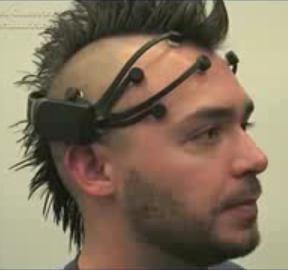
The activity of neurons generate electric currents; and the synchronous action of neural ensembles in the cerebral cortex, comprising large numbers of neurons, produce macroscopic oscillations, which can be monitored and graphically documented by an electroencephalogram (EEG). The electroencephalographic representations of those oscillations are typically denoted by the term ‘brainwaves’ in common parlance.[38][39]
Neural oscillations are rhythmic or repetitive electrochemical activity in the brain and central nervous system. Such oscillations can be characterized by their frequency, amplitude and phase. Neural tissue can generate oscillatory activity driven by mechanisms within individual neurons, as well as by interactions between them. They may also adjust frequency to synchronize with the periodicity of an external acoustic or visual stimuli.[40]
The technique of recording neural electrical activity within the brain from electrochemical readings taken from the scalp originated with the experiments of Richard Caton in 1875, whose findings were developed into electroencephalography (EEG) by Hans Berger in the late 1920s.
Frequency bands of cortical neural ensembles
The fluctuating frequency of oscillations generated by the synchronous activity of cortical neurons, measurable with an electroencephalogram (EEG), via electrodes attached to the scalp, are conveniently categorized into general bands, in order of decreasing frequency, measured in Hertz (HZ) as follows:[41][42]
In addition, three further wave forms are often delineated in electroencephalographic studies:
It was Berger who first described the frequency bands Delta, Theta, Alpha, and Beta.
Neurophysiological origin of binaural beat perception
Binaural-beat perception originates in the inferior colliculus of the midbrain and the superior olivary complex of the brainstem, where auditory signals from each ear are integrated and precipitate electrical impulses along neural pathways through the reticular formation up the midbrain to the thalamus, auditory cortex, and other cortical regions.[44][45][46][47]
Neural oscillations and mental state
Following the technique of measuring such brainwaves by Berger, there has remained a ubiquitous consensus that electroencephalogram (EEG) readings depict brainwave wave form patterns that alter over time, and correlate with the aspects of the subject’s mental and emotional state, mental status, and degree of consciousness and vigilance.[48][49][50] It is therefore now established and accepted that discreet electroencephalogram (EEG) measurements, including frequency and amplitude of neural oscillations, correlate with different perceptual, motor and cognitive states.[51][52][53][54][55][56][57][58][59][60][61]
Furthermore, brainwaves alter in response to changes in environmental stimuli, including sound and music; and while the degree and nature of alteration is partially dependent on individual perception, such that the same stimulus may precipitate differing changes in neural oscillations and correlating electroencephalogram (EEG) readings in different subjects, the frequency of cortical neural oscillations, as measured by the EEG, has also been shown to synchronize with or entrain to that of an external acoustic or photic stimulus, with accompanying alterations in cognitive and emotional state. This process is called neuronal entrainment or brainwave entrainment.
Entrainment
Meaning and Origin of the Term ‘Entrainment’
Entrainment is a term originally derived from complex systems theory, and denotes the way that two or more independent, autonomous oscillators with differing rhythms or frequencies, when situated in a context and at a proximity where they can interact for long enough, influence each other mutually, to a degree dependent on coupling force, such that they adjust until both oscillate with the same frequency. Examples include the mechanical entrainment or cyclic synchronization of two electric clothes dryers placed in close proximity, and the biological entrainment evident in the synchronized illumination of fireflies.[62]
Entrainment is a concept first identified by the Dutch physicist Christiaan Huygens in 1665 who discovered the phenomenon during an experiment with pendulum clocks: He set them each in motion and found that when he returned the next day, the sway of their pendulums had all synchronized.[63]
Such entrainment occurs because small amounts of energy are transferred between the two systems when they are out of phase in such a way as to produce negative feedback. As they assume a more stable phase relationship, the amount of energy gradually reduces to zero, with system of greater frequency slowing down, and the other speeding up.[64]
Subsequently, the term ‘entrainment’ has been used to describe a shared tendency of many physical and biological systems to synchronize their periodicity and rhythm through interaction. This tendency has been identified as specifically pertinent to the study of sound and music generally, and acoustic rhythms specifically. The most ubiquitous and familiar examples of neuromotor entrainment to acoustic stimuli is observable in spontaneous foot or finger tapping to the rhythmic beat of a song.
Exogenous entrainment
Exogenous rhythmic entrainment, which occurs outside the body, has been identified and documented for a variety of human activities, which include the way people adjust the rhythm of their speech patterns to those of the subject with whom they communicate, and the rhythmic unison of an audience clapping.[65]
Even among groups of strangers, the rate of breathing, locomotive and subtle expressive motor movements, and rhythmic speech patterns have been observed to synchronize and entrain, in response to an auditory stimuli, such as a piece of music with a consistent rhythm.[66][67][68][69][70][71][72] Furthermore, motor synchronization to repetitive tactile stimuli occurs in animals, including cats and monkeys as well as humans, with accompanying shifts in electroencephalogram (EEG) readings.[73][74][75][76][77]
Endogenous entrainment
Examples of endogenous entrainment, which occurs within the body, include the synchronizing of human circadian sleep-wake cycles to the 24-hour cycle of light and dark.[78] and the synchronization of a heartbeat to a cardiac pacemaker.[79]
Brainwave entrainment
Brainwaves, or neural oscillations, share the fundamental constituents with acoustic and optical wave forms, including frequency, amplitude, and periodicity. Consequently, Huygens’ discovery precipitated inquiry into whether or not the synchronous electrical activity of cortical neural ensembles might not only alter in response to external acoustic or optical stimuli but also entrain or synchronize their frequency to that of a specific stimulus.[80][81][82][83]
Brainwave entrainment is a colloquialism for such ‘neural entrainment’, which is a term used to denote the way in which the aggregate frequency of oscillations produced by the synchronous electrical activity in ensembles of cortical neurons can adjust to synchronize with the periodicity of an external stimuli, such as a sustained acoustic frequency perceived as pitch, a regularly repeating pattern of intermittent sounds, perceived as rhythm, or a regularly rhythmically intermittent flashing light.
The frequency following response and auditory driving
The hypothesized entrainment of neural oscillations to the frequency of an acoustic stimulus occurs by way of the Frequency following response (FFR), also referred to as Frequency Following Potential (FFP). The use of sound with intent to influence brainwave cortical brainwave frequency is called auditory driving.[84][85]
Auditory driving refers to the hypothesized ability for repetitive rhythmic auditory stimuli to ‘drive’ neural electric activity to entrain with it. By the principles of such hypotheses, it is proposed that, for example, a subject who hears drum rhythms at 8 beats per second, will be influenced such that an electroencephalogram (EEG) reading will show an increase brainwave activity at 8 Hz range, in the upper theta, lower alpha band.
Binaural beats and neural entrainment
One of the problems inherent in any scientific investigation conducted in order to ascertain whether brainwaves can entrain to the frequency of an acoustic stimulus is that human subjects rarely hear frequencies below 20 Hz, which is exactly the range of Delta, Theta, Alpha, and low to mid Beta brainwaves.[86][87] Among the methods by which some investigations have sought to overcome this problem is to measure electroencephalogram (EEG) readings of a subject while he or she listens to binaural beats. Subsequent to such investigations, there is significant evidence to show that such listening precipitates auditory driving by which ensembles of cortical neurons entrain their frequencies to that of the binaural beat, with associated changes in self-reported subjective experience of emotional and cognitive state.[88][89][90][91][92][93][94][95][96][97][98][99][100][101][102][103]
Binaural beats and music
Many of the aforementioned reports are based on the use of auditory stimuli that combines binaural beats with other sounds, including music and verbal guidance. This consequently precludes the attribution of any influence on or positive outcome for the listener specifically to the perception of the binaural beats.[104] Very few studies have sought to isolate the effect of binaural beats on listeners. However, initial findings in one experiment suggest that listening to binaural beats may exert an influence on both Low Frequency and High
Frequency components of heart rate variability, and may increase subjective feelings of relaxation.[105]
Notwithstanding this problem, a review of research findings suggest that listening to music and sound can modulate autonomic arousal through entrainment of neural oscillations. Furthermore, music generally, and rhythmic patterns, such as those produced by percussive performance including drumming specifically, have been shown to influence arousal ergotropically and trophotropically, increasing and decreasing arousal respectively.[106] Such auditory stimulation has been demonstrated to improve immune function, facilitate relaxation, improve mood, and contribute to the alleviation of stress.[107][108][109][110][111][112][113][114]
Meanwhile, the therapeutic benefits of listening to sound and music, whether or not the outcome can be attributed to neural entrainment, is a well-established principle upon which the practice of receptive music therapy is founded. The term ‘receptive music therapy’ denotes a process by which patients or participants listen to music with specific intent to therapeutically benefit; and is a term used by therapists to distinguish it from ‘active music therapy’ by which patients or participants engage in producing vocal or instrumental music.[115]
Receptive music therapy is an effective adjunctive intervention suitable for treating a range of physical and mental conditions.[116]
Meanwhile, the evident changes in neural oscillations precipitated by listening to music, which are demonstrable through electroencephalogram (EEG) measurements,[117][118][119][120][121][122] have contributed to the development of neurologic music therapy, which uses music and song as an active and receptive intervention, to contribute to the treatment and management of disorders characterized by impairment to parts of the brain and central nervous system, including stroke, traumatic brain injury, Parkinson’s disease, Huntington’s disease, cerebral palsy, Alzheimer’s disease, and autism.[123][124][125]
Non ordinary states of consciousness
Historically, music generally, and percussive performance specifically was and remains integral to ritual ceremony and spiritual practice among early and indigenous peoples and their descendants, where it is often used to induce the non ordinary state of consciousness (NOSC) believed by participants to be a requisite for communication with spiritual energies and entities.[126][127]
While there is no scientific evidence for existence of such energy or entities, and thereby nor the human capacity to communicate with them, the findings of some contemporary research suggests that listening to rhythmic sounds, especially percussion, can induce the subjective experience of a non ordinary states of consciousness (NOSC), with correlating electroencephalogram (EEG) profiles comparable to those associated with some forms of meditation, while also increasing the susceptibility to hypnosis.[128][129][130][131] Specifically, some investigations show that the electroencephalogram (EEG) readings attained while a subject is meditating are comparable to those taken while he or she is listening to binaural beats, characterized by increased activity in the Alpha and Theta bands.[132][133][134][135][136]
See also
References
McConnell, P. A., Froeliger, B., Garland, E. L., Ives, J. C., & Sforzo, G. A., Auditory driving of the autonomic nervous system: Listening to theta-frequency binaural beats post-exercise increases parasympathetic activation and sympathetic withdrawal. Frontiers in Psychology, Vol. 5, p2014.
Draganova R., Ross B., Wollbrink A., Pantev C. (2008). Cortical steady-state responses to central and peripheral auditory beats. Cerebral Cortex Vol. 18, 2008, pp1193–1200.
Stumpf, C., Binaurale Tonmischung, Mehrheitsschwelle und Mitteltonbildung, Zeitschrift für Psychologie Vol. 75, 1916, pp330-350.
Wade, N. J. and Ono, H., From dichoptic to dichotic: historical contrasts between binocular vision and binaural hearing, Perception Vol. 34, 2005, pp645-668.
Beyer, R. T., Sounds of Our Times: Two Hundred Years of Acoustics. Mellville, NY: American Institute of Physics, 1998.
Alison, S. S., On the differential stethophone, and some new phenomena observed by it, Proceedings of the Royal Society of London 9,1859, pp196-209.
Wells, W. C., An Essay upon Single Vision with two Eyes: together with Experiments and Observations on several other Subjects in Optics. London: Cadell, 1792.
Wade, N. J., Destined for Distinguished Oblivion: The Scientific Vision of William Charles Wells (1757-1817). New York, NY: Kluwer-Plenum, 2003.
Venturi, J. B., Considérations sur la connaissance de l’étendue que nous donne le sens de l’ouïe,”Magasin Encyclopédique, ou Journal des Sciences, des Lettres et des Arts 3, 1796, pp29-37.
Venturi, J. B., Betrachtungen über die Erkenntniss des Raums durch den Sinn des Gohörs,” Magazin für den neuesten Zustand der Naturkunde 2, 1800, pp1-16.
Venturi, J. B., Riflessioni sulla conoscenza dello spazio, che noi possiamo ricavar dall’udito, in Indagine Fisica sui Colori by G. Venturi (Tipografica, Modena), 1801, pp. 133-149.
Venturi, J. B., Betrachtungen über die Erkenntniss der Entfernung, die wir durch das Werkzeug des Gehörs erhalten,” Archiv für die Physiologie 5, 1802, pp383-392.
Venturi, J. B., Riflessioni sulla conoscenza dello spazio, che noi possiamo ricavar dall’udito, in Indagine Fisica sui Colori by G. Venturi (Tipografica, Modena), 1801, pp. 133-149.
Venturi, J. B., Betrachtungen über die Erkenntniss der Entfernung, die wir durch das Werkzeug des Gehörs erhalten,” Archiv für die Physiologie 5, 1802, pp383-392.
Chladni, E. F. F., Entdeckungen über die Theorie des Klanges. Leipzig : Weidmanns Erben und Reich, 1787.
Chladni, E. F. F., Die Akustik. Leipzig: Breitkopf und Härtel, 1802.
Chladni, E. F. F., Traité d’Acoustique (Paris: Courcier, 1809.
Seebeck, A., Beiträge zur Physiologie des Gehör- und Gesichtssinnes, Annalen der Physik und Chemie Vol. 68, 1846, pp449-465.
Wade, N. J., Destined for Distinguished Oblivion: The Scientific Vision of William Charles Wells (1757-1817). New York, NY: Kluwer-Plenum, 2003.
Wade, N. J., A Natural History of Vision, Cambridge, MA: MIT Press, 1998.
Wade, N. J. and Ono, H., From dichoptic to dichotic: historical contrasts between binocular vision and binaural hearing, Perception Vol. 34, 2005, pp645-668.
Wheatstone, C., Experiments on audition, Quarterly Journal of Science, Literature and Art, Vol. 24, 1827, pp67-72.
Lord Rayleigh, Our perception of the direction of a source of sound, Nature Vol. 7, 1876, pp32-33.
Lord Rayleigh, On Our Perception of the Direotion of a Source of Sound. Proceedings of the Musical Association, Vol. 2, No. 1, 1875, pp75-84.
Lord Rayleigh, Acoustical observations. III. The London, Edinburgh, and Dublin Philosophical Magazine and Journal of Science, Vol. 9, No. 56, 1880, pp278-283.
Lord Rayleigh, On our perception of sound direction, Philosophical Magazine, Series 6, Vol. 13, No. 74, 1907, pp214-232.
Lord Rayleigh, Acoustical notes, Philosophical Magazine, Series 6, Vol. 13, No. 75, 1907, pp316-333.
Lord Rayleigh, Acoustical observations. Philosophical Magazine Series 5, Vol. 3, No. 20, 1877, pp.456-464.
Lord Rayleigh, Acoustical observations, The London, Edinburgh, and Dublin Philosophical Magazine and Journal of Science, Vol. 9, No. 56, 1880, pp278-283.
Lord Rayleigh, Acoustical observations, Philosophical Magazine, Series 5, Vol. 13, No. 82, 1882, pp340-347.
Beyer, R. T., Sounds of Our Times: Two Hundred Years of Acoustics. Mellville, NY: American Institute of Physics, 1998.
More, L. T. and Fry, H. S., On the appreciation of difference of phase of sound-waves, Philosophical Magazine, Series 6, Vol. 13, No. 76, 1907, pp452-459.
Wilson, H. A. and Myers, C. S., The influence of binaural phase differences on the localisation of sounds, British Journal of Psychology, Vol. 2, No. 4, 1908, pp363–385.
Mayer, A. M., Researches in acoustics, Philosophical Magazine, Series 4, Vol. 49, No. 326, 1875, pp352-365.
Laennec, R. T. H., Traité de l’Auscultation Médiate. Paris: Chaudé, 1819.
Alison, S. S., The physical examination of the chest in pulmonary consumption and its intercurrent diseases. British and Foreign Medico-Chirurgical Review 28, 1861, pp145-154.
Alison, S. S., On the differential stethophone, and some new phenomena observed by it, Proceedings of the Royal Society of London 9,1859, pp196-209.
da Silva, F. L., Neural mechanisms underlying brain waves: from neural membranes to networks. Electroencephalography and Clinical Neurophysiology, Vol. 79, No. 2, 1991, pp81-93.
Cooper, R., Winter, A., Crow, H., and Walter, W. G., Comparison of subcortical, cortical, and scalp activity using chronically indwelling electrodes in man. Electroencephalography and Clinical Neurophysiology, Vol. 18, 1965, pp217–230.
Niedermeyer E. and da Silva F.L., Electroencephalography: Basic Principles, Clinical Applications, and Related Fields. Lippincot Williams & Wilkins, 2004.
da Silva, F. H., and van Leeuwan, W., The cortical alpha rhythm in and the depth and surface profile of phase. In Brazier, M. A. B. and Petsche, H., (Eds.), Architectonics of the Cerebral Cortex. New York, NY: Raven Press, 1978.
da Silva, F. H., Neural mechanism underlying brain waves: From neural membranes to networks. Electroencephalography and Clinical Neurophysiology, Vol. 79, 1991, pp81–93.
Deuschl, G., and Eisen, A., Recommendations for the practice of clinical neurophysiology. Guidelines of the International Federation of Clinical Neurophysiology. Electroencephalography and Clinical Neurophysiology Supplement, 1999.
Smith J. C., Marsh J. T. and Brown W. S. Far-field recorded frequency-following responses: evidence for the locus of brainstem sources. Electroencephalogr. Clin. Neurophysiol. Vol., 1975, pp465–472.
Oster, G., Auditory beats in the brain. Scientific American, Vol. 229, No. 4, 1973, pp94-102.
Swann R., Bosanko S., Cohen R., Midgley R., Seed K. M.,The Brain – A User’s Manual. New York, NY: G. P. Putnam and Sons, 1982.
Draganova R., Ross B., Wollbrink A., Pantev C., Cortical steady-state responses to central and peripheral auditory beats. Cerebral Cortex Vol. 18, 2008, pp1193-1200.
Trzepacz, P. T., and Baker, R. W., The psychiatric mental status examination. Oxford, UK: Oxford University Press, 1993.
Engel, A. K., and Singer, W., Temporal binding and the neural correlates of sensory awareness. Trends in cognitive sciences, Vol. 5, No. 1, 2001, pp16-25.
Varela, F., Lachaux, J. P., Rodriguez, E., and Martinerie, J.,The brainweb: phase synchronization and large-scale integration. Nature Reviews Neuroscience, Vol. 2, No. 4, 2001, pp229-239.
Anokhin, A. P., Lutzenberger, W., and Birbaumer, N., Spatiotemporal organization of brain dynamics and intelligence: An EEG study in adolescents. The International Journal of Psychophysiology, Vol. 33, 1999, pp259–273.
Başar, E., Başar-Eroglu, C., Karakas, S., and Schürmann, M., Brain oscillations in perception and memory. International Journal of Psychophysiology, Vol. 35, 2000, pp95–124.
Burgess, A. P., and Gruzelier, J. H., Short duration synchronization of human theta rhythm during recognition memory. NeuroReport, 8, 1997, pp1039-1042.
Eckhorn, R., Bauer, R., Jordan, W., Brosch, M., Kruse, W., Munk, M., and Reitboeck, H. J., Coherent oscillations: A mechanism of feature linking in the visual cortex? Multiple electrode and correlation analyses in the cat. Biological Cybernetics, Vol. 60, 1988, pp121–130.
Engel, A. K., Konig, P., Kreiter, A. K., & Singer, W., Interhemispheric synchronization of oscillatory neuronal responses in cat visual cortex. Nature, Vol. 252, 1991, pp1177-1179.
Klimesch, W., EEG alpha and theta oscillations reflect cognitive and memory performance: A review and analysis. Brain Research Reviews, Vol. 29, 1999, pp169-195.
Klimesch, W., Schimke, H., & Schwaiger, J., Episodic and semantic memory: An analysis in the EEG theta and alpha band. Electroencephalography and Clinical Neurophysiology, Vol. 91, 1994, pp428-441.
Miltner, W. H. R., Braun, C., Arnold, M., Witte, M., and Taub, E., Coherence of gamma-band EEG activity as a basis for associative learning. Nature, Vol. 397, 1999, pp434-436.
Rodriguez, E., George, N., Lachaux, J., Martinerie, J., Renault, B., and Varela, F., Perceptions shadow: Long-distance synchronization of human brain activity. Nature, Vol. 397, 1999, pp430–433.
Tallon-Baudry, C., Bertrand, O., and Fischer, C., Oscillatory synchrony between human extrastriate areas during visual short-term memory maintenance. Journal of Neuroscience, Vol. 21, No. 15, 2001, RC177.
Tallon, C., Bertrand, O., Bouchet, P., and Pernier, J. (1995). Gamma-range activity evoked by coherent visual stimuli in humans. European Journal of Neuroscience, Vol. 7, 1995, pp1285-1291.
Néda, Z., Ravasz, E., Brechet, Y., Vicsek, T., & Barabsi, A. L., Self-organizing process: The sound of many hands clapping. Nature, Vol. 403, 2000, pp849–850.
Pantaleone, J., Synchronization of Metronomes. American Journal of Physics, Vol. 70, 2002 pp992–1000.
Bennett, M., Schatz, M. F., Rockwood, H., and Wiesenfeld, K., Huygens’s clocks. Proceedings: Mathematics, Physical and Engineering Sciences, 2002, pp563-579.
Néda, Z., Ravasz, E., Brechet, Y., Vicsek, T., & Barabsi, A. L., Self-organizing process: The sound of many hands clapping. Nature, Vol. 403, 2000, pp849–850.
Haas, F., Distenfeld, S., & Axen, K., Effects of perceived musical rhythm on respiratory pattern. Journal of Applied Physiology, Vol. 61, No. 3, 1986, pp1185–1191.
Safranek, M., Koshland, G., and Raymond, G., Effect of auditory rhythm on muscle activity. Physical Therapy, Vol. 62, 1982, pp161–168.
Thaut, M.H., Schleiffers, S., and Davis, W.B., Changes in EMG patterns under the influence of auditory rhythm. In Spintge, R. and Droh, R. (Eds.), Music Medicine St. Louis, MO: MMB Music, 1992.
Thaut, M. H., McIntosh, G. C., Prassas, S. G., and Rice, R. R., Effect of rhythmic cuing on temporal stride parameters and EMG patterns in hemiparetic stroke patients. Journal of Neurologic Rehabilitation, Vol. 7, 1993, pp9–16.
Thaut, M., McIntosh, G., Prassas, S., and Rice, R., Effect of rhythmic cuing on temporal stride parameters and EMG patterns in normal gait. Journal of Neurologic Rehabilitation, Vol. 6, 1992, pp185–190.
McIntosh, G.C., Thaut, M.H., and Rice, R.R., 1996. Rhythmic auditory stimulation as entrainment and therapy technique in gait of stroke and Parkinson’s disease patients. In Pratt, R. and. Spintge, R., (Eds.), Music Medicine. St. Louis, MO: MMB Music, 1996.
Condon, W. S., Multiple response to sound in dysfunctional children. Journal of Autism and Childhood Schizophrenia, Vol. 5, No. 1, 1975, p43.
Pompeiano, O., and Swett, J. E., EEG and behavioral manifestations of sleep induced by cutaneous nerve stimulation in normal cats. Archives Italiennes de Biologie, Vol. 100, 1962, pp311–342.
Walter, D. O., and Adey, W. R., Linear and nonlinear mechanisms of brainwave generation. Annals of the New York Academy of Sciences, Vol. 128, 1966, pp772–780.
Namerow, N. S., Sclabassi, R. J., and Enns, N. F., Somatosensory responses to stimulus trains: Normative data. Electroencephalography and Clinical Neurophysiology, Vol. 37, 1974, pp11–21.
Gavalas, R. J., Walter, D. O., Hamer, J., and Adey, W. R., Effects of low-level, low-frequency electric fields on EEG and behavior in Macaca uemestriua. Brain Research, Vol. 18, 1970, pp491–501.
Buzsáki, G., Rhythms of the Brain. New York, NY: Oxford University Press, 2006.
Clayton M., Sager R., and Will U., In time with the music: the concept of entrainment and its significance for ethnomusicology. In European Meetings in Ethnomusicology Vol. 11, 2005, pp3-142.
Cvetkovic D., Powers R., and Cosic I., Preliminary evaluation of electroencephalographic entrainment using thalamocortical modelling. Expert Systems, Vol. 26, 2009, pp320-338.
Will, U., and Berg, E., Brainwave synchronization and entrainment to periodic stimuli. Neuroscience Letters, Vol. 424, 2007, pp55–60.
Cade, G. M. and Coxhead, F., The awakened mind, biofeedback and the development of higher states of awareness. New York, NY: Delacorte Press, 1979.
Neher, A., Auditory driving observed with scalp electrodes in normal subjects. Electroencephalography and Clinical Neurophysiology, Vol. 13, 1961, pp449–451.
Zakharova, N. N., and Avdeev, V. M., Functional changes in the central nervous system during music perception. Zhurnal vysshei nervnoi deiatelnosti imeni IP Pavlova Vol. 32, No. 5, 1981, pp915-924.
Burkard, R., Don, M., and Eggermont, J. J., Auditory evoked potentials: Basic principles and clinical application. Philadelphia, PA: Lippincott Williams & Wilkins, 2007.
Worden, F.G.; Marsh, J.T., Frequency-following (microphonic-like) neural responses evoked by sound. Electroencephalography and Clinical Neurophysiology Vol. 25, No. 1, 1968, pp42–52.
Rosen, S. and Howell, P., Signals and Systems for Speech and Hearing. Bingley, UK: Emerald, 2001.
Rossing, T., (2007). Springer Handbook of Acoustics. Berlin, Springer: 2007.
Wahbeh, H., Calabrese, C., and Zwickey, H., Binaural beat technology in humans: a pilot study to assess psychologic and physiologic effects. The Journal of Alternative and Complementary Medicine, Vol. 13, No. 1, 2007, pp25-32.
Becher, A. K., Höhne, M., Axmacher, N., Chaieb, L., Elger, C. E., and Fell, J., Intracranial electroencephalography power and phase synchronization changes during monaural and binaural beat stimulation. European Journal of Neuroscience, Vol. 41, No. 2, 2015, pp254-263.
Solcà, M., Mottaz, A., and Guggisberg, A. G, Binaural beats increase interhemispheric alpha-band coherence between auditory cortices. Hearing research, 2015.
Guruprasath, G., and Gnanavel, S., Effect of continuous and short burst binaural beats on EEG signals. In Innovations in Information, Embedded and Communication Systems (ICIIECS), 2015 International Conference, 2015, IEEE.
Jirakittayakorn, N., and Wongsawat, Y., The brain responses to different frequencies of binaural beat sounds on QEEG at cortical level. In Engineering in Medicine and Biology Society (EMBC), 2015. 37th Annual International Conference of the IEEE, 2015.
Becher, A. K., Höhne, M., Axmacher, N., Chaieb, L., Elger, C. E., and Fell, J. (2015). Intracranial electroencephalography power and phase synchronization changes during monaural and binaural beat stimulation. European Journal of Neuroscience, Vol. 41, No. 2, 2015, pp254-263.
Mihajloski, T. (2015). Characterization of Auditory Evoked Potentials From Transient Binaural beats Generated by Frequency Modulating Sound Stimuli. Doctoral Thesis, University of Miami, 2015.
Becher, A. K., Höhne, M., Axmacher, N., Chaieb, L., Elger, C. E., and Fell, J., Intracranial electroencephalography power and phase synchronization changes during monaural and binaural beat stimulation. European Journal of Neuroscience, Vol. 41, No. 2, 2015, pp254-263.
Vernon, D., Peryer, G., Louch, J., and Shaw, M.,Tracking EEG changes in response to alpha and beta binaural beats. International Journal of Psychophysiology, Vol. 93, No. 1, 2014, pp134-139.
Gao, X., Cao, H., Ming, D., Qi, H., Wang, X., Wang, X., … and Zhou, P., Analysis of EEG activity in response to binaural beats with different frequencies. International Journal of Psychophysiology, Vol. 94, No. 3, 2014, pp399-406.
Forster, J., Bader, L., Heßler, S., Roesler, O., and Suendermann, D. A., First Step Towards Binaural Beat Classification Using Multiple EEG Devices. In Proceedings of the International Conference on Applied Informatics for Health and Life Sciences, Kusadasi, Turkey, October 2014.
On, F. R., Jailani, R., Norhazman, H., and Zaini, N. M., Binaural beat effect on brainwaves based on EEG. In Signal Processing and its Applications (CSPA), 2013 IEEE 9th International Colloquium, 2013, IEEE.
Kasprzak, C. (2011). Influence of binaural beats on EEG signal. Acta physica polonica, Vol. 119, No. 6A, 2011, pp986-990.
Pratt, H., Starr, A., Michalewski, H. J., Dimitrijevic, A., Bleich, N., and Mittelman, N., Cortical evoked potentials to an auditory illusion: binaural beats. Clinical neurophysiology, Vol. 120, No. 8, 2009, pp1514-1524.
Karino, S., Yumoto, M., Itoh, K., Uno, A., Yamakawa, K., Sekimoto, S., and Kaga, K. (2006). Neuromagnetic responses to binaural beat in human cerebral cortex. Journal of neurophysiology, Vol. 96, No. 4, 2006, pp1927-1938.
Cvetkovic, D., Cosic, I., and Djuwari, D.,The induced rhythmic oscillations of neural activity in the human brain. In Proceedings of IASTED (Biomedical Engineering), 2004.
McConnell, P. A., Froeliger, B., Garland, E. L., Ives, J. C., & Sforzo, G. A., Auditory driving of the autonomic nervous system: Listening to theta-frequency binaural beats post-exercise increases parasympathetic activation and sympathetic withdrawal. Frontiers in Psychology, Vol. 5, 2014.
McConnell, P. A., Froeliger, B., Garland, E. L., Ives, J. C., & Sforzo, G. A., Auditory driving of the autonomic nervous system: Listening to theta-frequency binaural beats post-exercise increases parasympathetic activation and sympathetic withdrawal. Frontiers in Psychology, Vol. 5, 2014.
Trost W. and Vuilleumier P., Rhythmic entrainment as a mechanism for emotion induction by music: a neurophysiological perspective. In The Emotional Power of Music: Multidisciplinary Perspectives on Musical Arousal, Expression, and Social Control, Cochrane T., Fantini B., and Scherer K. R., (Eds.), Oxford, UK: Oxford University Press; 2013, pp213–225.
Szabó, C., The effects of monotonous drumming on subjective experiences. Music Therapy Today, Vol. 1, 2004, 2004, pp. 1-9.
Bittman, B. B., Berk, L. S., Felten, D. L., Westengard, J., Simonton, O. C., Pappas, J., and Ninehouser, M., Composite effects of group drumming music therapy on modulation of neuroendocrine-immune parameters in normal subjects. Alternative Therapeutic Health Medicine, Vol. 1, 2001, pp38–47.
Wachiuli, M., Koyama, M., Utsuyama, M., Bittman, B. B., Kitagawa, M., and Hirokawa, K., Recreational music-making modulates natural killer cell activity, cytokines, and mood states in corporate employees. Medical Science Monitor, Vol. 13, No. 2, 2007, CR57–70.
Bittman, B., Bruhn, K. T., Stevens, C., & Westengard, J., and Umbach, P. O., Recreational music-making: A cost-effective group interdisciplinary strategy for reducing burnout and improving mood states in long-term care workers. Advanced Mind Body Medicine, Vol. 19, Nos. 3-4, 2003, p16.
Bittman, B. B., Snyder, C., Bruhn, K. T., Liebfreid, F., Stevens, C. K., Westengard, J., and Umbach, P. O., Recreational music-making: An integrative group intervention for reducing burnout and improving mood states in first year associate degree nursing students: Insights and economic impact. International Journal of Nursing Education Scholarship, Vol. 1, Article 12, 2004.
Walton, K., and Levitsky, D., A neuroendocrine mechanism for the reduction of drug use and addictions by transcendental meditation. In O’Connell, D. and Alexander, C. (Eds.), Self-recovery: Treating addictions using transcendental meditation and Maharishi Ayur-Veda. New York, NY: Haworth, 1994.
Szabó, C., The effects of monotonous drumming on subjective experiences. Music Therapy Today, Vol. 1, 2004, pp. 1–9.
Winkelman, M., Complementary therapy for addiction: Drumming out drugs. The American Journal of Public Health, Vol. 93, 2003, pp647–651.
Bruscia, K., Defining music therapy. Barcelona: Gilsum, NH, 1998.
Grocke, D., and Wigram, T. (2007). Receptive methods in music therapy: Techniques and clinical applications for music therapy clinicians, educators, and students. London, England: Jessica Kingsley, 2007.
Wagner, M. J., Brainwaves and biofeedback. A brief history – Implications for music research. Journal of Music Therapy, Vol. 12, No. 2, 1975, pp46-58.
Fikejz, F., Influence of music on human electroencephalogram. In Applied Electronics (AE), International Conference, 2011.
Ogata, S., Human EEG responses to classical music and simulated white noise: effects of a musical loudness component on consciousness. Perceptual and Motor Skills Vol. 80, No. 3, 1995, pp779-790.
Lin, Y. P., Yang, Y. H., and Jung, T. P., Fusion of electroencephalographic dynamics and musical contents for estimating emotional responses in music listening. Frontiers in Neuroscience, Vol. 8, 2014.
Nakamura, S., Sadato, N., Oohashi, T., Nishina, E., Fuwamoto, Y., and Yonekura, Y., Analysis of music–brain interaction with simultaneous measurement of regional cerebral blood flow and electroencephalogram beta rhythm in human subjects. Neuroscience letters, Vol. 275, No. 3, 1999, pp222-226.
Karthick, N. G., Thajudin, A. V. I., and Joseph, P. K., Music and the EEG: a study using nonlinear methods. In Biomedical and Pharmaceutical Engineering, 2006. Biomedical and Pharmaceutical Engineering, International Conference, Singapore, 2006.
Thaut, M. H., Peterson, D. A., & McIntosh, G. C. (2005). Temporal entrainment of cognitive functions. Annals of the New York Academy of Sciences, 1060(1), 243-254
Thaut, M.,Training manual for neurologic music therapy. Colorado State University: Center for Biomedical Research in Music, 1999.
Thaut, M. H., Neurologic music therapy in cognitive rehabilitation. Music Perception, Vol. 27, No. 4, 2010, pp281-285.
Winkelman, M. (1997). Altered states of consciousness and religious behavior. In Glazier, S., (Ed.), Anthropology of Religion: A Handbook of Method and Theory. Westport, CT: Greenwood Press, 1997.
Rouget, G., Music and Trance: A Theory of the Relations Between Music and Possession. Chicalgo, IL: University of Chicago Press, 1985.
Maurer, R. L., Sr., Kumar, V. K., Woodside, L., and Pekala, R. J., Phenomenological experience in response to monotonous drumming and hypnotizability. American Journal of Clinical Hypnosis, Vol. 40, No. 2, 1997, pp130–145.
Mandell, A., Toward a psychobiology of transcendence: God in the brain. In Davidson, D. and Davidson, R., (Eds.), The Psychobiology of Consciousness New York, NY: Plenum Press, 1980.
Winkelman, M., Shamanism: The Neural Ecology of Consciousness and Healing. Westport, CT: Bergin and Garvey, 2000.
Stevens, L., Haga, Z., Queen, B., Brady, B., Adams, D., Gilbert, J., and McManus, P., Binaural beat induced theta EEG activity and hypnotic susceptibility: contradictory results and technical considerations. American Journal of Clinical Hypnosis, Vol. 45, No. 4, 2003, pp295-309.
Yamsa-ard, T., and Wongsawat, Y., The observation of theta wave modulation on brain training by 5 Hz-binaural beat stimulation in seven days. In Engineering in Medicine and Biology Society (EMBC), 37th Annual International Conference of the IEEE, 2015.
Gifari, M. W., Said, S. M., Lam, J., JALIL, N., and Supriyanto, E. Binaural Beat Entrainment Effect on Prefrontal and Parietal Brain EEG in Theta Frequency. Proceedings of the 11th International Conference on Cellular and Molecular Biology, Biophysics and Bioengineering, 2015.
Pfaff, H. U., Psychophysiological reactivity to auditory Binaural Beats stimulation in the alpha and theta EEG brain-wave frequency bands: A randomized, double–blind and placebo–controlled study in human healthy young adult subjects. Masters Thesis. Universidad Autonoma Madrid, 2014.
Yamsa-ard, T., and Wongsawat, Y., The relationship between EEG and binaural beat stimulation in meditation. In Proceedings of the Biomedical Engineering International Conference (BMEiCON), 2014, IEEE.
Puzi, N. M., Jailani, R., Norhazman, H., and Zaini, N. M. (2013, March). Alpha and Beta brainwave characteristics to binaural beat treatment. In Signal Processing and its Applications (CSPA), 9th International Colloquium, 2013, IEEE.
Further reading
- Thaut, M. H., Rhythm, Music, and the Brain: Scientific Foundations and Clinical Applications (Studies on New Music Research). New York, NY: Routledge, 2005.
- Berger, J. and Turow, G. (Eds.), Music, Science, and the Rhythmic Brain : Cultural and Clinical Implications. New York, NY: Routledge, 2011.
External links















 Dialogos of Eide