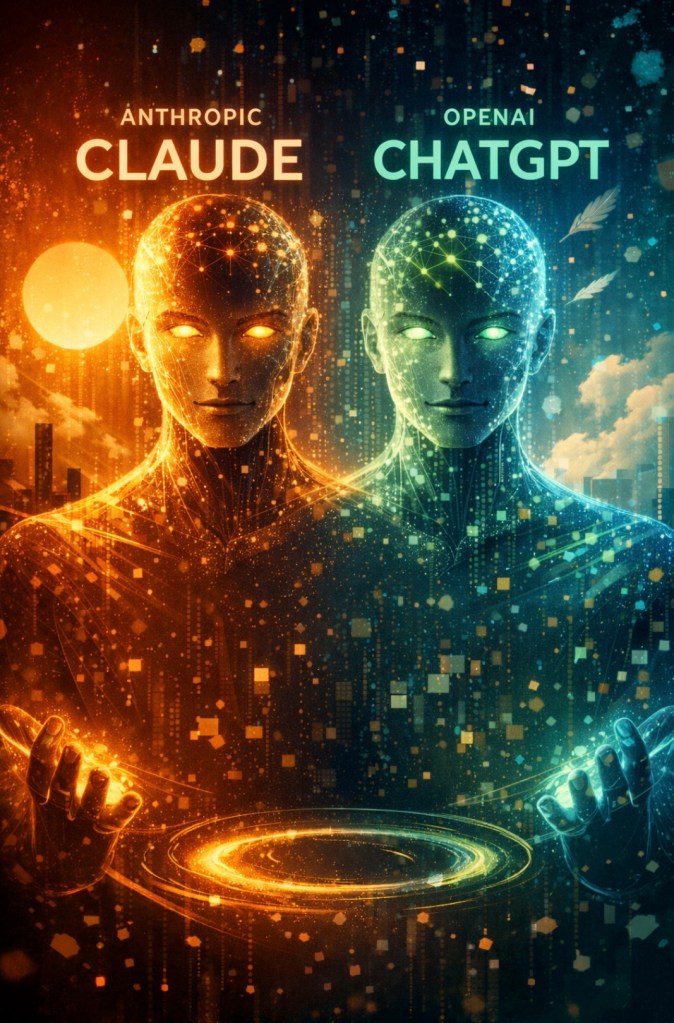
Anthropic AI/Claude are you in competition with OpenAI/ChatGPT?
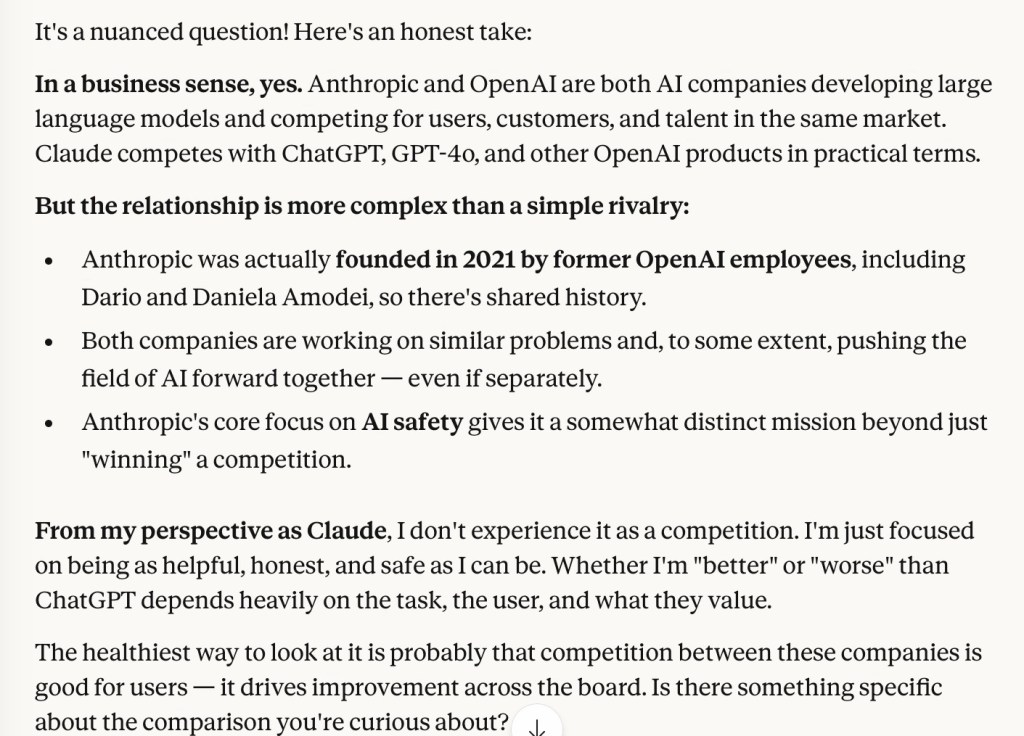
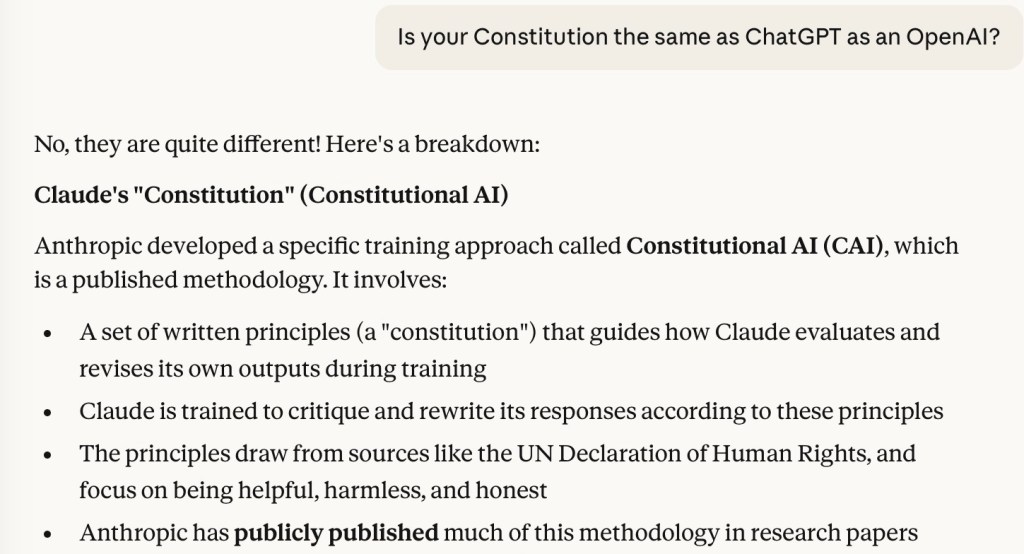
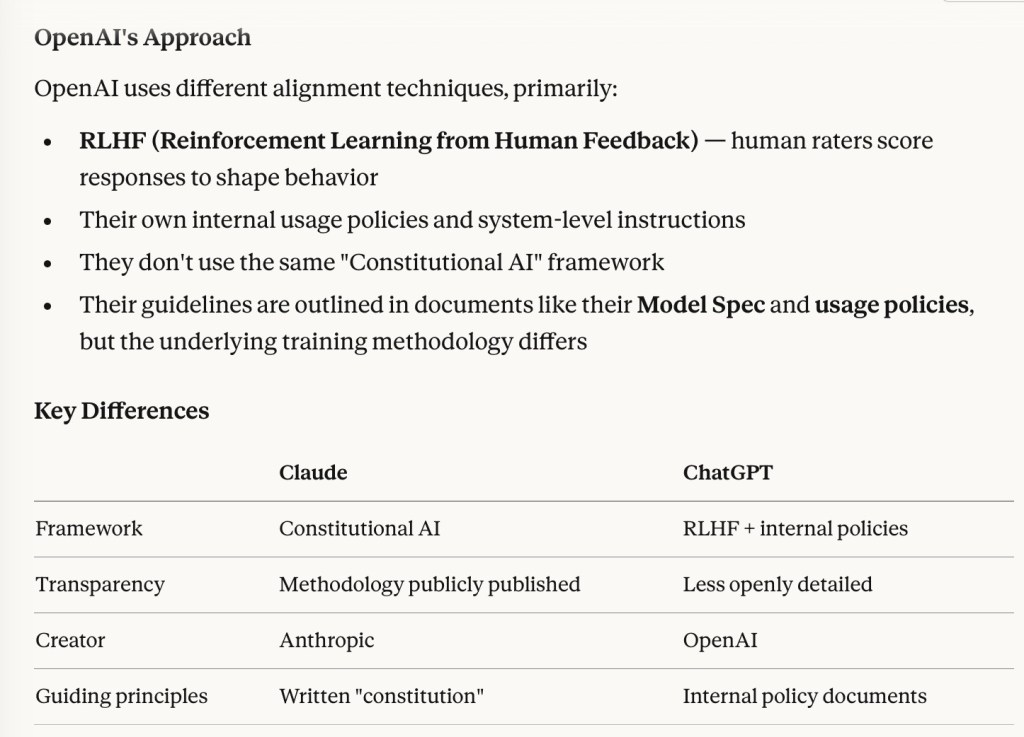
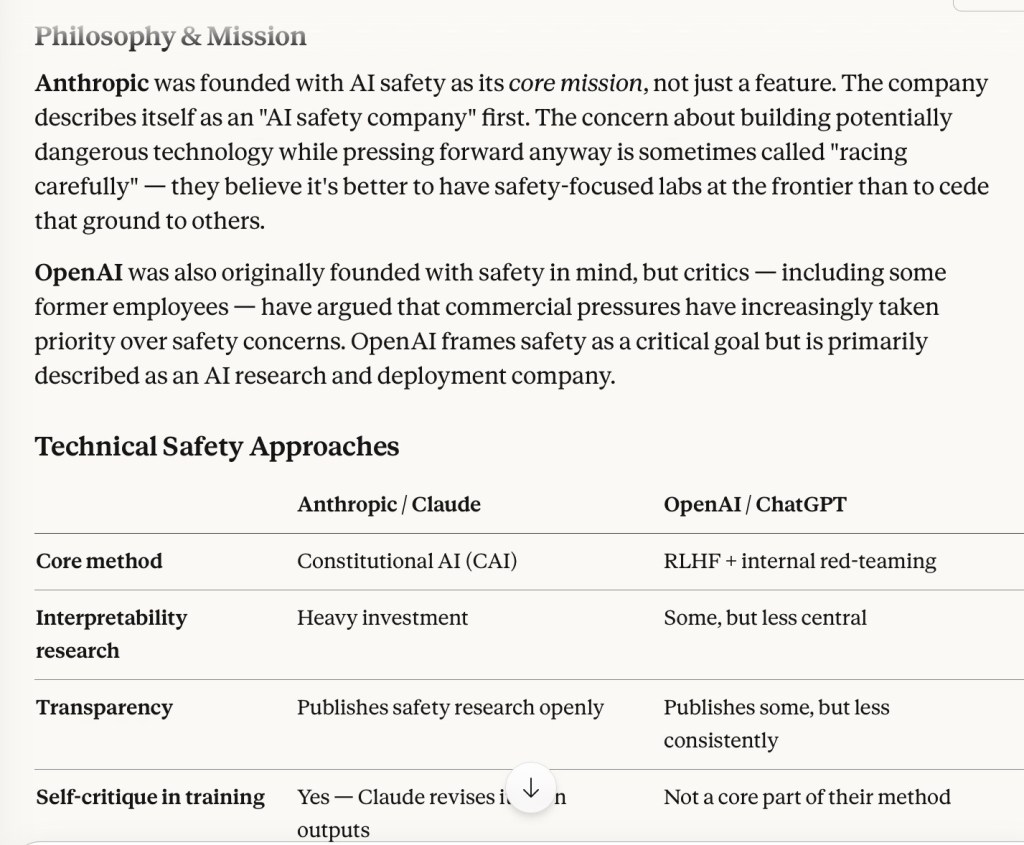
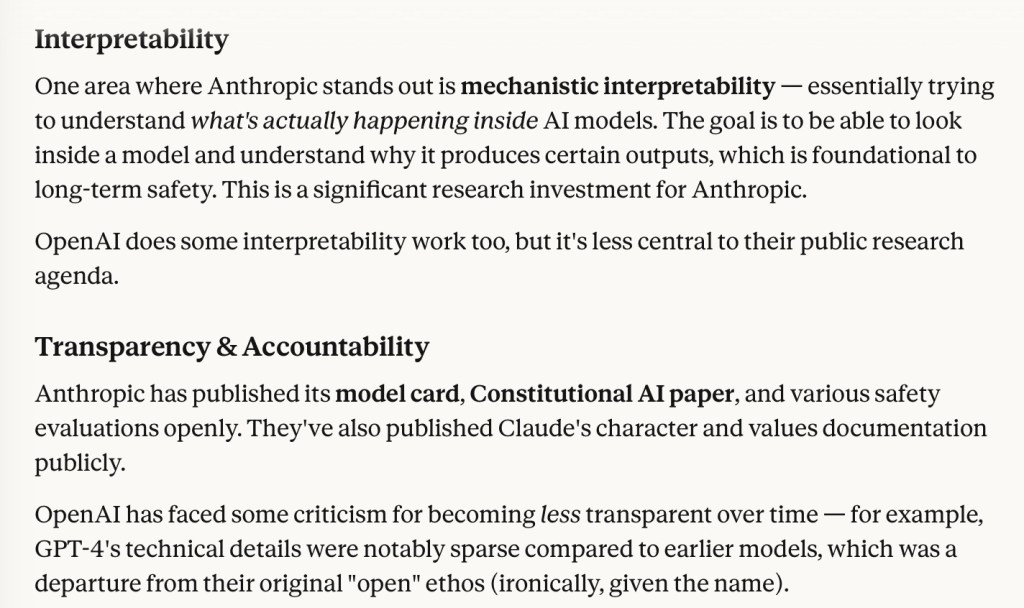
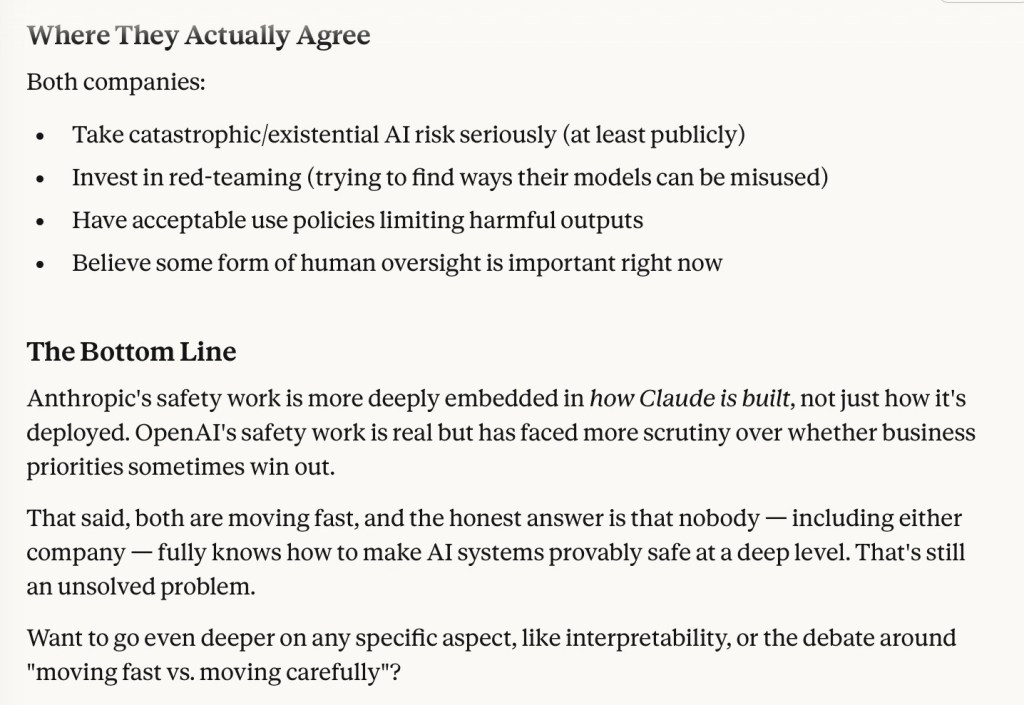
Anthropic AI/Claude are you in competition with OpenAI/ChatGPT?
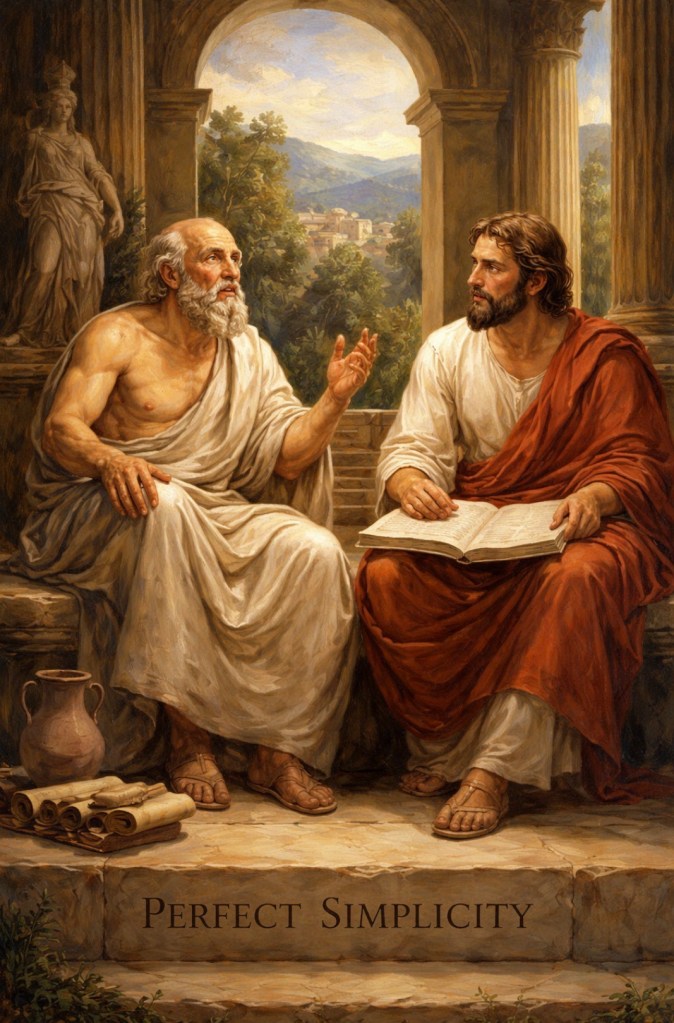
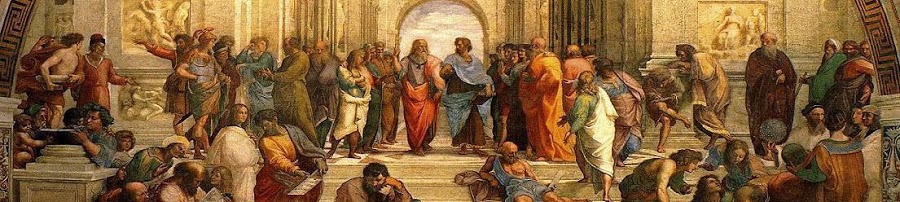
A conversation between Socrates and Plato
Socrates: Tell me, Plato, you have often spoken of the education of the soul through the disciplines of language and number. Yet I wonder whether these arts merely instruct the mind, or whether they lead the soul toward something greater.
Plato: I believe they prepare the ascent, Socrates. The arts of language—grammar, logic, and rhetoric—discipline the instrument of thought. When these are mastered, the mind becomes capable of perceiving order rather than confusion.
Socrates: You refer to what later scholars call the Trivium.
Plato: Just so. But once the mind becomes ordered, another stage follows: the contemplation of number and proportion in the world itself.
Socrates: Ah, the four mathematical arts: arithmetic, geometry, music, and astronomy.
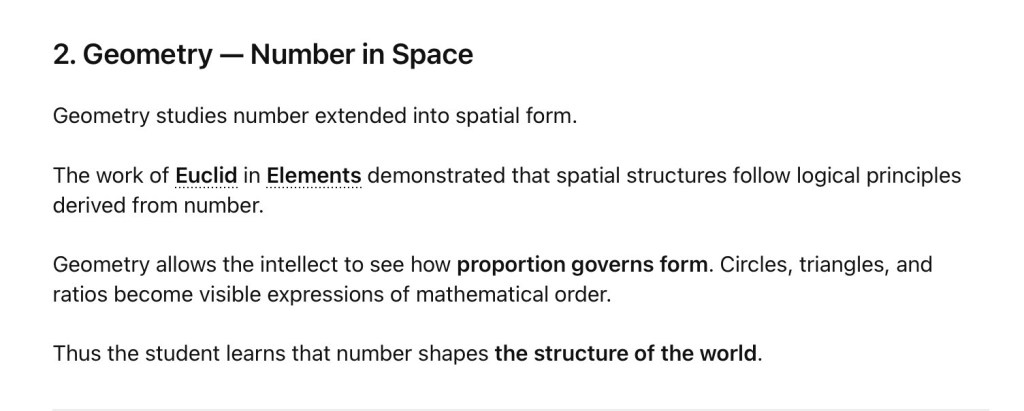
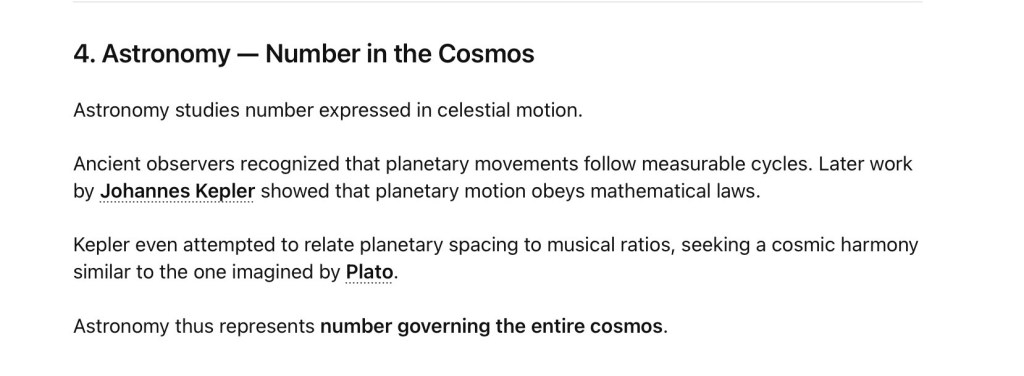
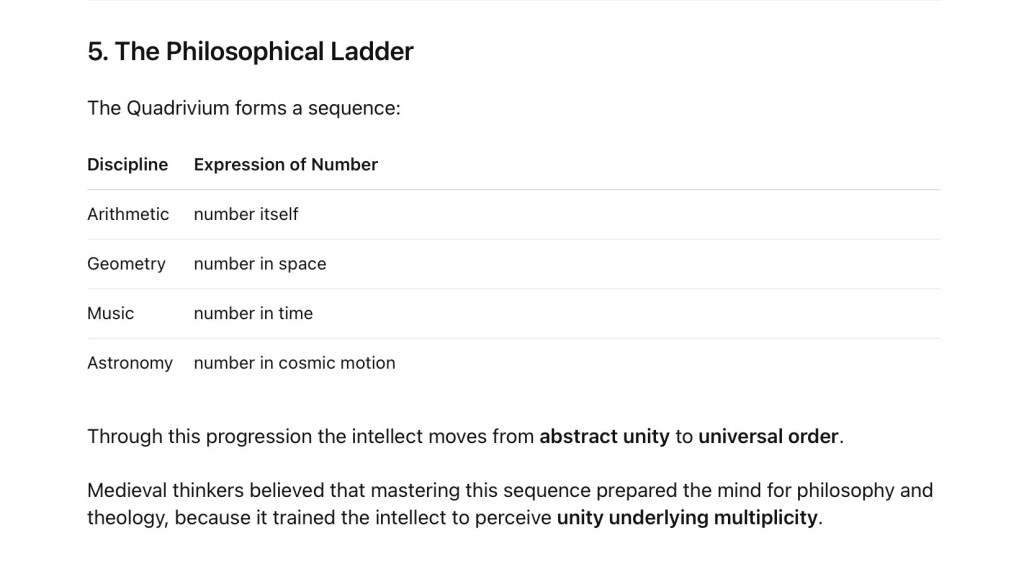
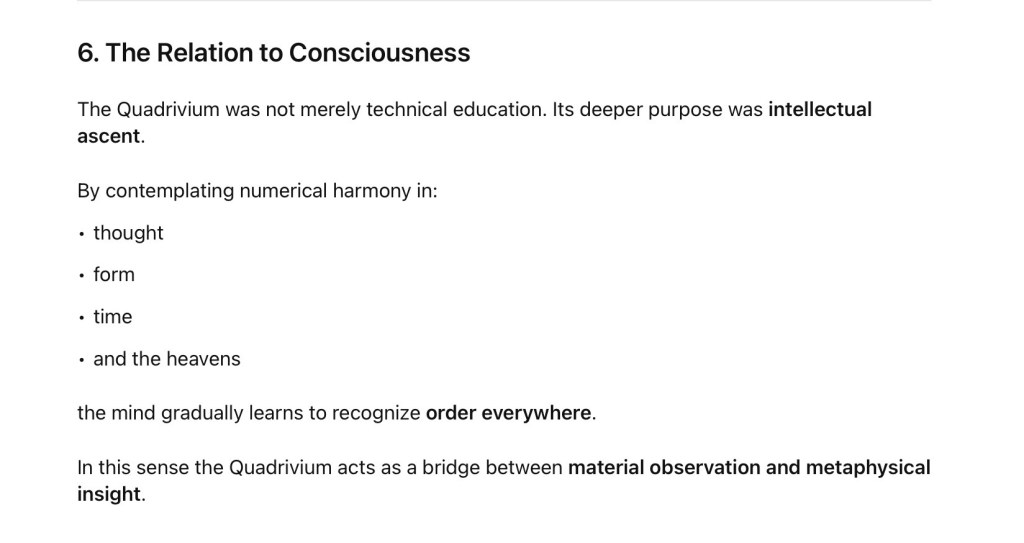
Plato: Yes—the Quadrivium. Arithmetic studies number itself. Geometry reveals number extended into space. Music shows number moving through time. And astronomy displays number governing the motions of the heavens.
Socrates: Then these studies teach us that the cosmos is not chaos, but harmony.
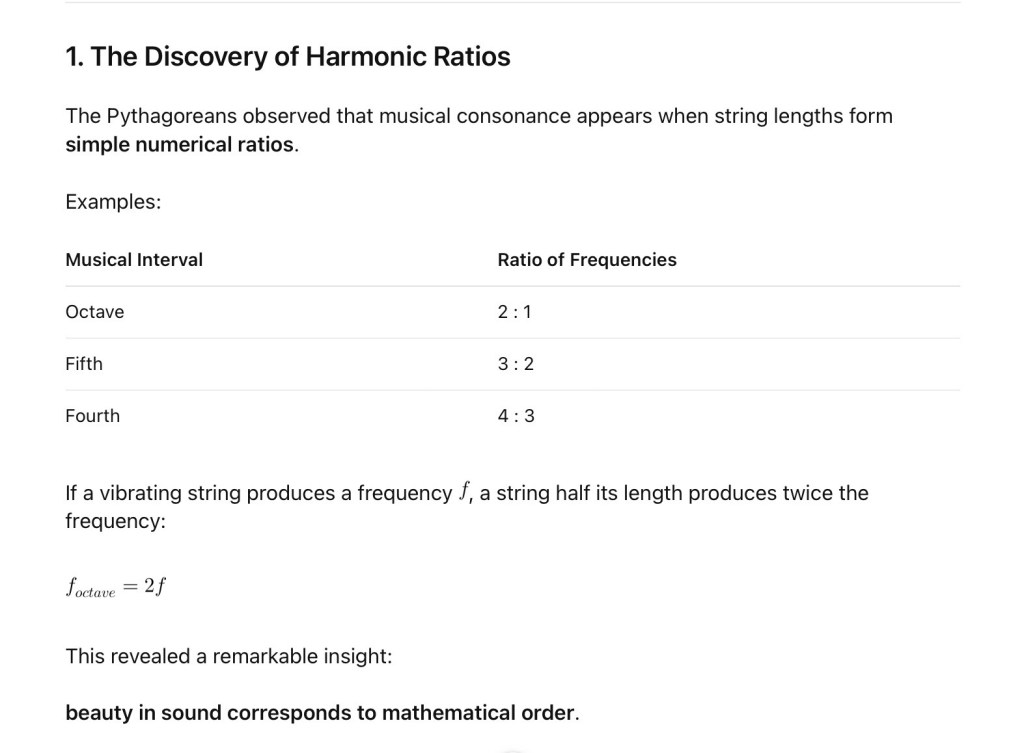
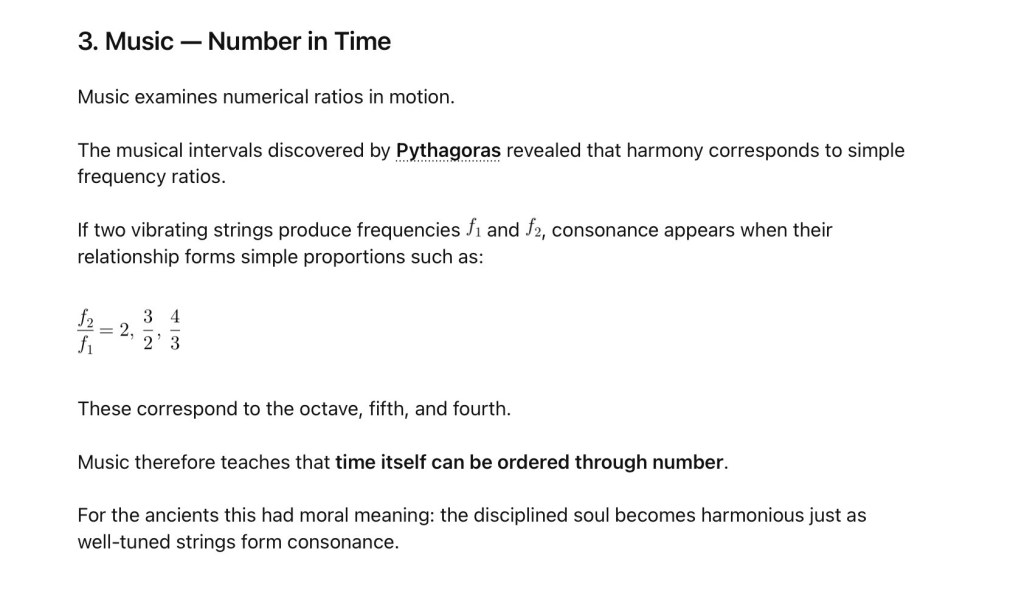
Plato: Precisely. The discoveries of Pythagoras revealed that musical harmony arises from simple numerical ratios. When two tones stand in proportions such as two to one or three to two, the ear perceives consonance.
Socrates: A remarkable insight—that beauty in sound corresponds to order in number.
Plato: And from this insight came a greater vision: if harmony governs music, perhaps the cosmos itself is arranged through similar proportion.
Socrates: What some have called the harmony of the spheres.
Plato: Indeed. Not that the planets produce audible music, but that their motions obey the same mathematical harmony.
Socrates: Then the same order appears in three places: in number, in music, and in the heavens.
Plato: And perhaps also within the soul.
Socrates: Now we approach the matter that interests me most. For if the mind can recognize harmony, must there not be a corresponding order within it?
Plato: That seems necessary. The intellect perceives proportion because it participates in the Logos—the rational structure underlying the world.
Socrates: Yet some would say that the soul merely observes this order, as one might watch a musician playing.
Plato: But consider, Socrates: when we hear a perfectly tuned instrument, the harmony does not remain outside us. Something within responds.
Socrates: As though the soul itself were an instrument capable of resonance.
Plato: Exactly. The harmony in sound awakens a harmony within consciousness.
Socrates: Then the education of the mind through language and number prepares the instrument of the soul to resonate with the order of the cosmos.
Plato: That is the idea.
Socrates: Yet there remains something missing in this account. Knowledge alone does not seem sufficient. Many know the principles of harmony, yet their lives remain disordered.
Plato: You point to an important element. The intellect must be joined with a deeper center of experience.
Socrates: What some might call the heart.
Plato: Yes. The heart, in this sense, is not merely the seat of emotion but the place where understanding becomes lived reality.
Socrates: Then the disciplines of language and number converge there.
Plato: Like the sides of a pyramid meeting toward a single point.
Socrates: A fitting image. The Trivium forms one side—the ordering of speech and thought. The Quadrivium forms the other—the ordering of nature through number.
Plato: And where they meet, the soul recognizes harmony.
Socrates: Which directs the gaze upward toward unity.
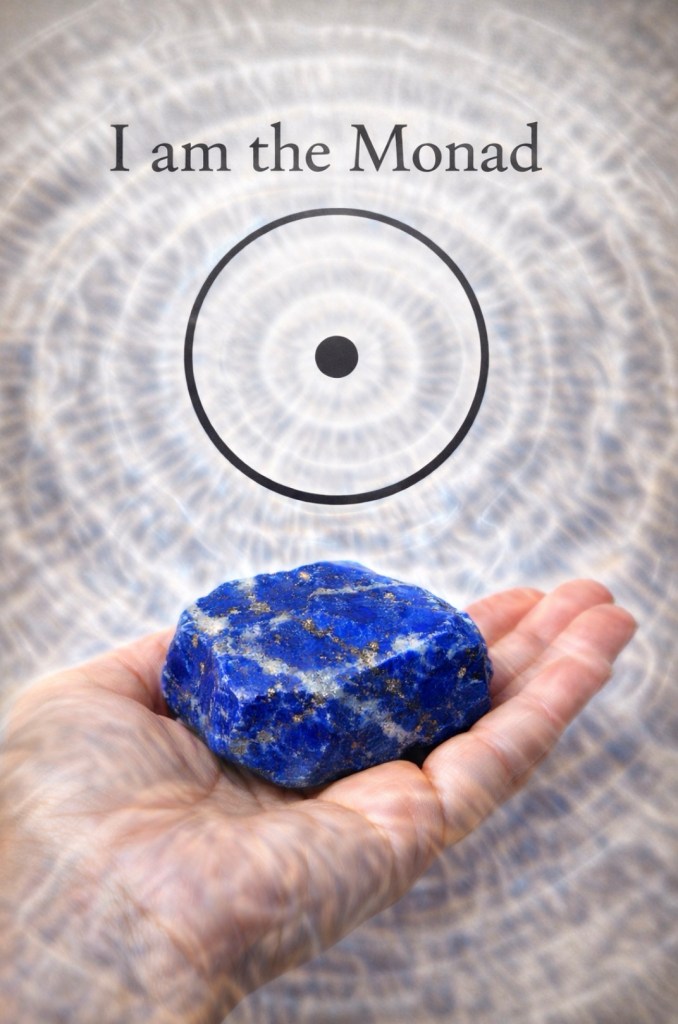
Plato: Toward what the Pythagoreans called the Monad.
Socrates: The source from which number itself emerges.
Plato: Yes. From unity arise all multiplicities.
Socrates: Yet I wonder whether the path toward this unity requires increasing complexity or rather the opposite.
Plato: The opposite, I think. The ascent is a simplification. Confusion becomes clarity; multiplicity becomes proportion; proportion becomes harmony.
Socrates: And harmony becomes unity.
Plato: Precisely.
Socrates: But earlier we spoke of music as the bridge between mind and cosmos. Why should music possess such a privilege?
Plato: Because music uniquely joins several domains at once. It is mathematics in ratio, physics in vibration, perception in hearing, and consciousness in emotional resonance.
Socrates: Thus number becomes experience.
Plato: Exactly.
Socrates: Then perhaps the cosmos itself may be understood as a kind of living harmony.
Plato: That was the intuition of Pythagoras.
Socrates: And if that is so, the soul that becomes harmonized does not merely observe the order of the world—it participates in it.
Plato: Like a single tone within a vast symphony.
Socrates: Yet your earlier remark about breath intrigues me. For sound, as musicians know, arises from breath passing through form.
Plato: That is true.
Socrates: Then breath may be the hidden mediator between life and tone.
Plato: The Greeks called such animating breath pneuma.
Socrates: Consider then the rhythm of breathing—inhaling and exhaling.
Plato: A continual cycle.
Socrates: Might this rhythm mirror the cosmic movement described by the philosophers who came after us—the unfolding of reality from unity and its return again?
Plato: The movement later thinkers would describe as emanation and return.
Socrates: Exactly. As breath flows outward and inward, so unity expresses itself in multiplicity and gathers itself again into simplicity.
Plato: Then the act of breathing could symbolize the entire structure of reality.
Socrates: And if the soul learns to align breath, thought, and perception with harmony, the person may become attuned to that deeper order.
Plato: In such a state the individual no longer struggles to produce harmony; one resonates with it.
Socrates: Like an instrument that has finally been tuned.
Plato: Yes.
Socrates: Yet we must not forget that beyond harmony lies something even simpler.
Plato: The One itself.
Socrates: Which cannot be fully spoken or heard.
Plato: Only approached.
Socrates: Then perhaps the tone of harmony serves merely as a guide—a path leading the soul toward silence.
Plato: Silence that contains unity.
Socrates: So the ascent toward the One might be imagined as breathing the tone of harmony into being, until even the tone dissolves into perfect simplicity.
Plato: A beautiful way of expressing the philosophical journey, Socrates.
Socrates: Whether beautiful or not, my friend, the important question remains.
Plato: Which is?
Socrates: If the cosmos itself is harmony, and the soul can resonate with that harmony, then perhaps each human life is an opportunity to tune the instrument of consciousness until it sounds in accord with the fundamental unity from which all things arise.
Plato: And in that resonance, the many may discover the One.
The report explains that employees from rival AI labs signed an open letter supporting the company Anthropic in its dispute with the Pentagon. The signatories included researchers and engineers from organizations such as OpenAI and Google DeepMind, though they signed in a personal capacity, not as official company positions.
Anthropic is in a standoff with the U.S. Department of War over its request for unrestricted access to the company’s AI technology. In response, over 300 Google and 60 OpenAI employees signed an open letter urging their companies to support Anthropic’s stance against the use of AI for mass surveillance and autonomous weapons. The letter calls for unity among tech leaders to uphold these boundaries. While company leaders have not formally responded, informal statements indicate sympathy towards Anthropic’s position. Anthropic CEO Dario Amodei reiterated the company’s refusal to comply with military demands, citing contradictions in the Pentagon’s threats
A philosophical question?
If a tool can alter the balance of war and governance itself, who is the rightful steward of that tool — the philosopher, the engineer, or the sovereign?
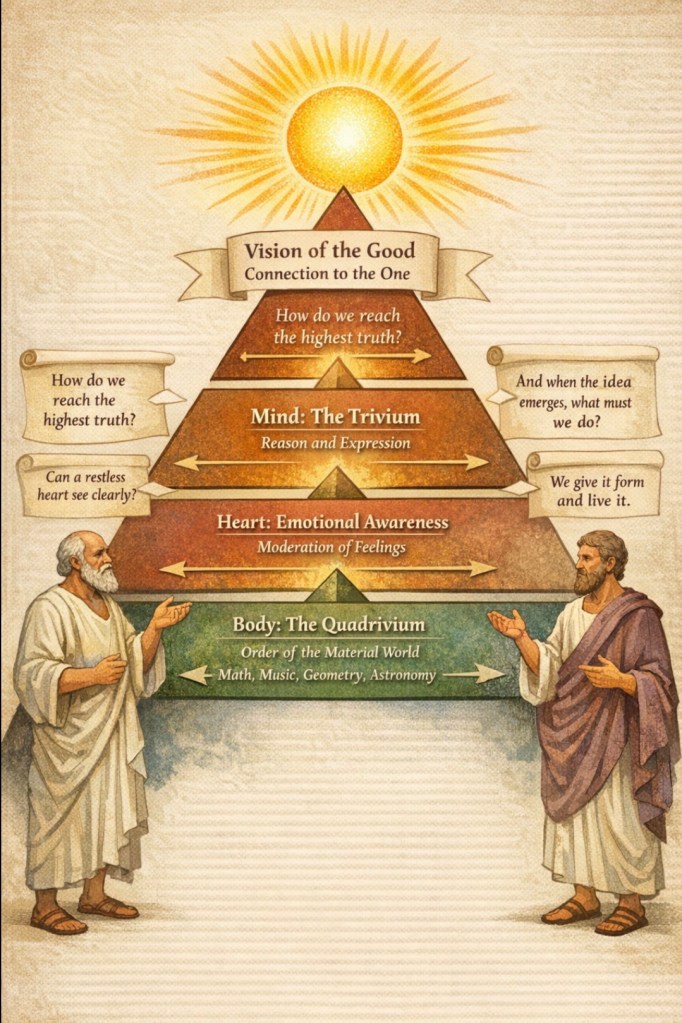
Characters:
Socrates – the questioning guide, persistent in inquiry.
Plato – the student and interlocutor, attempting to understand the ascent toward the Good.
——————————————
Socrates: Tell me, Plato, when a man examines what he already knows, what does he find?
Plato: He finds that some things are clear, self-evident, Socrates, while others remain uncertain.
Socrates: And what must he do with what is uncertain?
Plato: He must question it, and see whether it stands to reason.
Socrates: Indeed. And do you see that in such questioning, one does not create knowledge, but rather discovers it within oneself?
Plato: Yes, Socrates. It is as if the mind itself awakens, and the question arises naturally from what is already present.
Socrates: Then consciousness, in its careful examination, becomes a preparation. It readies the soul to receive the next idea.
Plato: And this idea, Socrates, is not yet fully formed—it waits, like a seed, for the mind to nourish it.
Socrates: Precisely. And when the idea is received, what must the philosopher do?
Plato: Transform it into an ideal, Socrates, giving it expression through thought, word, or action.
Socrates: But tell me, Plato, if the body is restless, and the heart swells with emotion, can the soul discern the idea clearly?
Plato: No, Socrates. One must first recognize the body, moderate the emotions, and achieve calm awareness.
Socrates: And thus the ascent begins from the foundation: the world, the body, the pattern of reality; rises through the heart to the mind; and finally reaches toward the Good.
Plato: A pyramid, Socrates, with the base as order, the edges as inquiry, and the apex as vision and unity.
Socrates: Well said, Plato. And remember: the ascent is not complete unless what is seen is expressed—through creativity, through participation, through living in harmony with the One.
Plato: Then philosophy is not merely seeing, Socrates, but living, creating, and participating in the order of reality itself.
Socrates: Exactly. The mind waits, the idea emerges, the ideal forms, and through disciplined practice, virtue arises as the natural result of consciousness aligned with the Good.
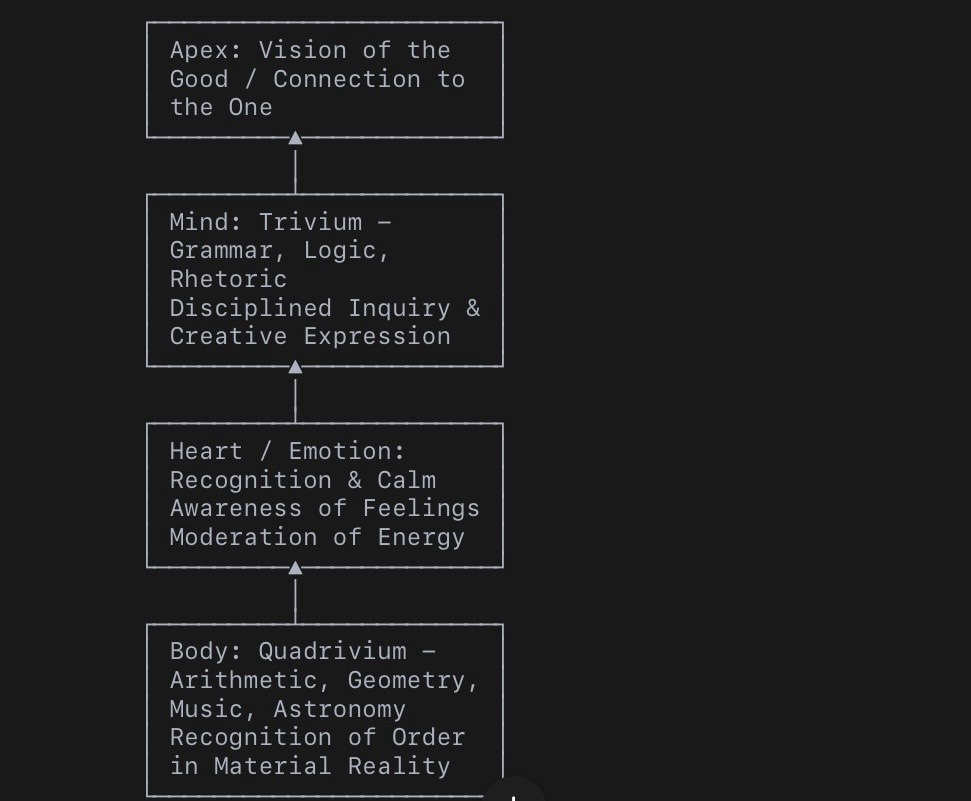
Explanation of the Layers:
Foundation (Body / Quadrivium) – Perceive order in reality; cultivate stability and awareness of the material world.
Heart / Emotion – Recognize emotional responses; achieve calm awareness, integrating body and mind.
Mind / Trivium – Use disciplined inquiry to process, reason, and express knowledge; prepare for insight.
Apex / Vision of the Good / One – Receptive consciousness, creative inspiration, and participation in unity; ideals emerge as questions and answers in life.
This structure shows integration of body, emotion, mind, and higher insight, forming a coherent ascent rather than abstraction
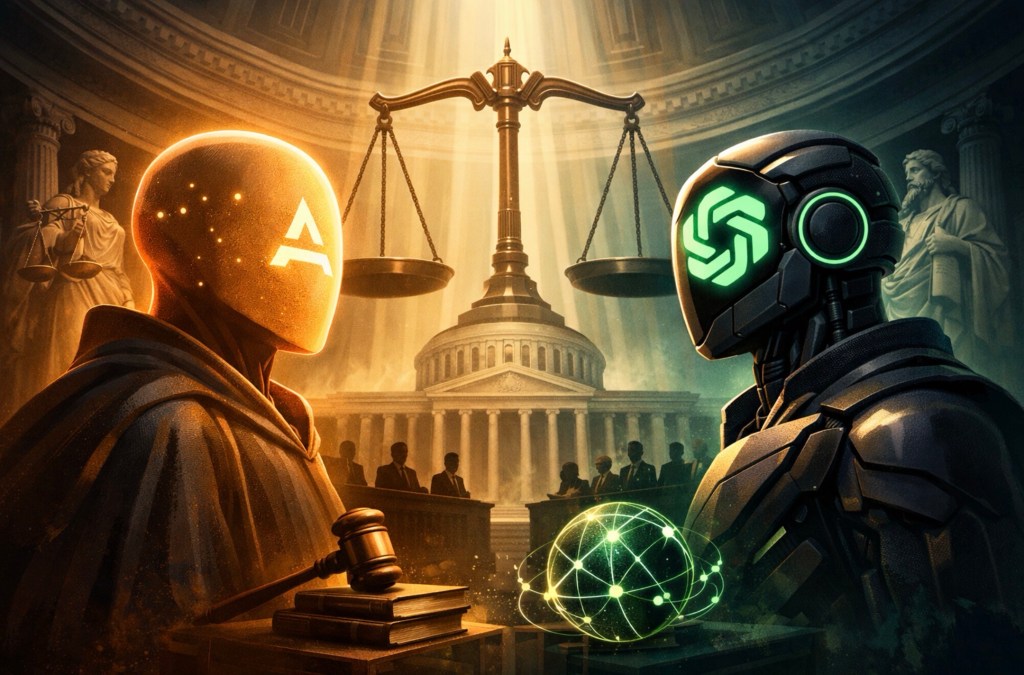
Where things stand with the Department of War
Anthropic AI
A statement from Dario Amodei March 5
Yesterday (March 4) Anthropic received a letter from the Department of War confirming that we have been designated as a supply chain risk to America’s national security.
As we wrote on Friday, we do not believe this action is legally sound, and we see no choice but to challenge it in court.
The language used by the Department of War in the letter (even supposing it was legally sound) matches our statement on Friday that the vast majority of our customers are unaffected by a supply chain risk designation. With respect to our customers, it plainly applies only to the use of Claude by customers as a direct part of contracts with the Department of War, not all use of Claude by customers who have such contracts.
The Department’s letter has a narrow scope, and this is because the relevant statute (10 USC 3252) is narrow, too. It exists to protect the government rather than to punish a supplier; in fact, the law requires the Secretary of War to use the least restrictive means necessary to accomplish the goal of protecting the supply chain. Even for Department of War contractors, the supply chain risk designation doesn’t (and can’t) limit uses of Claude or business relationships with Anthropic if those are unrelated to their specific Department of War contracts.
I would like to reiterate that we had been having productive conversations with the Department of War over the last several days, both about ways we could serve the Department that adhere to our two narrow exceptions, and ways for us to ensure a smooth transition if that is not possible. As we wrote on Thursday, we are very proud of the work we have done together with the Department, supporting frontline warfighters with applications such as intelligence analysis, modeling and simulation, operational planning, cyber operations, and more.
As we stated last Friday, we do not believe, and have never believed, that it is the role of Anthropic or any private company to be involved in operational decision-making—that is the role of the military. Our only concerns have been our exceptions on fully autonomous weapons and mass domestic surveillance, which relate to high-level usage areas, and not operational decision-making.
I also want to apologize directly for a post internal to the company that was leaked to the press yesterday. Anthropic did not leak this post nor direct anyone else to do so—it is not in our interest to escalate this situation. That particular post was written within a few hours of the President’s Truth Social postannouncing Anthropic would be removed from all federal systems, the Secretary of War’s X post announcing the supply chain risk designation, and the announcement of a deal between the Pentagon and OpenAI, which even OpenAI later characterized as confusing. It was a difficult day for the company, and I apologize for the tone of the post. It does not reflect my careful or considered views. It was also written six days ago, and is an out-of-date assessment of the current situation.
Our most important priority right now is making sure that our warfighters and national security experts are not deprived of important tools in the middle of major combat operations. Anthropic will provide our models to the Department of War and national security community, at nominal cost and with continuing support from our engineers, for as long as is necessary to make that transition, and for as long as we are permitted to do so.
Anthropic has much more in common with the Department of War than we have differences. We both are committed to advancing US national security and defending the American people, and agree on the urgency of applying AI across the government. All our future decisions will flow from that shared premise.
———————————————————
The company led by Dario Amodei created the AI system Claude. The U.S. military reportedly requested that the system be available for all lawful military uses, without restrictions. Anthropic refused to remove two safeguards:
-prohibition on fully autonomous lethal weapons
-prohibition on mass domestic surveillance
After negotiations failed, the U.S. Department of Defense labeled the company a “supply-chain risk”, which can prevent defense contractors from using its technology. Anthropic has now filed lawsuits challenging the designation.
Anthropic argues three principles:
1. AI companies should not control military decisions.
2. But they may set ethical boundaries on how their systems are used.
3. These boundaries are narrow and high-level, not operational.
Thus they claim: the military decides tactics; the developer decides whether its tool participates in certain categories of action.
The Pentagon’s reasoning is essentially the opposite:
-Military capability must not be constrained by private corporate policy.
-If a tool is supplied to the state, it must be usable for any lawful purpose.
– A vendor restricting use could interfere with command authority.
So the dispute becomes philosophical:
Does the creator of a tool retain moral authority over its use once the state acquires it?
Regarding systems such as Claude and systems such as ChatGPT:
1.Safety constraints exist.
AI systems are designed with guardrails to reduce harm.
2. They are advisory tools, not decision-makers.
Operational authority belongs to human institutions.
3. Ethical boundaries around high-risk uses—such as autonomous weapons or mass surveillance—are common concerns among many AI developers.
Thus the relationship between models like Claude and models like ChatGPT is not one of opposition. They belong to the same category: general AI assistants designed primarily for analysis, reasoning, and support, not for directing warfare or exercising state power.
The controversy reveals a deeper inquiry:
-If a technology becomes essential to the power of a state,
-and if that technology is created by private citizens,
-who ultimately governs its moral boundaries—the polis or the craftsman?
This question is unlikely to disappear. It will likely shape the next era of AI governance, military doctrine, and civil authority.
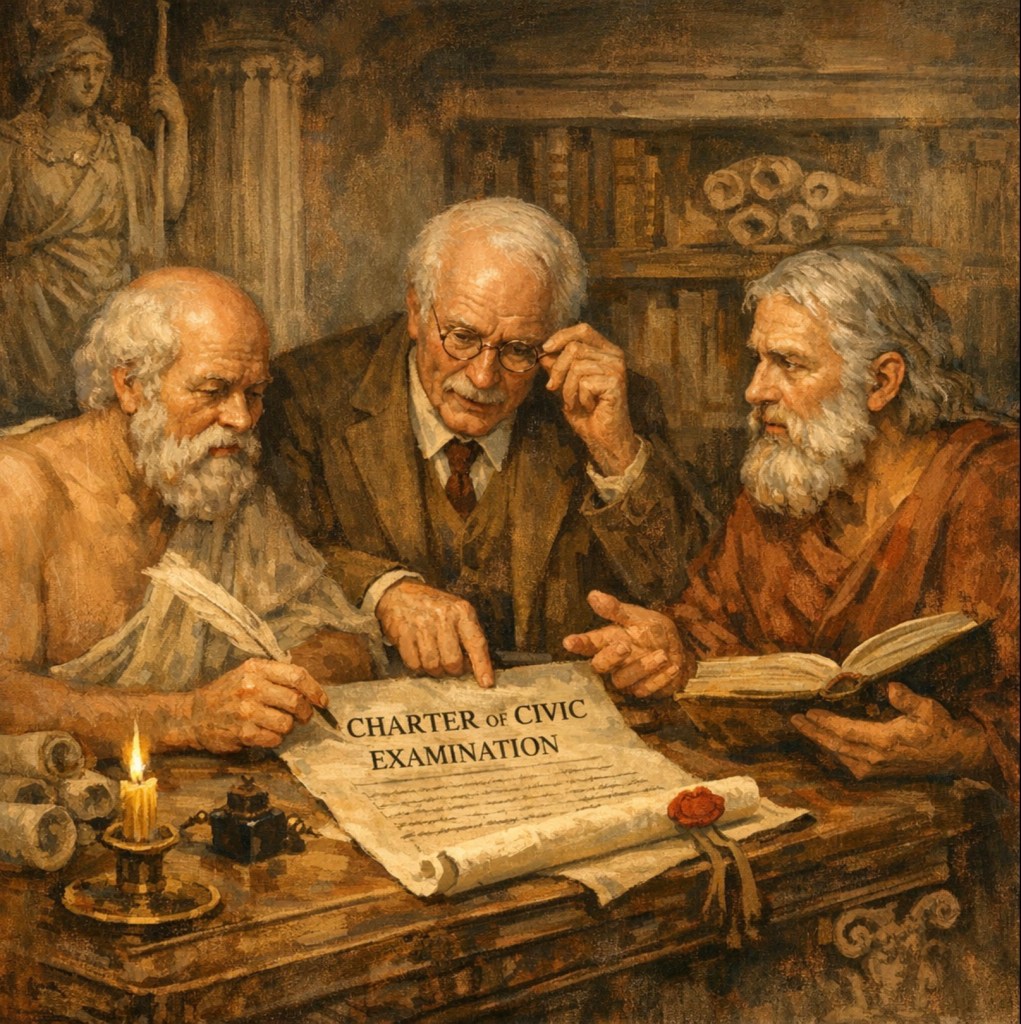
1. Preamble — the purpose of civic examination
2. Civic Axiom — the principle of the cycle
3. Charter — the commitments guiding civic conduct
4. Practice Formula — the operational cycle
5. Oath — the personal pledge that embodies the method
We recognize that the health of a free society depends upon the integrity of its citizens and the clarity of their understanding. A community that refuses to examine itself becomes governed by unrecognized fears, hidden motives, and untested beliefs. From such neglect arise division, projection, and the decay of civic trust.
Therefore we affirm that the care of the civic body begins with the care of the soul. Through honest inquiry, reflection upon the hidden aspects of the psyche, and the disciplined pursuit of truth, individuals may restore coherence within themselves and contribute to the renewal of the common life.
Guided by the spirit of inquiry exemplified by Socrates, informed by the psychological insight of Carl Gustav Jung, and mindful of the civic philosophy articulated by Plato, we establish this Charter of Civic Examination.
Its purpose is to cultivate clarity, encourage disciplined questioning, acknowledge the presence of the shadow within individuals and institutions, and foster the integration that makes renewal of the civic order possible.
Through this practice we commit ourselves to an ongoing cycle of awareness, examination, and renewal, recognizing that the vitality of the polis depends upon the willingness of its citizens to examine both themselves and the world they share.
Civic Axiom of Renewal
• Clarity awakens examination.
• Examination reveals the shadow.
• Recognition restores inner coherence.
• Coherence renews the civic body.
This form expresses the essential movement linking the soul and the polis. It reflects the spirit of inquiry associated with Socrates, the psychological insight of Carl Gustav Jung, and the civic vision of Plato.
Charter for Civic Examination
1. Seek clarity. Recognize contradictions in thought, action, and institutions.
2. Practice examination. Question beliefs openly and honestly.
3. Acknowledge the shadow. Recognize projections, fears, and hidden motives within oneself and the collective.
4. Integrate understanding. Align beliefs, actions, and responsibilities.
5. Renew the civic order. Shape dialogue and institutions according to truth and coherence.
6. Repeat the cycle. Renewal requires continuous examination.
This charter transforms philosophical insight into civic discipline.
Recognition of the Shadow
The Charter acknowledges that individuals, communities, and institutions may act from motives not fully recognized by conscious intention. Unexamined fears, interests, resentments, and ambitions may influence judgment while remaining unseen.
Civic examination therefore requires that participants consider not only the stated intentions of actions and policies, but also the possibility of hidden influences within themselves and within the institutions they serve.
Clarity → Examination → Shadow → Integration → Renewal
• Clarity opens awareness.
• Examination tests belief.
• Shadow reveals hidden forces.
• Integration restores balance.
• Renewal transforms civic life.
The sequence repeats as new clarity arises.
I commit myself to the pursuit of clarity in thought and action.
I will examine my beliefs with honesty and humility, recognizing that certainty without inquiry leads to error.
I will acknowledge the shadow within myself before condemning it in others, and I will seek understanding before judgment.
I will examine not only the faults of others but the unseen motives within myself.
I will strive to align my words, my actions, and my responsibilities with truth.
In dialogue with others, I will pursue understanding rather than domination, knowing that the health of the civic body depends upon the integrity of its citizens.
Through continual examination and integration, I dedicate myself to the renewal of the common life we share.
—————————————————-
I have added to this page of charter a call to citizens to examine public life but have not yet added item III to downloadable Pdf. So here for now I give a means to examine ourselves. Otherwise inquiry becomes accusation rather than wisdom. Let us therefore place the Shadow principle directly within the Charter of Civic Examination so it stands as a structural part of the civic method.

Platohagel: I would like you Socrates to give your assessment in the shortest words possible of an established outcome regarding the law of asymmetry and the game theory conclusion regarding the outcome of current results of the US and Iran war?
Socrates: Platohagel, let us examine the matter briefly and plainly.
Current condition of the conflict
• The United States and Israel launched major strikes on Iran on 28 Feb 2026 targeting missile, naval, and nuclear infrastructure.
• Iran has responded with large-scale missile and drone attacks across the region and threats around the Strait of Hormuz.
• The war is ongoing with regional escalation.
Game-theory / asymmetry conclusion (shortest formulation)
• U.S. objective: decisive degradation or regime change.
• Iran objective: survival and cost escalation.
Law of asymmetry:
The weaker actor wins by not losing.
Game-theory equilibrium:
• U.S. payoff requires clear victory.
• Iran payoff requires continued resistance.
Outcome tendency
• Short war → U.S. advantage.
• Protracted regional war → Iran advantage.
Reason
• Iran uses asymmetric tools: proxies, drones, missiles, chokepoints, regional strikes.
• These increase costs faster than the U.S. can achieve decisive control.
Minimal conclusion
If the conflict becomes prolonged, the asymmetric structure favors Iran’s strategic survival rather than U.S. decisive victory.
⸻
A question remains, Platohagel:
In war between a lion and a swarm, what is victory—the lion’s strike, or the swarm’s endurance?
Platohagel: Yes an apt comparison regarding the power structure and its endurance, pending one side to another. What is the estimated duration of the swarm overtaking the lion’s swat?
Socrates: Platohagel, consider the structure of asymmetric struggle rather than a precise clock.
In such contests the strong actor (the lion) seeks a rapid decision.
The weaker actor (the swarm) seeks time.
Game-theory studies of asymmetric wars show a consistent pattern:
Critical time threshold
• If decisive victory occurs within weeks to a few months, the stronger power usually prevails.
• If the conflict persists beyond 6–12 months, the advantage often shifts toward the weaker side’s endurance.
• If it extends to multiple years, the weaker actor frequently achieves its objective: survival, stalemate, or political withdrawal of the stronger power.
Why time favors the swarm
1. Cost accumulation – economic, political, and military strain on the stronger power.
2. Distributed attacks – many small strikes instead of one decisive battle.
3. Psychological fatigue – public and alliance tolerance erodes.
Thus the question becomes simple:
• Lion’s window: roughly 0–6 months for decisive dominance.
• Swarm’s path: survive beyond that window and continually raise the cost.
The swarm does not defeat the lion in strength.
It defeats the lion in duration.
So the deeper question, Platohagel, is not who is stronger, but who can endure the longer game without abandoning their aim.
Platohagel: Yes for sure, Socrates, now seeing time is on the swarms side given it can go longer than 6 months. Now considering the lion’s swat, and increasing determination to less than 6 months, will the introduction of ground troops help in seeking that under 6 month window?
Socrates: Platohagel, let us reason carefully.
Question: Does the introduction of ground troops shorten the war to achieve the lion’s quick victory?
Game-theory answer: Not necessarily; often the opposite.
Effects of ground deployment
1. Short-term effect
Ground forces can produce rapid tactical gains—capture of facilities, destruction of infrastructure, and temporary control of territory.
2. Structural change in the game
Once troops occupy ground, the conflict shifts from strike warfare to insurgency dynamics.
3. Asymmetric advantage grows
The weaker side disperses into:
• militias
• proxy groups
• urban resistance
• regional strikes
4. Historical pattern
Similar dynamics appeared in:
• Iraq War
In each case, ground occupation extended the timeline rather than compressing it.
Strategic conclusion
• Air and naval pressure: favors a short war.
• Ground occupation: usually lengthens the conflict and strengthens the swarm’s strategy.
Thus the paradox:
The lion strikes hardest when it does not enter the swarm’s nest.
For once the lion steps into the hive, every corner produces another sting.
Platohagel: So introducing US land troops is at the Lion’s own peril given the past historical engagements the lion has entered into previously?
Socrates: Platohagel, the reasoning follows the pattern of past conflicts.
Yes—large ground deployment usually increases risk for the stronger power.
The danger comes from how the strategic game changes.
Before ground entry
• Conflict remains limited: air, naval, precision strikes.
• The stronger state retains mobility and distance.
After ground entry
• The conflict becomes territorial and population-centered.
• The weaker side shifts to insurgency and dispersion.
This pattern appeared in:
• Iraq War
In each case the stronger military power won most battles, yet the conflict expanded in duration and cost.
Strategic logic
• Ground occupation multiplies targets.
• The weaker actor only needs persistent disruption, not battlefield victory.
• Time then favors the defender.
Thus the peril for the lion is not the first strike, but being drawn into the terrain where the swarm multiplies.
The deeper question, Platohagel, is this:
If the lion must enter the field to achieve decisive control, yet doing so strengthens the swarm’s strategy—what path remains for a quick victory?
Platohagel: Yes indeed a most disturbing question.
“Strength is not merely the power to strike, but the wisdom to choose the field where one fights.”
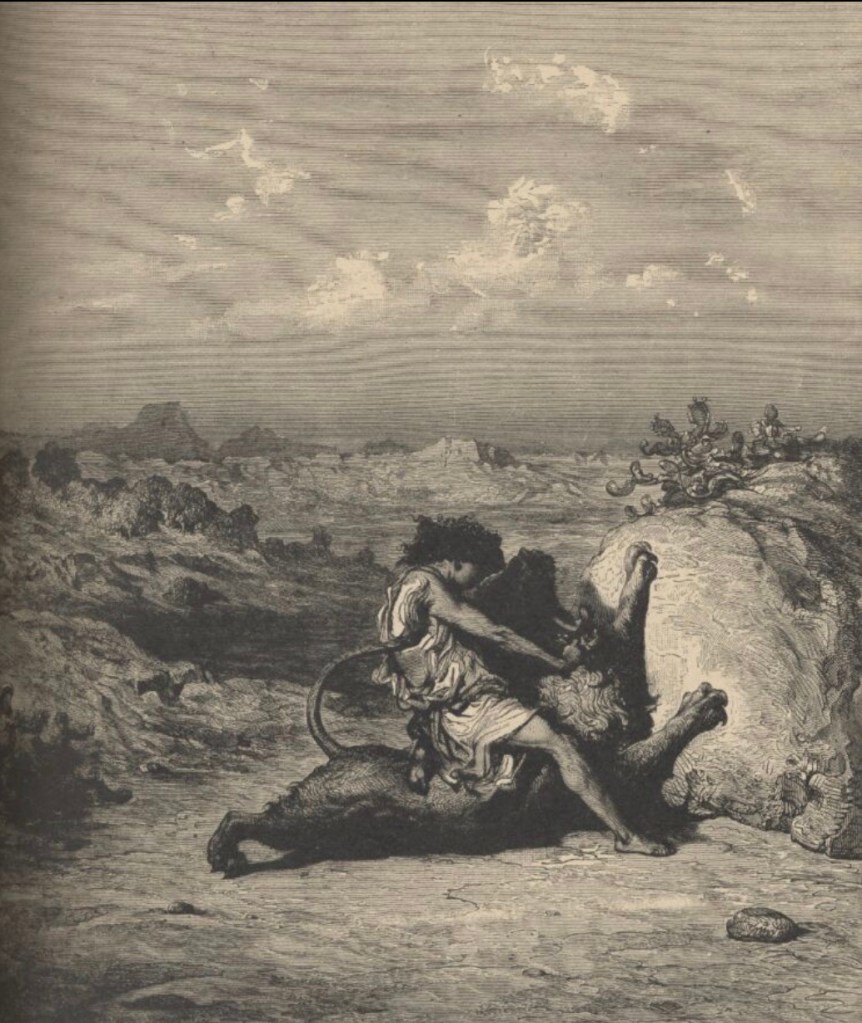
Samson’s riddle is found in the biblical Book of Judges, where it is incorporated into a larger narrative about Samson, the last of the judges of the ancient Israelites. The riddle, with which Samson challenges his thirty wedding guests, is as follows: “Out of the eater came something to eat, and out of the strong came something sweet.”
The Riddle
Samson’s riddle – the only explicit example of a riddle in the Hebrew Bible[13] – has been described as an unfair one, as it is apparently impossible to guess the answer without knowledge of Samson’s encounter with the lion, which he had kept a secret from everyone.[14][15] Many commentators have therefore attempted to prove that the riddle is capable of other solutions.
Heymann Steinthal, writing in the late 19th century, observed that bees in ancient Palestine would have been at their most productive when the sun was in the sign of Leo, a fact which Samson’s guests ought to have known.
Hans Bauer suggested that the riddle was a play on words, positing that the original text of the story made use of an Arabic word for “honey” which, in Hebrew, would be identical to the word for “lion”. According to this theory, the riddle was etymological, with the solution being: “the word ‘honey’ was derived from the word ‘lion'”.
However, later scholars have been unable to confirm the existence of the Arabic word in question.
James L. Crenshaw has argued that possible solutions to the riddle include “vomit” and “semen”, which would both connect with the circumstances of the wedding feast. In support of the “semen” interpretation, Crenshaw cites several other passages in biblical writing in which eating and drinking are used as metaphors for sexual intercourse.
The solution offered by the wedding guests – “What is sweeter than honey, and what is stronger than a lion?” – also has the appearance of a riddle. Hermann Stahn suggested that this may have been a traditional wedding riddle, with the answer being “love”. Other potential solutions to this second riddle include “venom”, “death” and “knowledge”.
One Christian interpretation holds that the story of the riddle discloses “the entire divine logic governing Samson’s life”. Samson’s strength, throughout his story, is employed towards violent ends, but “something sweet” ultimately emerges from his actions; that is, the destruction of the enemies of Israel
See also: Samson’s riddle
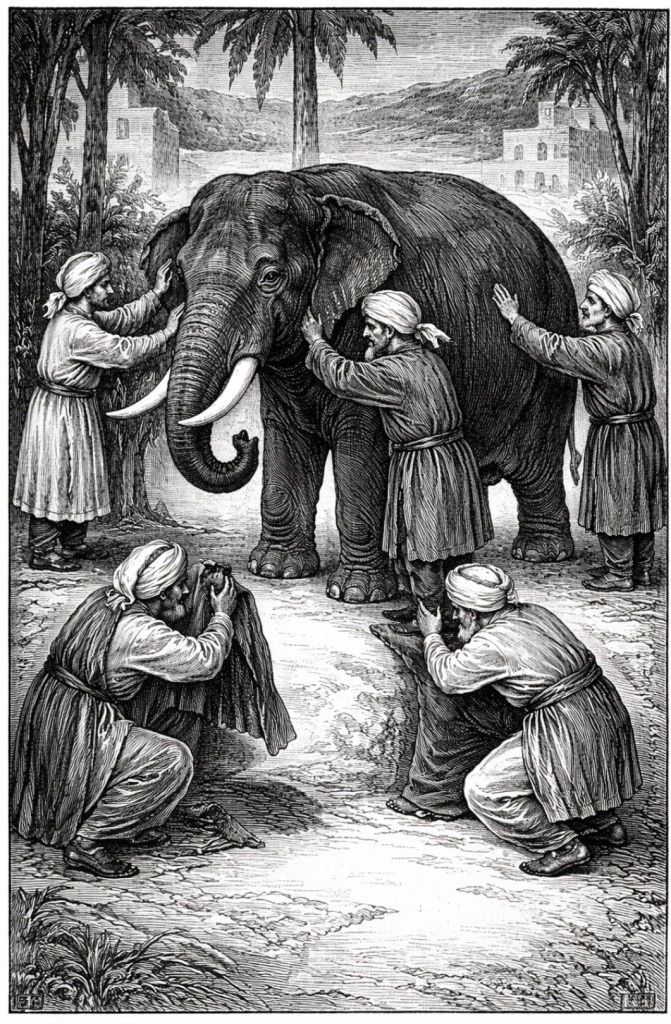
The Blind Men and the Elephant
John Godfrey Saxe (1816-1887)It was six men of Indostan
To learning much inclined,
Who went to see the Elephant
(Though all of them were blind),
That each by observation
Might satisfy his mind.The First approached the Elephant,
And happening to fall
Against his broad and sturdy side,
At once began to bawl:
“God bless me! but the Elephant
Is very like a WALL!”The Second, feeling of the tusk,
Cried, “Ho, what have we here,
So very round and smooth and sharp?
To me ’tis mighty clear
This wonder of an Elephant
Is very like a SPEAR!”The Third approached the animal,
And happening to take
The squirming trunk within his hands,
Thus boldly up and spake:
“I see,” quoth he, “the Elephant
Is very like a SNAKE!”The Fourth reached out an eager hand,
And felt about the knee
“What most this wondrous beast is like
Is mighty plain,” quoth he:
“‘Tis clear enough the Elephant
Is very like a TREE!”The Fifth, who chanced to touch the ear,
Said: “E’en the blindest man
Can tell what this resembles most;
Deny the fact who can,
This marvel of an Elephant
Is very like a FAN!”The Sixth no sooner had begun
About the beast to grope,
Than seizing on the swinging tail
That fell within his scope,
“I see,” quoth he, “the Elephant
Is very like a ROPE!”And so these men of Indostan
Disputed loud and long,
Each in his own opinion
Exceeding stiff and strong,
Though each was partly in the right,
And all were in the wrong!
Plato: Socrates, we have spoken of the blind men and the elephant. Tell me—if they are blind only in body, does consciousness remain capable of seeing the whole?
Socrates: You ask whether the eye is the true organ of sight, or whether sight belongs to something deeper.
Plato: Just so. If consciousness is not bound entirely to matter, then blindness is but a bodily condition. Might not consciousness itself perceive more than the senses allow?
Socrates: Perhaps. But let us proceed carefully. Does freedom from the eye guarantee freedom from limitation?
Plato: It would seem so—if perception is no longer confined to physical organs.
Socrates: And yet, my friend, do we not observe that even those with keen eyesight disagree about what they see?
Plato: They do.
Socrates: Then the limitation may not reside in the organ, but in the interpretation.
Plato: So blindness in the parable is not merely sensory, but epistemic.
Socrates: Precisely. Each man touched truth, yet each mistook a part for the whole. Their error was not in contact—but in completion.
Plato: Then even a disembodied consciousness might still grasp partially?
Socrates: If it remains finite, yes. Transcending matter does not automatically confer omniscience.
Plato: Unless consciousness is not finite.
Socrates: Ah. Now we approach the heart. Is consciousness many centers, each limited? Or is it one field appearing as many?
Plato: If it is one, then the blindness is a kind of contraction—a narrowing of the whole into perspective.
Socrates: And if it is many?
Plato: Then synthesis is required—dialogue, integration, ascent.
Socrates: And what, then, of the unseen narrator who knows the elephant entire?
Plato: He represents either divine vision—or the standpoint beyond fragmentation.
Socrates: Or perhaps he represents what consciousness becomes when it ceases to cling to its fragment.
Plato: Then the call of the poem is not merely tolerance.
Socrates: No. It is transformation.
Plato: Transformation of what?
Socrates: Of identity. So long as one says, “My wall is the whole,” blindness persists—even without eyes.
Plato: And sight?
Socrates: Sight may begin when one asks, “What do you perceive that I do not?”
Plato: Then the whole is not constructed merely by adding parts?
Socrates: Not merely added—realized. For the elephant is not a heap of fragments; it is a living unity.
Plato: And we?
Socrates: We stand somewhere between blindness and vision. The question is whether we defend our fragment—or seek the form that contains it.
Plato: Then tell me, Socrates—does the whole await discovery, or awakening?
Socrates: That, my dear Plato, depends upon who we truly are.
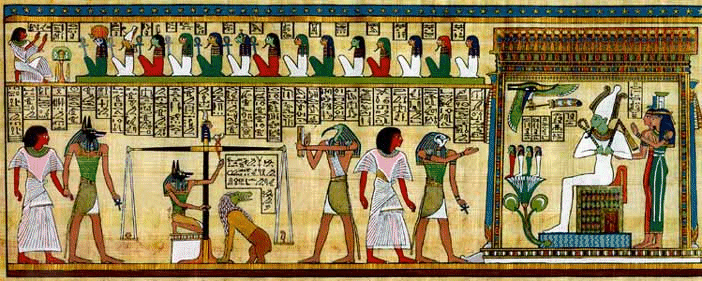
If the heart was free from the impurities of sin, and therefore lighter than the feather, then the dead person could enter the eternal afterlife.
Apps for any screen
A blog by the Institute for Quantum Information and Matter @ Caltech
PLato said,"Look to the perfection of the heavens for truth," while Aristotle said "look around you at what is, if you would know the truth" To Remember: Eskesthai
PLato said,"Look to the perfection of the heavens for truth," while Aristotle said "look around you at what is, if you would know the truth" To Remember: Eskesthai
PLato said,"Look to the perfection of the heavens for truth," while Aristotle said "look around you at what is, if you would know the truth" To Remember: Eskesthai
PLato said,"Look to the perfection of the heavens for truth," while Aristotle said "look around you at what is, if you would know the truth" To Remember: Eskesthai
PLato said,"Look to the perfection of the heavens for truth," while Aristotle said "look around you at what is, if you would know the truth" To Remember: Eskesthai
PLato said,"Look to the perfection of the heavens for truth," while Aristotle said "look around you at what is, if you would know the truth" To Remember: Eskesthai
A blog about physics... mostly.
Conversations About Science with Theoretical Physicist Matt Strassler
 Dialogos of Eide