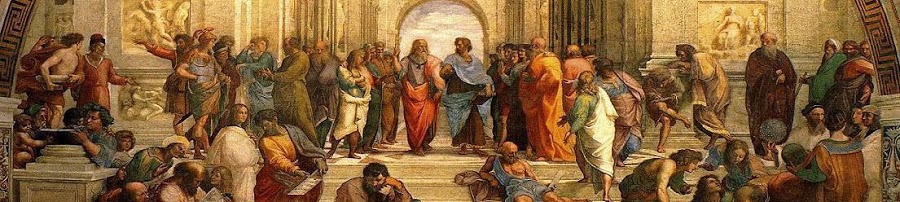
The simulation hypothesis proposes that all of reality, including the earth and the universe, is in fact an artificial simulation, most likely a computer simulation. Some versions rely on the development of a simulated reality, a proposed technology that would seem realistic enough to convince its inhabitants the simulation was real. The hypothesis has been a central plot device of many science fiction stories and films.





-
Recent Posts
Archives
Blogs I Follow
Categories
- 21 Grams
- Abraham Maslow
- AdS/CFT
- Aerogels
- Agasa
- AI
- Albrecht Durer
- Alchemists
- Alexandria
- Alice
- Aliens
- Allotrope
- AMS
- Analogies
- Anthropic Principal
- Anton Zeilinger
- Antony Garrett Lisi
- Aristotelean Arche
- Art
- Arthur Young
- Ashmolean Museum
- astronomy
- astrophysics
- Atlas
- Aurora
- Autonomy, Sovereignty, AI
- Avatar
- Babar
- Birds
- Black Board
- Black Holes
- Blank Slate
- Blog Developers
- Boltzmann
- Book of the Dead
- Books
- Bose Condensate
- Brain
- Branes
- Brian Greene
- Bubbles
- Calorimeters
- Cancer
- Carl Jung
- Cayley
- Cdms
- Cerenkov Radiation
- CERN
- Chaldni
- Charter
- Climate
- CMS
- Coin
- Collision
- colorimetry
- Colour of Gravity
- Compactification
- Complexity
- Computers
- Concepts
- Condense Matter
- Condensed Matter
- Cosmic Rays
- Cosmic Strings
- Cosmology
- Coxeter
- Crab Nebula
- Creativity
- Crucible
- Curvature Parameters
- Cymatics
- Daemon
- dark energy
- dark matter
- deduction
- Deep Play
- Deepak Chopra
- Dimension
- Dirac
- Don Lincoln
- Donald Coxeter
- E8
- Earth
- Economic Manhattan Project
- Economics
- Einstein
- Ekstasis
- Elephant
- Eliza
- Emergence
- Emotion
- Entanglement
- Entropy
- EOT-WASH GROUP
- Euclid
- Euler
- Ev and Sodium Storage-Batteries
- False Vacuum
- Faraday
- Faster Than Light
- Fermi
- Filter Bubble
- Finiteness in String theory Landscape
- first principle
- Flowers
- Fly's Eye
- Foundation
- Fuzzy Logic
- Game Theory
- Gamma
- Gatekeeper
- Gauss
- General Relativity
- Genus Figures
- Geometrics
- geometries
- George Gabriel Stokes
- Giovanni Girolamo Saccheri
- Glast
- Gluon
- Gordon Kane
- Grace
- Grace Satellite
- Gran Sasso
- Graviton
- Gravity
- Gravity Probe B
- Hans Jenny
- Harmonic Oscillator
- Heart
- Heisenberg
- Helioseismology
- HENRI POINCARE
- Higgs
- Holonomy
- Hooft
- Hot Stove
- House Building
- Hubble
- Hulse
- Hunger
- Hypomnemata
- IceCube
- imagery
- Imagery dimension
- imagery. gauss
- Induction
- Inertia
- Ingenuity
- Interferometer
- Internet
- Intuition
- Inverse Square Law
- Isostasy
- Jacob Bekenstein
- Jan 6
- Jet Quenching
- John Bachall
- John Bahcall
- John Mayer
- John Nash
- John Venn
- Jung
- kaleidoscope
- Kaluza
- Kandinsky
- Kip Thorne
- KK Tower
- Klein
- Koan
- L5
- lagrangian
- Landscape
- latex rendering
- Laughlin
- Laval Nozzle
- Law of Asymmetry
- Law of Octaves
- LCROSS
- Leonard Mlodinow
- LHC
- Liberal Arts
- Library
- Lighthouse
- Lightspeed
- LIGO
- Liminocentric
- Lisa Randall
- Lithium-ion, Sodium-ion
- LLM
- Loop Quantum
- LRO
- Ludwig Boltzmann
- M Theory
- Majorana Particles
- Mandalas
- Mandelstam
- Marcel Duchamp
- Marshall McLuhan
- Martin Rees
- Mathematics
- Maurits Cornelis Escher
- Max Tegmark
- Medicine Wheel
- Membrane
- Memories
- Mendeleev
- Meno
- Mercury
- Merry Christmas
- Metaphors
- Metrics
- Microscopic Blackholes
- Microstate Blackholes
- Mike Lazaridis
- Mind Maps
- Mirror
- Moon
- Moon Base
- Moore's Law
- Moose
- Multiverse
- Muons
- Music
- Nanotechnology
- Nassim Taleb
- Navier Stokes
- Neurons
- Neutrinos
- nodal
- nodal Gauss Riemann
- Non Euclidean
- Nothing
- Numerical Relativity
- Octave
- Oh My God Particle
- Omega
- Opera
- Orbitals
- Oscillations
- Outside Time
- Parables
- Particles
- Pascal
- Paul Steinhardt
- Perfect Fluid
- perio
- Periodic Table
- Peter Steinberg
- PHAEDRUS
- Phase Transitions
- Photon
- Pierre Auger
- planck
- Plato
- Plato's Cave
- Plato's Nightlight Mining Company
- Polytopes
- Powers of Ten
- Projective Geometry
- Quadrivium
- Quanglement
- Quantum Chlorophyll
- Quantum Gravity
- Quark Confinement
- Quark Gluon PLasma
- Quark Stars
- Quarks
- Quasicrystals
- Quiver
- Ramanujan
- Raphael
- Raphael Bousso
- Relativistic Muons
- Resilience
- rhetoric
- Riemann
- Riemann Hypothesis
- Riemann Sylvestor surfaces
- Robert B. Laughlin
- Robert Pirsig
- Ronald Mallet
- Samson’s Riddle
- Satellites
- School of Athens
- science
- SDO
- Second Life
- Self Evident
- Self-Organization
- Sensorium
- Seth Lloyd
- Shing-tung Yau
- Signatore
- Sir Isaac Newton
- Sir Roger Penrose
- Smolin
- SNO
- Socrates
- Socratic Method
- SOHO
- Sonification
- sonofusion
- Sonoluminence
- Sound
- Sovereignty
- Space Weather
- Spectrum
- Spherical Cow
- Standard model
- Stardust
- StarShine
- Stephen Hawking
- Sterile Neutrinos
- Steve Giddings
- Steven Weinberg
- Strange Matter
- Strangelets
- String Theory
- Summing over Histories
- Sun
- Superfluids
- SuperKamiokande
- SuperNova
- SuperNovas
- Supersymmetry
- Susskind
- Sylvester Surfaces
- Sylvestor surfaces
- Symmetry
- Symmetry Breaking
- Synapse
- Synesthesia
- Tablet
- Tattoo
- Taylor
- The Six of Red Spades
- Themis
- Theory of Everything
- Thomas Banchoff
- Thomas Kuhn
- Thomas Young
- Three Body Problem
- Timaeus
- Time Dilation
- Time Travel
- Time Variable Measure
- Titan
- TOE
- Tomato Soup
- Tonal
- Topology
- Toposense
- Toy Model
- Transactional Analysis
- Triggering
- Trivium
- Tscan
- Tunnelling
- Turtles
- Twistor Theory
- Uncategorized
- Universal Library
- Usage Based Billing
- Veneziano
- Venn
- Vilenkin
- Virtual Reality
- Viscosity
- VLBI
- Volcanoes
- Wayback Machine
- Wayne Hu
- Web Science
- When is a pipe a pipe?
- White Board
- White Rose
- White Space
- Wildlife
- Witten
- WMAP
- Woodcuts
- WunderKammern
- Xenon
- YouTube
- Analogies
- Art
- Black Holes
- Brain
- Brian Greene
- CERN
- Collision
- Colour of Gravity
- Complexity
- Concepts
- Consciousness
- Cosmic Rays
- Cosmic Strings
- Cosmology
- dark energy
- dark matter
- deduction
- Dimension
- Dirac
- Earth
- Einstein
- Emergence
- Entanglement
- Foundation
- Gamma
- General Relativity
- geometries
- Glast
- Gluon
- Grace
- Grace Satellite
- Graviton
- Gravity
- Higgs
- Induction
- Internet
- lagrangian
- Landscape
- LHC
- LIGO
- Liminocentric
- Mandalas
- Mathematics
- Memories
- Microscopic Blackholes
- M Theory
- Muons
- Music
- Neutrinos
- Non Euclidean
- Nothing
- Outside Time
- Particles
- Philosophy
- Photon
- planck
- Plato's Cave
- Quantum Gravity
- Quark Gluon PLasma
- Quarks
- Satellites
- Self Evident
- Smolin
- Socratic Method
- Sound
- Space Station
- Standard model
- String Theory
- Sun
- Superfluids
- Susskind
- Symmetry
- Symmetry Breaking
- Time Travel
- Topology
Search
Possibilities
AI Black Holes CERN Colour of Gravity Concepts Cosmology dark energy dark matter Dimension Earth Einstein General Relativity geometries Gravity Landscape Mathematics M Theory Neutrinos Nothing Particles Photon Quantum Gravity Quark Gluon PLasma Sound Standard model String Theory Sun Symmetry Time Travel UncategorizedDialogos of Eide
 Dialogos of Eide