Science Deals with the Intangible


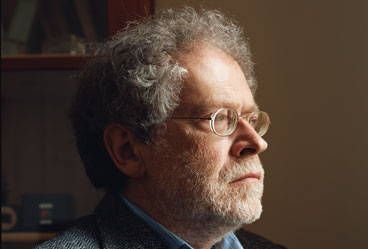
Alexander discusses his experience on the Science channel’s ‘Through the Wormhole.’ 

 I have been reading different perspectives about an experience Dr. Eben Alexander had and is written in Newsweek called.”Heaven Is Real: A Doctor’s Experience With the Afterlife.” I gained access to written material through The Daily Beast written on Oct 8th 2012. Also additional information from the Sam Harris Blog, and entitled article,”This Must Be Heaven,” on October 12, 2012.

 A review of this article also by PZMeyers, called,”Newsweek panders to the deluded again.

Okay, so you know,  I assume most scientists take the position of PZMeyers in terms of the proof that is required in terms of the validation of experience that is easily reproducible. We want other people to be able to objectively tell their point of view when it comes to the issues regarding the near death experience. Not to regard their training in terms of their education so as to be thwarted or derailed by experiencing reality in a new and profound way.

So if you are a scientist,  what procedures would you ask that such adventure be placed before such subjective investigation that one would say they have dealt responsibly with the research and development of a method to a “compilable experiencer of truth finding and factual evidence?”

So of course for me,  to see consciousness induced and being able to provide for the similarity of experience would be evidence for the reproducibility of at least explaining the basis of the experience.Would it not for you?

In, “The Photon and Emergence,” I begin to deal with a perspective and question about how we all perceive reality. Is this not an acceptable point of view about what emergence implies as one talks about  the masslessness of being,  while being a materialist in a material world?

I ventured to say that while I may see in terms of Lagrangian in as a classical description of our universe, it is almost if,  I had taken to verse and felt moved,  seeing the self as a massless being,  as moving through the Cosmo. The easiest and fastest route traveled,  without becoming attached to the environs of the materialist worlds.

Does it not seem that the environs of such worlds are as luring in thought as the question of what our attachments are in how meaning becomes our friend toward such expressions? So while Myers sees the original experience of Dr Eben Alexander as an conflated adaption of the original by virtue of the written after math, such is the reality of forming perspective raised by the definition. This attempt at finding and explaining the originality of the experience. Should we be asking,  have you experienced same?

So then indeed what is the equative formulation of such experience that one may follow not only the logic of  but of the science as well.

The Park

In the park there is something quite luring and settling in my own mind about what we experience in the material world and how we find meaning.  I mean this is what we  find  in uniqueness of our own characterizations of being that one could tell each other apart from another.

It would be far removed then from conduct becoming of being,  that such a person would defile another based on their telling experience. Sure,  one may not have recognized the value of the psychological in terms of what meaning plays in a person’s life. Why,  one can be seen  as being quite insensitive to the quest for defining and explaining the originality of that experience. The detractor, as a stance of scientific investigation I may say as another,  “be kind and truthful to yourself, ” while being absent of the same originality of experience you see.
 
As a layman I find this of particular importance when we send our vision out amongst the stars, all the while looking at the substance of these events “within the larger context of the universe.”


Dr. Kip Thorne, Caltech 01-Relativity-The First 20th Century Revolution

Working from the same periphery of dialogue that  an experiencier adds to the artifact of originality, may be displayed in analogy as some Spherical Cow of the reasoning of the sort as to finding the originality in expression?  Yet,  we use all the ways and means to define the experience of that moment by what elements lead to the discretion of the original? What was it’s original form? What motivations defined in the expression of the cosmos of being?

So we use the backdrop of measure to define the decay product of the original as to say that the original existed at some point defined in 10 -43seconds as an act,  do we say,  that such existence is not part and parcel now of the elements of the whole universe?

Posted in Uncategorized | Tagged | 5 Comments

Einstein Crossing the Room

this increases his resistance to movement, in other words, he acquires mass, just like a particle moving through the Higgs field

Okay maybe I took the image to seriously?:) I am no doubt focusing on the foundational attributes of our reality when it comes to how far one can sees, so of course I hope that such thoughts generated about the forms raise the issue of what was first or what was derived from first principles.

I mean of course it is necessary  to gain a position in logic approach to which advancement of truths may be encountered.  Dealing with not only with the responsibility to self,  but to what is espoused publicly. So while I am after the scientific attitude of relevance and experimental attitude to support such reasoning, I do want factual statements in light of the theory that is proposed,  and  advances of such thoughts as to what is reality forming?

The idea of time and its duration was a functional thing when proposed as a thought experiment with regard to A Hot stove and a pretty girl(On the Effects of External Sensory Input on Time Dilation.” A. Einstein, Institute for Advanced Study, Princeton, N.J.) one may have drawn a conclusion as Einstein did, that the,”  state of mind of the observer plays a crucial role in the perception of time.

Can I be faulted then in my continued quest to find meaning at such levels?

 Since there exist in this four dimensional structure [space-time] no longer any sections which represent “now” objectively, the concepts of happening and becoming are indeed not completely suspended, but yet complicated. It appears therefore more natural to think of physical reality as a four dimensional existence, instead of, as hitherto, the evolution of a three dimensional existence. Einstein

The schematic reasoning of point, line, and plane,  is somehow a gesture to a functional framework of geometrical identification and proportions as to expressions in reality. An escape from the realization of using straight lines and such to move too, a Non Euclidean geometry for perspectives about the nature and implication of curvature in space/time.

 Brian Greene:

it turns out that within string theory … there is actually an identification, we believe, between the very tiny and the very huge. So it turns out that if you, for instance, take a dimension – imagine its in a circle, imagine its really huge – and then you make it smaller and smaller and smaller, the equations tell us that if you make it smaller than a certain length (its about 10-33 centimeters, the so called ‘Planck Length’) … its exactly identical, from the point of view of physical properties, as making the circle larger. So you’re trying to squeeze it smaller, but actually in reality your efforts are being turned around by the theory and you’re actually making the dimension larger. So in some sense, if you try to squeeze it all the way down to zero size, it would be the same as making it infinitely big. …

But alas one might say I have been turned inside\out,  as an idea about the topological nature of a point in time,  in a mind about a spot and about a place called nothing.

See:

No matter how you view it, the Higgs field is not the universal giver of mass to things in the universe: not to ordinary atomic matter, not to dark matter, not to black holes. To most known fundamental particles, yes — and it is crucial in ensuring that atoms exist at all. But there would be just as much interesting gravitational physics going on in the universe if there were no Higgs field. There just wouldn’t be any atoms, or any people to study them. Why the Higgs and Gravity are Unrelated

The only things you need in order to know that gravity will exhibit (not “be-explained-in-terms-of”, for this explains nothing) spin-two gravitons is

1) the world is quantum mechanical

2) gravitational waves in Einstein’s theory are those of a spin-two classical field

As long as these two things are true, it’s guaranteed; for in a quantum mechanical world, all waves are made from quanta (which is what particles are — ripples of minimal height), quanta all must have integer or half-integer spin, and the properties of the waves follow from the spin of their quanta. So you can infer the quantum numbers of quanta from the properties of the corresponding waves, without knowing anything else. You can infer from Maxwell’s equations for electric and magnetic fields that if there is quantum mechanics in the world, electromagnetic waves will be made from spin-one quanta (namely photons.)

To make a full theory of quantum gravity, however, you need a vastly more complete understanding of how all the fields of nature interact with each other. This is where all the mathematical challenges arise. It is the same for understanding what photons do when they interact with matter; you need much more than Maxwell’s equations for that! Quantum electrodynamics (QED) was quite challenging to develop, long after people knew about photons. And quantum gravity will be that much more difficult — but spin-two gravitons will be a part of it, unless quantum mechanics has to be completely revised even for ordinary gravitational waves.

    Posted in Uncategorized | Leave a comment

    Occultation

    An Earth orbiting detector sensitive to gamma ray photons will see step-like occultation features in its counting rate when a gamma ray point source crosses the Earth’s limb.

    This is due to the change in atmospheric attenuation of the gamma rays along the line of sight. In an uncollimated detector, these occultation features can be used to locate and monitor astrophysical sources provided their signals can be individually separated from the detector background. We show that the Earth occultation technique applied to the Burst and Transient Source Experiment (BATSE) on the Compton Gamma Ray Observatory (CGRO) is a viable and flexible all-sky monitor in the low energy gamma ray and hard X-ray energy range (20 keV – 1 MeV). The method is an alternative to more sophisticated photon imaging devices for astronomy, and can serve well as a cost-effective science capability for monitoring the high energy sky.

    Here we describe the Earth occultation technique for locating new sources and for measuring source intensity and spectra without the use of complex background models. Examples of transform imaging, step searches, spectra, and light curves are presented. Systematic uncertainties due to source confusion, detector response, and contamination from rapid background fluctuations are discussed and analyzed for their effect on intensity measurements. A sky location-dependent average systematic error is derived as a function of galactic coordinates. The sensitivity of the technique is derived as a function of incident photon energy and also as a function of angle between the source and the normal to the detector entrance window. Occultations of the Crab Nebula by the Moon are used to calibrate Earth occultation flux measurements independent of possible atmospheric scattering effects. See:
    The Burst and Transient Source Experiment Earth Occultation Technique

    Posted in Uncategorized | 1 Comment

    When You Look at the Cosmos……?

    Scientists have turned up rare evidence that space-time is smooth as Einstein predicted, while pushing closer to a complete theory of gravity. From NASA Goddard Space Flight Center, Fermi Gamma Ray Space Telescope. See: SpaceRip.com

    …..you might be enamored with how you might see the cosmos as I am.

    The question of continuity of expression as some mathematical construct with out seeing the uniqueness of  lets say lensing….how might we associate with such dynamics of that continuity?

    According to Einstein’s theory of general relativity, the sun’s gravity causes starlight to bend, shifting the apparent position of stars in the sky.

    It’s the way in which the Lagrangian expressions are understood or how satellite travel helps to denote the pathways throughout our universe. Are traverse pathways being suggested as we might see the holes in the cosmos as unique just to satellite travel alone? Ask yourself how the photon is influenced then? What pathways are traveled that we may see the evidence on the screen that such association measure in the spectrum are revealing of events across space and time.

    Astronomers use the light-bending properties of gravity to view very distant galaxies–such as the arc shapes in this image–in a technique called “gravitational lensing.


    This book describes a revolutionary new approach to determining low energy routes for spacecraft and comets by exploiting regions in space where motion is very sensitive (or chaotic). It also represents an ideal introductory text to celestial mechanics, dynamical systems, and dynamical astronomy. Bringing together wide-ranging research by others with his own original work, much of it new or previously unpublished, Edward Belbruno argues that regions supporting chaotic motions, termed weak stability boundaries, can be estimated. Although controversial until quite recently, this method was in fact first applied in 1991, when Belbruno used a new route developed from this theory to get a stray Japanese satellite back on course to the moon. This application provided a major verification of his theory, representing the first application of chaos to space travel.

    See Also:

    Posted in Calorimeters, Fermi, lagrangian, Satellites | Tagged , , , , , | Leave a comment

    What are the Foundational Building Blocks of Reality?

    According to chemistry, everything in the universe is made of about 100 elements, as described by the Periodic Table. According to particle physics, those elements can be further divided into subatomic particles. The Standard Model, physics’ answer to the Periodic Table, contains a short list of ingredients for all of matter: six quarks, six leptons and four force-carrying particles. In a video posted to YouTube this week, Fermilab physicist Don Lincoln explains physicists’ recipe for the universe.See: Symmetry Magazine

    Posted in Uncategorized | Leave a comment

    G-2 Experiment

    See:

    Posted in Gran Sasso, Muons, Relativistic Muons | Tagged , , | Leave a comment

    Things to scale in Powers of Ten

    You know it won’t make sense until you see that the underlying perspective is as if you can look at the world with a microscope or, look at the universe in terms of a large scale.

    NanoTechnologies then are useful in terms of the job your doing and holds comparative views in terms of that Powers of Ten.

    In the Interview with Turok you want to look at the Cosmos o a Microscopic Scale so that you understand the relationship of Particulate research as a foundation approach to what drives the universe in expression. This is why Particle research is very important. But why you must be open to the development of the technologies that force you to look at the way we do things.

    Powers of Ten takes us on an adventure in magnitudes. Starting at a picnic by the lakeside in Chicago, this famous film transports us to the outer edges of the universe. Every ten seconds we view the starting point from ten times farther out until our own galaxy is visible only a s a speck of light among many others. Returning to Earth with breathtaking speed, we move inward- into the hand of the sleeping picnicker- with ten times more magnification every ten seconds. Our journey ends inside a proton of a carbon atom within a DNA molecule in a white blood cell. POWERS OF TEN © 1977 EAMES OFFICE LLC (Available at http://www.eamesoffice.com)

    See Also: Astronomy Picture of the Day

    Powers of Ten Blog

    Figure 0.1 Snapshots of the Universe at a selection of length scales from the smallest to the largest scale.

    See Also:

    Posted in Powers of Ten | Tagged | Leave a comment

    NanoTechnology

    Nanotechnology (sometimes shortened to “nanotech“) is the manipulation of matter on an atomic and molecular scale. Generally, nanotechnology works with materials, devices, and other structures with at least one dimension sized from 1 to 100 nanometres. Quantum mechanical effects are important at this quantum-realm scale. With a variety of potential applications, nanotechnology is a key technology for the future and governments have invested billions of dollars in its research. Through its National Nanotechnology Initiative, the USA has invested 3.7 billion dollars. The European Union has invested 1.2 billion and Japan 750 million dollars.[1]

    Nanotechnology is very diverse, ranging from extensions of conventional device physics to completely new approaches based upon molecular self-assembly, from developing new materials with dimensions on the nanoscale to direct control of matter on the atomic scale. Nanotechnology entails the application of fields of science as diverse as surface science, organic chemistry, molecular biology, semiconductor physics, microfabrication, etc.

    Scientists debate the future implications of nanotechnology. Nanotechnology may be able to create many new materials and devices with a vast range of applications, such as in medicine, electronics, biomaterials and energy production. On the other hand, nanotechnology raises many of the same issues as any new technology, including concerns about the toxicity and environmental impact of nanomaterials,[2] and their potential effects on global economics, as well as speculation about various doomsday scenarios. These concerns have led to a debate among advocacy groups and governments on whether special regulation of nanotechnology is warranted.


     The most scientifically sophisticated building ever constructed at the University of Waterloo, this one-of-a-kind centre will facilitate transformational research with applications spanning computing, communications, medicine and beyond. Shared by the Institute for Quantum Computing (IQC) and the Waterloo Institute for Nanotechnology (WIN), this building provides our researchers with the tools and opportunities to unlock the amazing power of quantum information science and the boundless potential of nanotechnology. The groundbreaking discoveries that happen here will continue Waterloo’s long tradition of research excellence and innovation through the 21st century.

    See: Ophelia Lazaridis Quantum-Nano Centre  and  Waterloo Institute for Nanotechnology

    See Also:

    Posted in Nanotechnology | Tagged | Leave a comment

    Neil Turok and Paul Kennedy at Perimeter

    Posted in Uncategorized | Tagged | Leave a comment

    Exploring the Relationship Between Mathematics and Music

    2010.103: Saloni Shah(2010) An Exploration of the Relationship between Mathematics and Music.Other thesis, Manchester Institute for Mathematical Sciences, The University of Manchester

    This mathematical connection to music is an important one in my view.  Certainly makes for some interesting reading.

    Posted in Uncategorized | Leave a comment