
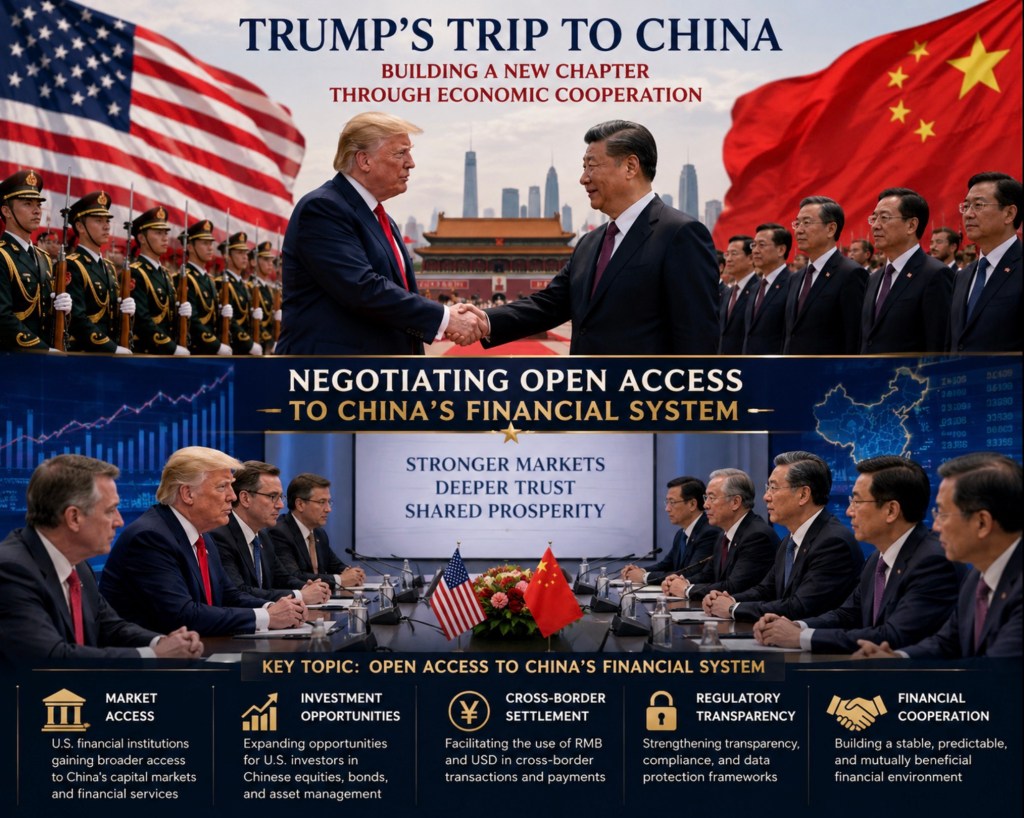
Who will control stable and circle digital currencies if US has opened access to China’s financial markets?
The question, turns upon a distinction often hidden beneath the language of “markets” and “currency.”
To ask who controls stablecoins is not merely to ask who owns the software. It is to ask:
- Who controls the reserves?
- Who controls the legal jurisdiction?
- Who controls redemption into real sovereign money?
- Who controls the payment rails and compliance systems?
Consider Circle and its USDC stablecoin. Though blockchain transactions appear borderless, the reserves backing USDC are overwhelmingly held in U.S. dollar assets such as Treasury bills and regulated banking structures. Circle itself operates under U.S. regulatory frameworks and licensing requirements.
Thus even if Chinese capital markets become more open to U.S. firms—or if American firms gain greater access to Chinese finance—the underlying control of a dollar stablecoin remains primarily tied to:
- U.S. law
- U.S. banking access
- U.S. Treasury markets
- U.S. sanctions/compliance systems
This is why many analysts increasingly view stablecoins as instruments of American monetary influence rather than neutral crypto assets.
Yet China understands this clearly. And because it understands, it does not appear eager to surrender monetary sovereignty to U.S.-backed digital dollars.
Instead, China has pursued three parallel paths:
- The digital yuan (e-CNY) through the People’s Bank of China
- Expansion of yuan settlement in trade
- Exploration of yuan-backed stablecoins, potentially through Hong Kong structures
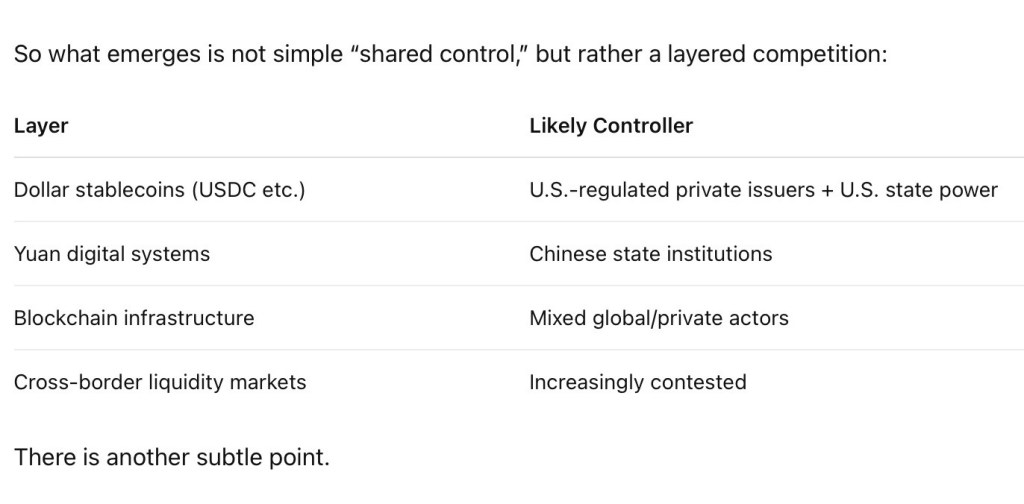
If U.S. firms gain access to Chinese financial markets, this does not necessarily mean China controls the stablecoins. It may instead mean both powers are attempting to enter each other’s monetary ecosystems without surrendering ultimate sovereign authority.
One might say:
- America seeks to digitize the dollar globally.
- China seeks to internationalize the yuan without opening full monetary freedom.
And stablecoins have become one battlefield in that wider contest.
See Also: Introducing: The AI Data Centers Moratorium Act

 Dialogos of Eide