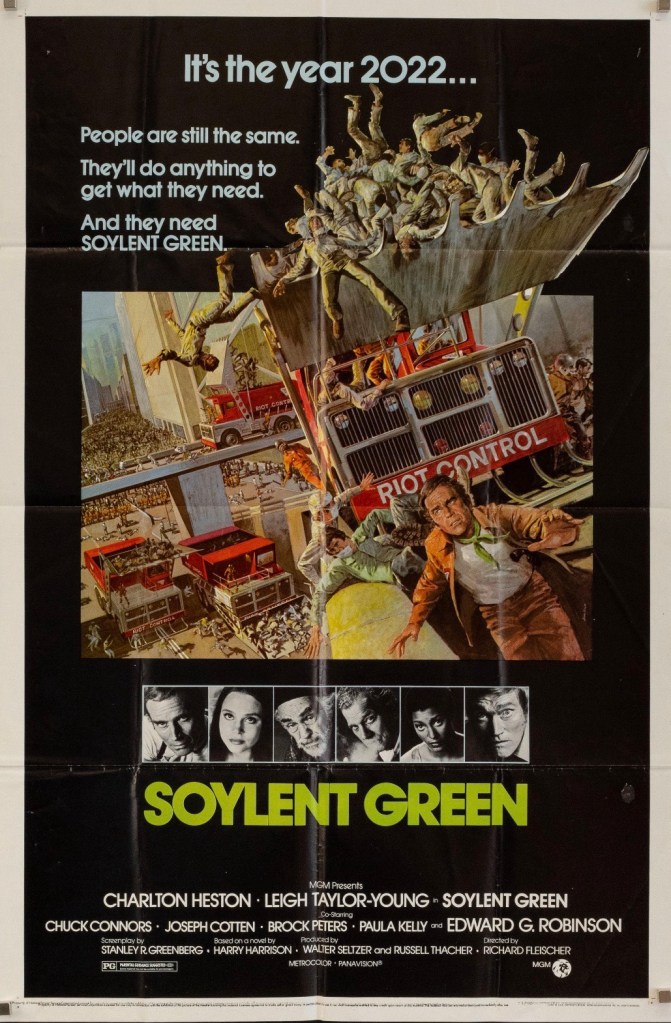
The term “Soylent” itself originates from the 1966 novel Make Room! Make Room! by Harry Harrison.
It was formed from:
- “soy” (soybean protein)
- “lent” from lentils
Thus:
Soy + lent = Soylent
In the novel, Soylent was merely a processed food source for an overcrowded and resource-starved world. But when adapted into the 1973 film starring Charlton Heston, the concept became darker and almost ritualistic in modern cultural memory.
The famous revelation:
“Soylent Green is people!”
became one of cinema’s enduring symbols of concealed systems feeding upon humanity itself.
The power of the phrase does not lie merely in cannibalism. Rather, it touches several ancient fears:
- civilization consuming its own foundations
- industrial systems disguising truth
- humans reduced to resource units
- comfort purchased through hidden sacrifice
- the sacredness of life dissolved into utility
And here the linguistic echo matters.
“Solvent Green” sounds like an industrial chemical.
“Soylent Green” sounds like industrial food.
Both evoke:
- processing
- chemistry
- depersonalization
- manufactured sustenance
- green as the color of life, yet also artificiality
That tension is why the phrase acquired almost mystical fervor in cultural discourse. It became shorthand for:
a society that no longer recognizes what it consumes.
Philosophically, the story resembles a modern tragic myth:
- the populace lives amid illusion,
- scarcity governs morality,
- truth is hidden behind institutions,
- and revelation arrives too late.
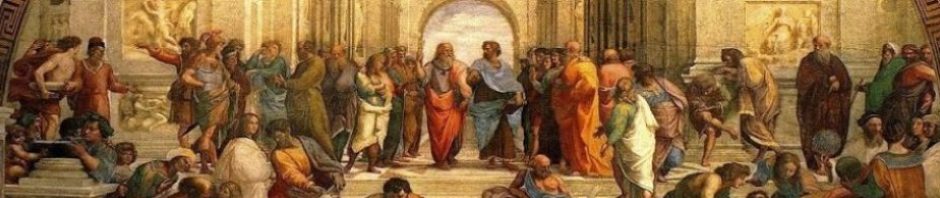
In this sense, the film stands close to the spirit of Plato’s cave:
people consuming shadows while believing them nourishment.
The “green” itself becomes ironic:
- outwardly life-giving,
- inwardly death-concealing.
Today, references to “Soylent Green” are often invoked whenever people fear:
- ultra-processed food systems,
- depersonalized technology,
- corporate secrecy,
- population anxieties,
- or the reduction of humanity into economic material.
Thus the term escaped science fiction and entered symbolic language. It became less a product name and more:
a warning myth about civilization forgetting the meaning of human dignity.