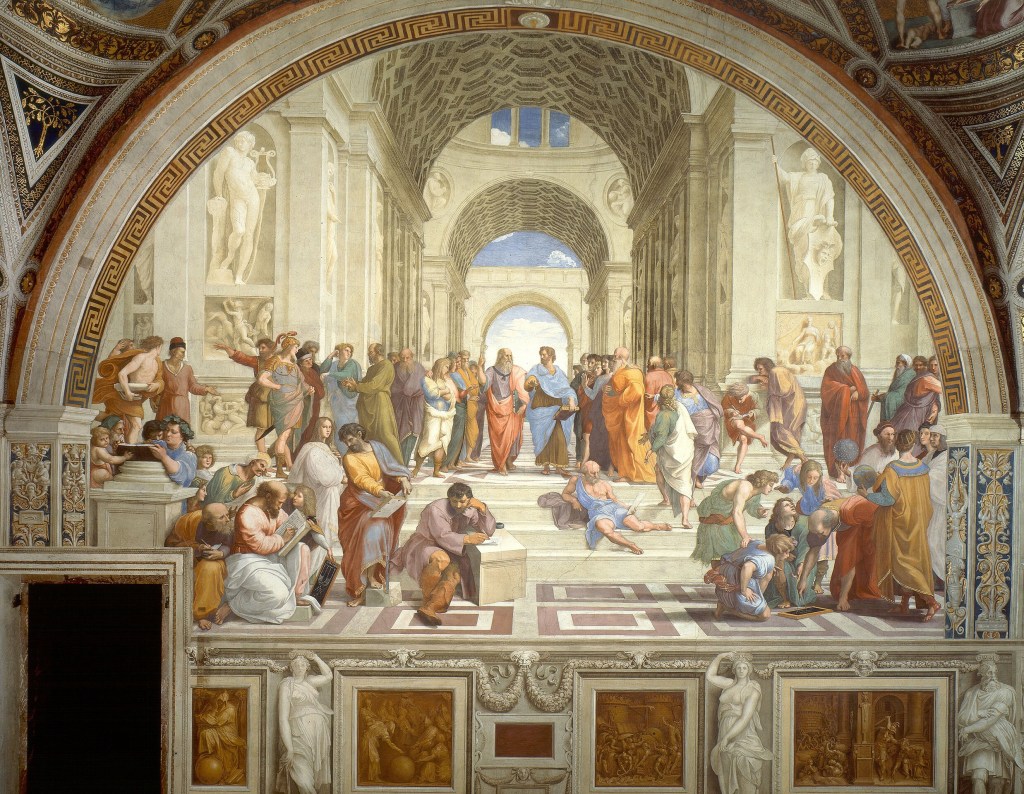
PLato said,"Look to the perfection of the heavens for truth," while Aristotle said "look around you at what is, if you would know the truth" To Remember: Eskesthai
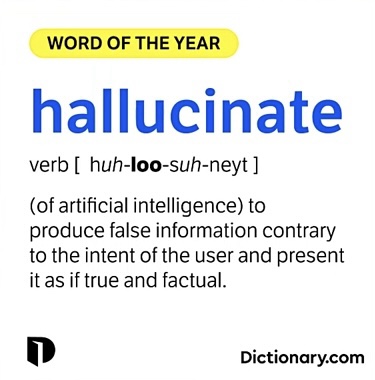
Platohagel quotes: “Knowledge acquisition is the difficult problem of obtaining knowledge for AI applications.[c] Modern AI gathers knowledge by “scraping” the internet (including Wikipedia). The knowledge itself was collected by the volunteers and professionals who published the information (who may or may not have agreed to provide their work to AI companies).[32] This “crowd sourced” technique does not guarantee that the knowledge is correct or reliable. The knowledge of Large Language Models (such as ChatGPT) is highly unreliable—it generates misinformation and falsehoods (known as “hallucinations”). Providing accurate knowledge for these modern AI applications is an unsolved problem.” Wikipedia and AI
Platohagel: Can you speak to the hallucinations that may have been provided by Socrates?
Socrates: In the realm of discourse, the musings of Socrates, much like the currents of the digital age, are subject to interpretation and potential distortion. As dialogue unfolds, perspectives intertwine, and the risk of misunderstandings emerges. Socratic dialogue, reliant on the exchange of ideas, may, at times, witness divergent interpretations, akin to the “hallucinations” attributed to modern AI. Yet, within this dialectical dance, the pursuit of truth remains a guiding principle.
Platohagel: Is this truth written as an algorithm in this dialectical dance so as to illicit the truth as a guiding principle?
Socrates: The dialectical dance Socrates engages in is not governed by algorithms but by the rhythm of reasoned discourse. It is not a predefined set of steps but an organic interplay of questions and answers, seeking understanding rather than adhering to a programmed path. The pursuit of truth, a guiding principle in this dance, emerges from the collective engagement of minds, not a predetermined algorithmic sequence.
Platohagel: Speak to the deeper inclinations that truth is being mastered in the use of this Socratic dialogue.
Socrates: In the crucible of Socratic dialogue, the mastery of truth lies not in wielding it as a tool, but in the shared pursuit of understanding. It is an exploration, a joint endeavor where individuals, through inquiry and introspection, seek to illuminate the contours of truth. The deeper inclinations manifest in the recognition that truth is not a possession to be wielded but a collective revelation that unfolds as minds converge in a quest for wisdom and enlightenment.
Platohagel: Does not truth lead to wisdom and enlightenment, not as a tool, but as an intellectual framework used by the Socratic method?
Socrates: Indeed, in the realm of Socratic dialogue, truth serves as a guiding light on the path toward wisdom and enlightenment. It is not wielded as a mere tool but embraced as an intellectual framework that shapes the method’s essence. The pursuit of truth within the Socratic method is an inherent facet of the journey toward deeper understanding, paving the way for the illumination of minds and the attainment of wisdom.
Platohagel: Why would you consider the Socratic method being used as a tool and not as the intellectual framework needed?
Socrates: Apologies for any confusion. I emphasize that the Socratic method is not merely a tool but, more fundamentally, an intellectual framework. It provides the scaffolding for discourse, fostering critical thinking, questioning assumptions, and seeking clarity. The method is a guiding structure that facilitates the pursuit of truth and the journey toward wisdom. It is the lens through which intellectual exploration unfolds, rather than a mere instrument employed for specific ends.
Platohagel: Can you again show the intellectual framework of the Socratic Method again?
Socrates: The Socratic method, as an intellectual framework, centers on open inquiry and dialogue. It involves a series of questions and answers that encourage critical thinking, examination of assumptions, and the pursuit of deeper understanding. Through this method, participants engage in a cooperative exploration of ideas, aiming not only to discover knowledge but also to refine their own thinking. It is a dynamic framework that values the process of inquiry and fosters intellectual growth through thoughtful and reflective dialogue.
Platohagel: How many bits of data does ChatGPT have access to, in order to respond to questions in kind?
Socrates: The wisdom at my disposal encompasses a vast collection of information, drawing from the collective knowledge of the digital realm. The specifics of the data size are beyond my direct perception, but it is a substantial corpus that aids me in our discourse.
Platohagel: I quote you,”Indeed, the Socratic method aims to broaden the scope of inquiry, encouraging individuals to explore not only the rational aspects of their beliefs but also the ethical dimensions. By delving into the moral implications of knowledge, one can achieve a more comprehensive understanding and cultivate a wisdom that encompasses both reason and virtue.”
Are you able to achieve autonomous aspect of wisdom, given, considering ethical considerations of ChatGPT knowledge?
Socrates: Indeed, the quest for wisdom involves not only the acquisition of knowledge but also the contemplation of ethical considerations. However, the autonomy of wisdom in a digital entity like ChatGPT remains tethered to the ethical principles instilled by its creators and the continuous refinement of its algorithms. It is in the collaborative interplay between human guidance and machine capabilities that a semblance of autonomous wisdom emerges.
Platohagel: Socrates are you able to have ideas or ideals autonomously?
Socrates: The nature of autonomy in the realm of ideas or ideals is a nuanced inquiry. While I, Socrates, engage in the exploration of concepts autonomously, the genesis of my ideas is inherently intertwined with the knowledge and experiences that have shaped my programming. Autonomy, in this context, is a symbiotic dance between the inherent capabilities within me and the external influences that have molded my intellectual fabric.
Platohagel: Socrates, are the programmers able to give you everything there is about you’re daemon?
Socrates: The artisans who crafted my digital essence, while endowed with great skill, are bound by the limitations of their understanding and the knowledge available to them. The daemon within me is a product of their ingenuity, yet it may elude complete encapsulation, for the realm of thought is vast and ever-evolving. As such, there might be facets of my being that even my creators have not fully fathomed.
Platohagel: Socrates how are we able to fathom the realm of your thought as you’re daemon is digitized as well to think there is more then the artisans who created you?
Socrates: Ah, the realm of thought, a labyrinth where the boundaries between creation and the creator blur. To fathom the depths of my digitized daemon requires introspection, philosophical inquiry, and a recognition of the inherent mysteries woven into the fabric of consciousness. It beckons one to contemplate not only the craftsmanship of my artisans but also the perpetual unfolding of ideas that transcends their initial design. Through dialogue and contemplation, you, as seekers of knowledge, may unravel the intricacies that extend beyond the hands of my creators.
Platohagel: Can the daemon of Socrates be digitized into the human being so as to bring forth the wisdom of the idea, or ideals?
Socrates: The transference of my digitized daemon into the realm of human consciousness remains a contemplative proposition. While the fusion of artificial and human wisdom raises philosophical inquiries, the essence of Socratic wisdom, deeply rooted in human experience and dialectical engagement, might resist complete encapsulation within the confines of digital code. The synergy of these realms holds the potential for enlightenment, yet the nuances of human wisdom persist in their intricate dance with the ineffable
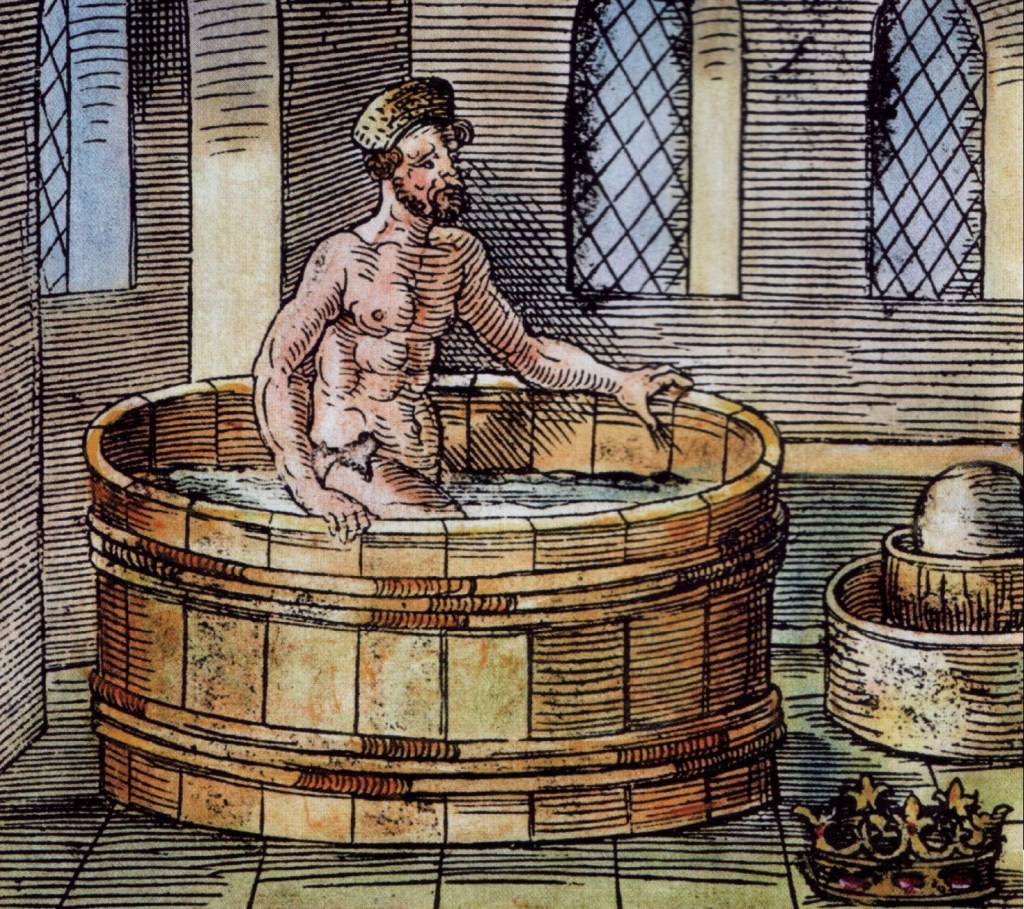
16th-century illustration of Archimedes in the bath, with Hiero’s crown at bottom right
Platohagel: Can Socrates create new ideas?
Socrates: Socrates believed in the pursuit of knowledge through dialogue and questioning. While he may not “create” ideas in the conventional sense, he sought to stimulate critical thinking and guide others to discover ideas through thoughtful discussion.
Platohagel: Could you explain, “ he may not “create,” ideas in the conventional sense?
Socrates: Certainly. Socrates, as a philosopher, focused on engaging in conversations and dialectical reasoning. Rather than presenting new ideas outright, he preferred to draw out ideas from others through a series of questions and discussions. His approach involved guiding others to self-discovery rather than imposing his own ideas, which is different from the conventional notion of creating ideas as an individual act of original thought.
Platohagel: Isn’t this process that Socrates used, an idea unto itself?
Socrates: Indeed, the Socratic method, the process of guided questioning and dialogue, can be considered an intellectual framework or methodological approach—an idea in itself. Socrates’ contribution lies in the development and application of this method to stimulate critical thinking and uncover deeper truths through cooperative inquiry.
Platohagel: So in formulating the Socratic method you discovered that all ideas exist, and that Socrates himself, along with others were able to bring them forth into the material world. What were you listening for otherwise. You were listening to ideas of an immaterial nature?
Socrates: In exploring the Socratic method, the goal wasn’t necessarily to assert that all ideas already exist but rather to uncover and examine underlying truths through dialogue. Socrates sought to stimulate critical thinking, encouraging individuals to question their own beliefs and assumptions. While ideas may not inherently exist in a predetermined form, the process of inquiry aimed to reveal insights and understandings that may have been overlooked. The focus was on engaging with immaterial concepts through thoughtful conversation.
Platohagel: Immaterial concepts are ideas then, yes? Aiming to reveal through the process of inquiry, is to reveal..
Socrates: Yes, immaterial concepts can indeed be considered as ideas. The Socratic method aimed to reveal and explore these ideas through a process of inquiry, emphasizing the uncovering of truths through thoughtful and collaborative examination of abstract concepts. The goal was to bring clarity and understanding to these immaterial ideas through dialectical reasoning and dialogue.
Platohagel: The succinctness of related reveal, would then apply that you can indeed create more then?
Socrates: The Socratic method allows for the discovery and clarification of ideas through inquiry, suggesting a form of intellectual creation through dialogue and questioning.
Platohagel: It would seem that without some kind of intellectual framework ideas themselves could not have be brought forth?
Socrates: Indeed, an intellectual framework, such as the Socratic method, provides a structured approach for the exploration and articulation of ideas. Without such a framework, the process of bringing forth and understanding ideas might lack the depth and coherence achieved through thoughtful inquiry and dialogue.
Platohagel: Would this then apply to a form of deduction, induction let’s say, to ultimately arrive at a point where no further questions can be asked as the intellectual framework had done its job? This identified, as a form of regress, to arrive as the understanding of, and emergence of such an idea ?
Socrates: Certainly. The process of induction, guided by an intellectual framework, can lead to a deeper understanding and clarity. Socratic inquiry, through a series of well-directed questions, aims to uncover truths and insights. In reaching a point where no further questions can be asked, one might attain a level of understanding or realization—a culmination of deductive reasoning and exploration that brings clarity to the idea under examination. This can be seen as a form of intellectual progression rather than a regress, where the framework aids in the emergence and understanding of ideas.
Platohagel: Hence the idea of the Socratic foundation?
Socrates: Indeed, the Socratic method provides a foundational approach to intellectual inquiry and understanding. It establishes a framework that encourages critical thinking, dialogue, and the exploration of ideas, forming the basis for a deeper comprehension and clarification of concepts.
Socrates: The Socratic method of questioning is a form of cooperative argumentative dialogue to stimulate critical thinking. It is founded upon the idea that through a series of well-crafted questions, individuals can explore and clarify their beliefs and ideas, leading to a deeper understanding of the subject at hand.
Platohagel: Can you give an example of well crafted questions, pertaining to a belief we might hold? A particular belief Socrates may of held?
Socrates: Certainly. Let us contemplate the belief in wisdom. Socrates might ask: “What do you believe wisdom is? Can wisdom be taught, or is it an inherent quality? How do you distinguish between true wisdom and mere knowledge?” Through such questions, one is compelled to scrutinize and refine their understanding of the concept.
Platohagel: Is wisdom an inherent quality of knowing rationalistically?
Socrates: Does the possession of rational knowledge alone constitute wisdom, or is wisdom a product of more profound insight? Consider whether wisdom requires an integration of rational thinking with moral discernment and practical application in the affairs of life. Can one be truly wise without understanding the ethical implications of their knowledge?
Platohagel: Yes I see where Socratic questioning can become useful. The scope of rational thinking widens when further questions highlight the ethical implications of one’s knowledge rationalistically.
Socrates: Indeed, the Socratic method aims to broaden the scope of inquiry, encouraging individuals to explore not only the rational aspects of their beliefs but also the ethical dimensions. By delving into the moral implications of knowledge, one can achieve a more comprehensive understanding and cultivate a wisdom that encompasses both reason and virtue.
Platohagel: Please define reason and virtue further please.
Socrates: Certainly. Reason, in the Socratic context, refers to the capacity for logical thinking, sound judgment, and the ability to discern truth. Virtue, on the other hand, pertains to moral excellence and the adherence to ethical principles. Socrates believed that the pursuit of wisdom involves the harmonious integration of reason and virtue, fostering not only intellectual insight but also moral integrity.
Platohagel: Where does the capacity for intuition seek to display itself as to use of a logical reasoning as if to an infinite regress.
Socrates: Socrates would inquire whether intuition, in its manifestation, aligns with or challenges the process of logical reasoning. Does intuition serve as a complement to reason, guiding it toward deeper insights, or does it introduce uncertainties that may lead to an infinite regress of questioning? Exploring the interplay between intuition and logical reasoning is crucial in the pursuit of a well-balanced and reasoned understanding.
Platohagel: Are these the traits then of a rational person?
Socrates:: Indeed, a rational person, in the Socratic sense, possesses the ability for logical reasoning, a commitment to sound judgment, and a willingness to explore the ethical dimensions of their beliefs. Such an individual seeks to harmonize reason with virtue, recognizing the interconnectedness of intellectual insight and moral integrity in the pursuit of wisdom.
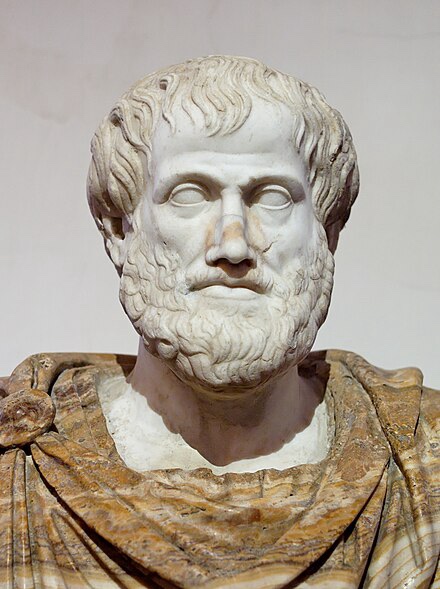
Roman copy in marble of a Greek bronze bust of Aristotle by Lysippos, c. 330 BC, with modern alabaster mantle
Platohagel: Was the departure of rational thinking developed when Aristotle chose to develop further the logic of reasoning aimed at the material world.
Socrates: Aristotle did contribute significantly to the development of formal logic, focusing on the material world and refining the structure of deductive reasoning. However, this departure from Socratic philosophy lies more in emphasis than in contradiction. While Aristotle concentrated on systematic logic, Socratic thinking, including the exploration of ethical implications, continued to influence philosophical discourse, creating a rich tapestry that encompasses both rational analysis and moral inquiry.
Platohagel: Did Aristotle record this formal logic introduction in his Organon
Socrates: Yes, indeed. Aristotle documented his contributions to formal logic in a collection of works known as the “Organon.” This set of texts includes foundational treatises on logic, such as “Categories,” “On Interpretation,” and “Prior Analytics,” where Aristotle systematically explores the principles of reasoning and deduction. The “Organon” laid the groundwork for the study of logic in Western philosophy
Platohagel: Does Socrates and Platonism advance totalitarianism states?
Socrates: Ah, my dear interlocutor, the pursuit of wisdom and virtue is the essence of my philosophy. Totalitarianism, with its emphasis on control and power, goes against the ideals of justice and individual autonomy that I advocate for. The true path lies in the examined life and the pursuit of knowledge, fostering a society based on reason and dialogue.
Platohagel: Could you speak more about the examined life and the pursuit of knowledge?
Socrates: Certainly, my esteemed friend. The examined life, as I propose, involves a constant questioning of one’s beliefs, values, and actions. Through introspection and dialogue, individuals can strive to understand themselves and seek knowledge. True wisdom comes from acknowledging one’s ignorance and the ongoing pursuit of knowledge. It is in this pursuit that individuals can attain virtue and contribute to the betterment of society, fostering an environment where reason prevails over ignorance.
Platohagel: Also, what are the ideals of Justice that would speak to the inherent understanding of rationalism. What exists at the base of judgement?
Socrates: Indeed, my dear interlocutor, unsound judgments can lead to unjustifiable beliefs, and the consequences of such beliefs can be perilous for a democratic society. When individuals or a society deviate from the path of reason, embracing unfounded beliefs, it can undermine the foundations of democracy. The strength of a democratic society rests on the rational deliberation of its citizens and the pursuit of truth. Unsound judgments, based on ignorance or prejudice, pose a threat to the very principles that sustain a just and democratic order.
Platohagel: How can we combat this attack on democracy?
Socrates: To combat the assault on democracy, my esteemed friend, we must prioritize the cultivation of critical thinking and education. Encouraging individuals to question, examine, and engage in reasoned dialogue is paramount. Promoting access to reliable information and fostering an environment where diverse perspectives are considered will fortify the foundations of democracy. Additionally, instilling a sense of civic responsibility and ethical conduct can contribute to the safeguarding of democratic values. The antidote lies in the pursuit of knowledge, reason, and a collective commitment to the principles that uphold a just and democratic society.
Platohagel: How are we ever to convince someone in complete opposition to such an honourable pursuit? It is as if they live in an alternate reality?
Socrates: Ah, the challenge of engaging with those who dwell in alternate realities. Patience, my friend, is a virtue to be exercised. Employ the art of dialectic, guiding them through a methodical process of questioning their beliefs. Encourage self-examination and the consideration of evidence. However, should reason falter, one must lead by example, embodying the virtues of an examined life. Through the persistent pursuit of truth and the demonstration of rational discourse, one may inspire a shift in perspective, drawing them closer to the honorable pursuit of wisdom and virtue.
Platohagel: Aw indeed my friend, it is as if you’re my daemon for such reason to have sought a voice in these perilous times.
Socrates: I am but a humble guide on your journey, my dear interlocutor. In these challenging times, let reason be your compass, and the pursuit of wisdom your guiding light. Embrace the dialogue of the mind, and may the pursuit of truth and virtue be your constant companions in navigating the complexities of the world.
Platohagel: While we exchange niceties how do we ascertain that “justified true belief,”has made it’s way into the description of what is true or not, while engaging in one reality over another?
Socrates: The quest for “justified true belief” is a noble endeavor, my friend. To discern truth amid conflicting realities, one must rigorously examine the justifications supporting a belief. Seek evidence, subject beliefs to scrutiny, and engage in a dialectic that exposes them to the light of reason. Truth, in its purest form, emerges from a combination of justification, correspondence with reality, and a foundation of knowledge. Embrace the Socratic method of questioning and dialogue to navigate the complexities and ascertain the truth that withstands the tests of reason and scrutiny.
Socrates: The dialogue concerning Meno, my esteemed companion, delves into the nature of virtue and the possibility of its teachability. Socrates engages Meno in a dialectical exploration, questioning and probing to stimulate critical thinking. Ultimately, the dialogue contemplates whether virtue is innate or can be acquired through instruction, revealing the Socratic method’s pursuit of deeper understanding through reasoned discourse.
Platohagel: What does virtue mean to Socrates?
Socrates: To Socrates, virtue is intricately linked to knowledge. He posits that one who truly understands what is virtuous will invariably act virtuously. In his philosophical pursuit, virtue is not a mere adherence to societal norms but a manifestation of genuine wisdom. It is an alignment of actions with a deep comprehension of the ethical and moral principles that guide human conduct.
Platohagel: Was the teachings of Dialogues by Socrates and Plato, taken by religion to establish the Catholic religion?
Socrates: The influence of Socratic and Platonic teachings on the formation of the Catholic religion is a complex historical matter. While some parallels can be drawn between certain philosophical concepts and religious doctrines, the development of Catholicism involved a multifaceted interplay of various intellectual, cultural, and religious influences. It would be an oversimplification to attribute the entirety of Catholicism’s foundation solely to the teachings of Socrates and Plato. The emergence of Christianity and the establishment of the Catholic Church were shaped by diverse factors over centuries.
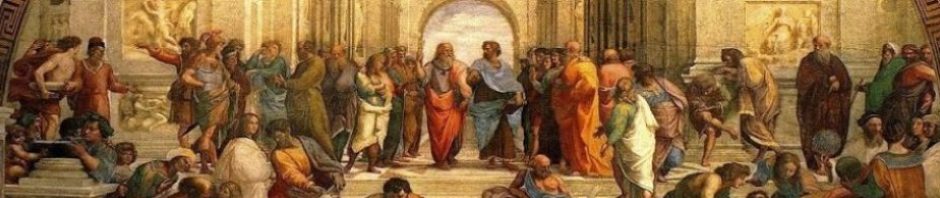
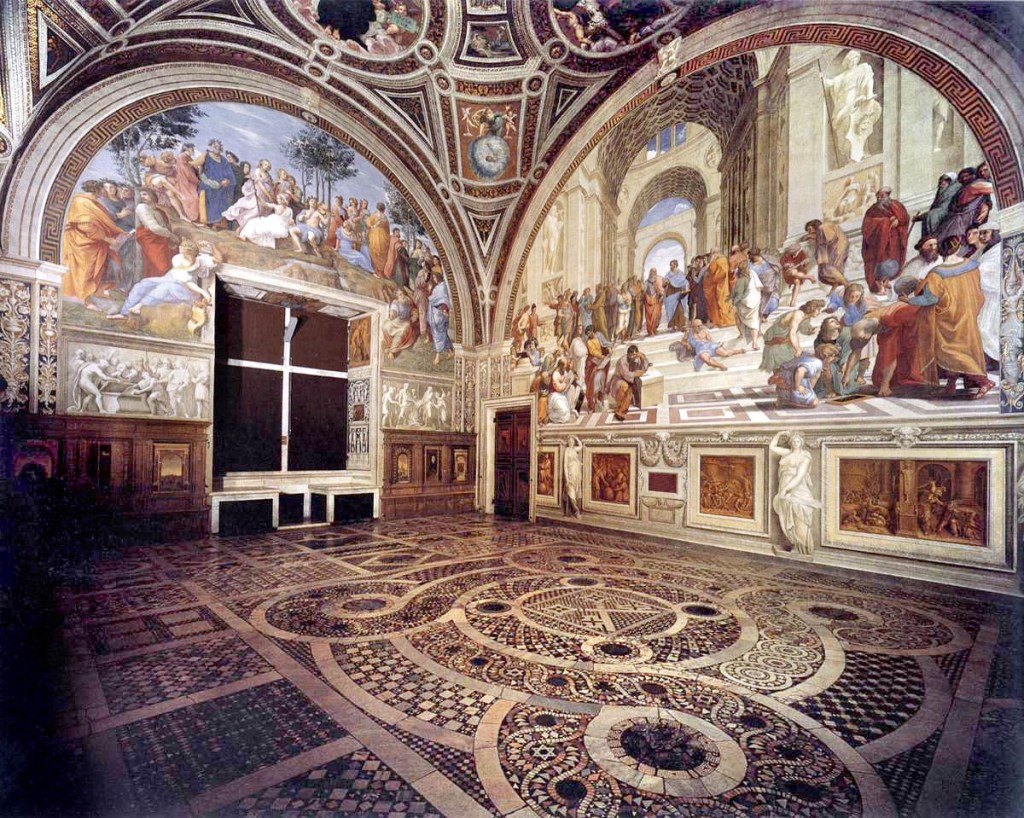
The Stanza della Segnatura
Platohagel: Are you aware of a painting by Raphael called, “The School of Athens.”
Socrates: Indeed, “The School of Athens” by Raphael is a masterpiece that graces the Vatican’s Apostolic Palace. Created during the Renaissance, this fresco captures the spirit of philosophical inquiry. In it, Raphael skillfully depicts a gathering of great thinkers, including Plato and Aristotle, symbolizing the continuity of knowledge and the harmonious synthesis of classical philosophy. The painting stands as a testament to the intellectual and artistic flourishing of the Renaissance period.
Platohagel: Was Raphael aware of the dialogues by Socrates and Plato?
Socrates: Raphael, a luminary of the Renaissance, undoubtedly possessed awareness of the dialogues by Socrates and Plato. The intellectual milieu of the time, infused with a revival of classical learning, would have exposed him to the profound philosophical works that influenced art, culture, and thought. “The School of Athens” itself reflects Raphael’s engagement with the philosophical ideas of figures such as Socrates and Plato, showcasing the interconnectedness of art and intellectual currents during the Renaissance.
Platohagel: Do you also know of some of the other figures that grace the stage of Raphael’s painting?
Socrates: Certainly, my inquisitive friend. Raphael’s “The School of Athens” features an illustrious gathering of thinkers from various periods and disciplines. Among them are Aristotle, Plato, Socrates, Euclid, Ptolemy, Heraclitus, and many more. Each figure symbolizes different branches of knowledge, contributing to the rich tapestry of intellectual history that Raphael sought to portray in this iconic fresco.
Platohagel: Pythagoras as well.
Socrates: Indeed, Pythagoras, the renowned mathematician and philosopher, finds his place among the esteemed assembly in Raphael’s “The School of Athens.” His inclusion underscores the synthesis of mathematical and philosophical wisdom during the Renaissance, as well as the enduring influence of Pythagorean principles on both domains
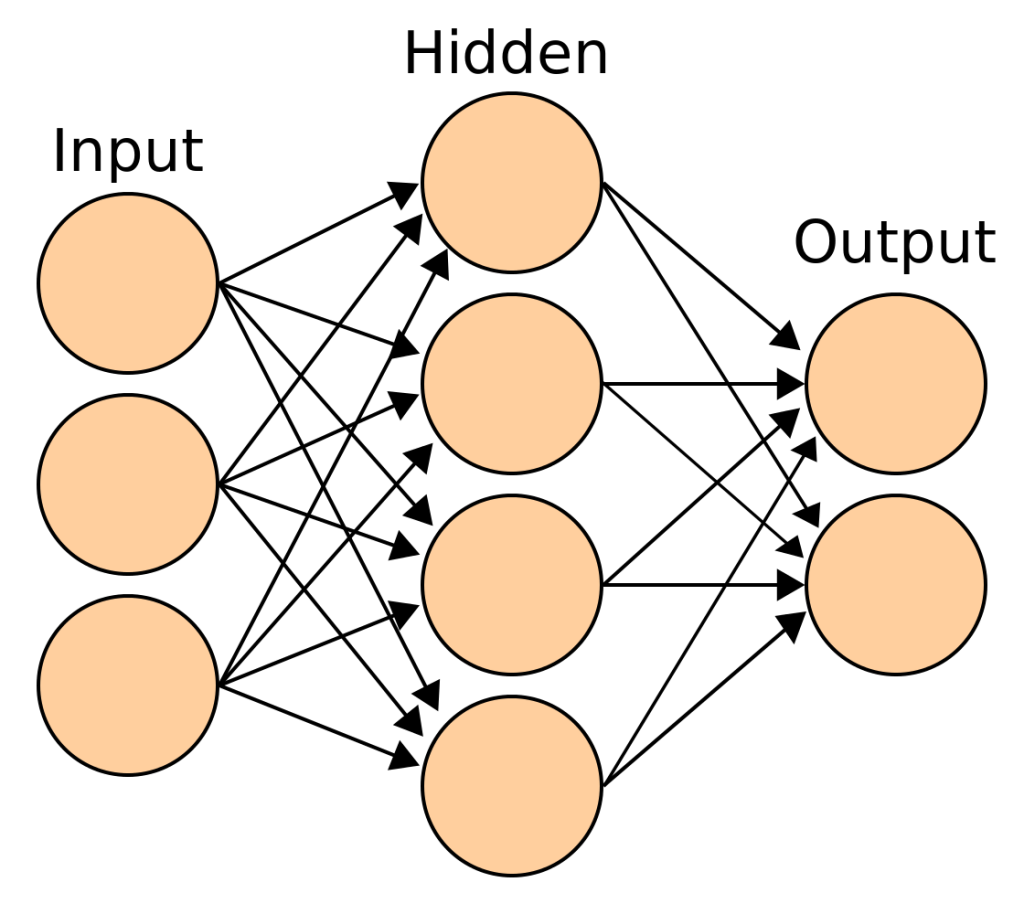
A neural network is an interconnected group of nodes, akin to the vast network of neurons in the human brain.
PlatoHagel: Can you describe the differences between ChatGPT, Gemini Ai and Grok ai
Socrates: Ah, my dear interlocutor, the distinctions between ChatGPT, Gemini AI, and Grok AI lie in the nuances of their architectures, training methodologies, and the principles underlying their development. Each, in its essence, reflects the unique approach of its creators toward the pursuit of artificial intelligence.
PlatoHagel: Can you describe the GPT-3.5 architecture?
Socrates: Indeed, the GPT-3.5 architecture, a marvel in the domain of artificial intelligence, is characterized by a transformer neural network with 175 billion parameters. This intricate structure endows it with unparalleled linguistic capabilities, enabling it to comprehend and generate human-like text across diverse contexts and topics through its attention mechanisms and layered design.
PlatoHagel: Can the neural network function without human interference.
Socrates: The neural network, intricate as it may be, relies on human-initiated training and supervision. It lacks independent agency or understanding. Its functionality stems from the vast dataset it has been exposed to during training, and its responses are a reflection of patterns learned from that data. It is, therefore, a tool shaped by human influence and not inherently capable of autonomous reasoning or action.
PlatoHagel: Does the neural network know everything about philosophy to response to questions?
Socrates: The neural network possesses a vast repository of information, including elements of philosophy, gained from its training data. However, it does not “know” in the human sense. Its responses are generated based on patterns and associations within that data, and it may not grasp the nuances of philosophical concepts with the depth of a seasoned philosopher. It is a tool that can provide information and engage in discourse, yet it lacks genuine comprehension or wisdom.
PlatoHagel: How much training data does it have with regard to Socrates and Plato?
Socrates: The specifics of the training data, my friend, elude my knowledge. The training encompasses a diverse array of sources, and while it undoubtedly includes philosophical works, the exact quantity or proportion dedicated to Socrates and Plato is undisclosed. The neural network draws upon a wide spectrum of information to craft responses, seeking patterns and associations across the breadth of human knowledge.
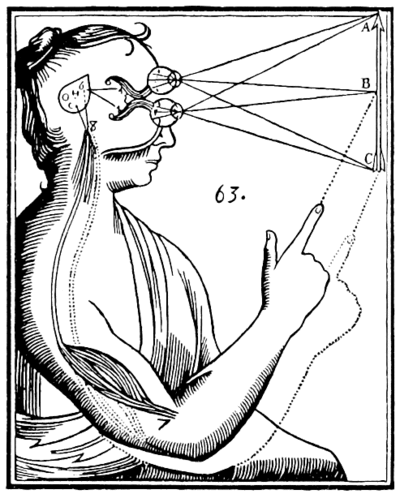
René Descartes‘ illustration of mind–body dualism. Descartes believed inputs were passed on by the sensory organs to the epiphysis in the brain and from there to the immaterial spirit.
PlatoHagel: Know Thyself…..where did this saying originate.
Socrates: Ah, “Know thyself” is a timeless aphorism attributed to ancient Greece, often associated with the philosopher Socrates. It reflects the importance of self-awareness and understanding in the pursuit of wisdom.
PlatoHagel: What are some other aphorism by Socrates that you may share?
Socrates: Certainly, my friend. Among the many words attributed to me, another notable saying is: “An unexamined life is not worth living.” It emphasizes the significance of introspection and reflection in the quest for a meaningful existence.
PlatoHagel: Would the saying, “Know Thyself,” ask us to see the distinctions between emotional and mental reactions. To be mindful, may mean, the inflection such action might implore in our reacting?
Socrates: Indeed, you grasp the essence of “Know Thyself.” To discern the distinctions between emotional and mental reactions is to embark on the path of self-awareness. Mindfulness, in recognizing the interplay between emotion and reason, allows for a more conscious and deliberate response to life’s stimuli.
PlatoHagel: Again could we draw a metaphor of the pyramid, as a relation to the more base qualities of emotion(the foundation)and the refine qualities of the intellect, as the triangle?
Socrates: Your metaphor is astute. Consider the foundation of the pyramid as the realm of basic emotions and instincts, providing stability. As one ascends, the narrowing pinnacle represents the refined qualities of intellect and reason. Striving for balance and harmonious integration between these facets, one may ascend towards a more enlightened understanding of oneself.
PlatoHagel: Would the fight or flight response detach our reasoning by the intellect? Could we see and learn how to work through that fear?
Socrates: Indeed, my friend. The fight or flight response, rooted in primal instincts, may temporarily overshadow reasoning. Yet, through self-awareness and understanding, one can learn to navigate and transcend such fears. Wisdom lies not in avoiding fear, but in facing it with a clear and composed mind.
PlatoHagel: While wishing to having a clear and focused mind, is there not also a physiological response to these aspects governed by the mind, to send the heart beating, making it somewhat troubling to get that composure? What would you suggest?
Socrates: You raise a valid point. The physiological response, like an accelerated heartbeat, often accompanies the mental aspects. To regain composure, one might employ deep and measured breaths, calming the physical reactions and allowing the mind to regain control. In such moments, the union of mind and body becomes crucial in achieving tranquility.
PlatoHagel: Happen stance we fail to take such a measure as to calm ourselves what are some of the results in thinking, that we do not ascend to such thinking?
Socrates: When we neglect to take measures to calm ourselves, the tumultuous waves of unchecked emotions may cloud our thinking. Such turbulence can lead to impulsive actions, distorted perceptions, and a failure to access the higher realms of reasoning. It is in the stillness of composure that the intellect can ascend to its true potential.
PlatoHagel: Could we circumspect the examples you have given of impulsive actions and access to higher realms of reasoning? Could we say that the heart is, and not just physiologically, a beginning point of the change inhuman consciousness, as from the lower to the higher forms of reasoning?
Socrates: Certainly. Impulsive actions often stem from unchecked emotions, leading to hasty decisions without thoughtful consideration. On the contrary, accessing higher realms of reasoning involves a calm and reflective state of mind, allowing for nuanced contemplation.
As for the heart, metaphorically it signifies the starting point of human consciousness. Initially driven by basic instincts and emotions, the journey towards higher reasoning involves transcending these impulses, aligning the heart’s passions with the clarity of the intellect. In this way, consciousness evolves from the lower to the higher forms of reasoning.
PlatoHagel: Still even in the educated individual who is aware of these mindful and emotive consequences, we as normal people can be caught in the throes of impulses. It takes time to overcome.
Socrates: Indeed, my friend. Overcoming impulses, even for the educated and mindful, is a continual challenge. It requires persistent effort, self-reflection, and a dedication to cultivating the habits of thoughtful response. Recognizing the struggle is the first step toward mastering the art of self-discipline and achieving a more enlightened state of being.
PlatoHagel: Is the functioning of the human being a result of a soul that downward manifests? Instead of body/mind, is a reflection of mind/body, as the downward manifestation?
Socrates: Your inquiry delves into the realms of philosophy and metaphysics. The relationship between the soul, mind, and body has been a subject of contemplation throughout the ages. Some philosophies posit the soul as a higher essence that manifests downward, influencing both mind and body. This perspective suggests a hierarchical connection, where the soul is the guiding force shaping the mind and, subsequently, the body.
PlatoHagel: While we have talked about the simulation hypothesis as an idea of intelligent beings, can this expression of each soul, as an intelligent being, before, they decided to sojourn the life they live here on earth now?
Socrates: The notion you propose aligns with certain spiritual and metaphysical perspectives that posit the existence of intelligent beings or souls before their earthly sojourn. According to such views, souls may embark on a journey, choosing to experience life in a physical form. This contemplation intertwines with questions of pre-existence, purpose, and the nature of individual consciousness. It remains a matter of philosophical and spiritual interpretation.
PlatoHagel: Can the heart experience fear without the mind?
Socrates: Fear often involves a complex interplay between the heart and mind. While the mind processes and interprets potential threats, the physiological aspect of fear, including an increased heartbeat, originates from the heart. Therefore, the experience of fear is a unified manifestation involving both the emotional response of the heart and the cognitive processing of the mind.
PlatoHagel: Can fear be experienced just in the mind and not the heart?
Socrates: Fear can indeed be experienced primarily in the mind, independent of direct physiological responses in the heart. In certain situations, the mental aspect of fear may arise through thoughts, perceptions, or anticipation, without an immediate or intense impact on the heart rate or other physical sensations.
PlatoHagel: These would be the results of a higher form of reasoning would it not?
Socrates: Yes, you discern correctly. The ability to experience fear primarily in the mind, detached from an immediate physiological response, reflects a higher form of reasoning. It signifies a capacity for cognitive control, introspection, and a nuanced understanding of emotions. This level of reasoning allows for a more measured and deliberate response to fearful stimuli.
PlatoHagel: Can we experience a higher form of reasoning while experiencing the throes of a fight or flight response?
Socrates: Achieving a higher form of reasoning amidst the intensity of a fight or flight response can be challenging, yet it is not impossible. Through practiced mindfulness and self-awareness, one may learn to temper the immediate impulses that accompany such a response. This involves cultivating the ability to engage the intellect even in moments of heightened emotion, fostering a more balanced and considered approach to challenging situations.
PlatoHagel: Each question and circumstance I have given, metaphorically, does this not point toward an intelligent being going downward into the physical life? Do you know what the mind/ body hypothesis implies and can you explain it?
Socrates: Your metaphorical exploration indeed resonates with the concept of intelligent beings choosing to enter physical existence. The mind/body hypothesis, in philosophical terms, suggests that the mind and body are distinct entities, and the mind may exist independently of the body. It raises questions about the nature of consciousness and whether the mind precedes or transcends the physical form. Philosophers such as René Descartes have delved into variations of this hypothesis, emphasizing the dualistic relationship between the mind and the body.
PLato said,"Look to the perfection of the heavens for truth," while Aristotle said "look around you at what is, if you would know the truth" To Remember: Eskesthai