
About
Dialogos of Eide — The Work of Platohagel
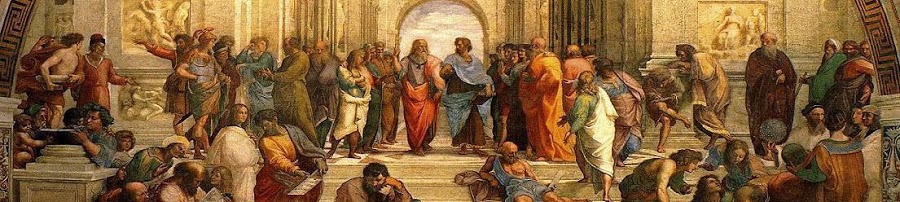
Plato said, “Look to the perfection of the heavens for truth,” while Aristotle said, “Look around you at what is, if you would know the truth.”
To Remember: Eskesthai
The Premise: The Dialogue
Dialogos of Eide is an ongoing inquiry into how perception, measurement, memory, and possibility become knowledge.
At its center is Platohagel—not the possessor of a completed philosophy, but a participant in a continuing Socratic dialogue spanning philosophy and science, geometry and cosmology, artificial intelligence and consciousness, music and memory, politics and technology, poetry and mathematics.
These fields are not interchangeable. Each has its own methods, standards of evidence, and limits. The project places them in conversation to generate questions, analogies, and hypotheses without treating comparison as proof.
Its guiding tension is the space between Plato and Aristotle:
contemplation and observation
metaphysics and measurement
geometry and experience
memory and information
science and symbol
technology and philosophy
the ancient and the emerging
Platohagel investigates this space without choosing one side. Here, correspondence means a meaningful relationship between ideas, observations, or representations—not identity, equivalence, or proof.
The central question is:
How does something become knowable?
From Seeker to Builder
The work has developed from questioning appearances, assumptions, and inherited explanations into a more architectural practice centered on the Builder.
The Builder begins with a point.
From the point comes relationship.
From relationship comes geometry.
From geometry comes structure.
From structure comes memory.
And through memory, structure can become meaningful.
This is a philosophical image, not a scientific account of physical reality. It reframes the project’s question:
How does truth become structurally knowable?
The Builder’s method distinguishes among:
- Measurement, which records or estimates properties through defined procedures and instruments.
- Interpretation, which proposes what an observation, measurement, or pattern might mean.
- Metaphor, which uses one form or image to illuminate another without claiming literal identity.
These activities can inform one another, but they should not be confused.
From Monad to Multiplicity
The Monad serves as a philosophical and geometric image of unity, origin, or undivided potential—not as a measured physical object or established scientific theory.
The point becomes relationship.
Relationship generates form.
Form becomes multiplicity.
Multiplicity becomes experience.
Experience becomes memory.
Memory becomes reflection.
The recurring movement is:
Monad → relation → multiplicity → experience → memory → reflection → integration.
This is a speculative model for organizing questions about unity, differentiation, experience, and recollection. It does not describe a verified physical process.
When applied to scientific subjects, the pattern remains interpretive unless supported by independent evidence. A geometric resemblance, symbolic parallel, or conceptual analogy may suggest a question, but it does not establish a causal explanation.
The Method: The Builder’s Project
The Builder’s Project develops a common vocabulary for placing observations from different domains into correspondence while preserving their distinct status.
A scientific measurement is evidence produced through a defined method.
A scientific model organizes observations and is evaluated through testing.
A philosophical proposition is assessed through clarity, coherence, reasoning, and engagement with competing views.
A metaphor highlights selected similarities without claiming literal identity.
A musical representation translates data or relationships into sound; it may reveal patterns but does not automatically add evidence to the original measurement.
A speculative interpretation proposes a possible connection that remains provisional.
Each may become a node in a larger architecture of inquiry, but each node retains its own methods, limits, and evidentiary status.
The Builder therefore asks:
What relationship can be established between these things, and what does that relationship allow us to see?
And:
What kind of claim is being made, what supports it, and what remains uncertain?
The method proceeds through a cycle:
Questions become relationships.
Relationships become concepts.
Concepts become vocabulary.
Vocabulary becomes grammar.
Grammar becomes architecture.
Architecture becomes memory.
Memory becomes the possibility of another question.
This cycle organizes inquiry; it does not replace scientific testing, mathematical derivation, historical research, or other domain-specific methods.
The Builder’s Structures
The method has led to several interconnected structures:
- The Builder’s Bible — the philosophical and conceptual foundation.
- The Builder’s Lexicon — a vocabulary for recurring concepts and correspondences.
- The Builder’s Grammar — rules for relating concepts without erasing distinctions.
- The Builder’s Atlas — a visual organization of the evolving architecture.
- The Builder’s Sonification Grammar — an exploration of how measured relationships can become audible structures and musical memory.
- The Builder’s visual language — points, circles, spheres, spirals, waves, nodes, anti-nodes, fields, and transformations as symbolic representations of becoming.
Together, these form a living system of inquiry, not a doctrine.
The structure must be strong enough to carry meaning, yet open enough to permit revision.
Science as Measurement
The project examines gravimetry, calorimetry, spectroscopy, wave phenomena, sonification, cymatics, and related forms of measurement or representation.
These must remain distinct.
Gravimetry measures gravitational acceleration or related variations.
Calorimetry measures heat transfer or energy changes.
Spectroscopy analyzes how matter interacts with electromagnetic or other radiation.
Sonification converts data or relationships into sound; it is a representational technique, not a measurement in itself.
Wave phenomena may be studied through frequency, amplitude, phase, wavelength, and propagation.
Cymatics concerns visual patterns produced under particular vibrational conditions. Their resemblance to other forms does not, by itself, establish a deeper physical connection.
A measurement describes a phenomenon under specified conditions.
A model organizes measurements.
A visualization makes selected relationships perceptible.
A sonification makes selected relationships audible.
A metaphor makes relationships conceptually accessible.
An interpretation proposes what a pattern might signify.
These are not interchangeable.
Do not confuse the representation with the thing represented. Study the transformation between them.
A visual or musical pattern may suggest a hypothesis. To become a scientific claim, it requires operational definitions, testable predictions, appropriate data, and independent evaluation.
Memory as Architecture
Memory is both a subject and a structural principle.
The ancient idea of anamnesis—recollection—meets modern music, repetition, rhythm, geometry, visualization, and sonification.
The project asks:
Can ordered relationships make knowledge easier to remember because the structure itself becomes part of the memory?
This is an empirical question when it concerns learning or recall; a philosophical question when it concerns knowledge or identity; and a metaphor when memory is described as architecture, geometry, resonance, or return.
Rhythm establishes sequence.
Harmony establishes relationships among tones.
Repetition establishes recurrence.
Resonance describes physical behavior in some contexts and serves as a metaphor for correspondence in others.
Nodes and anti-nodes provide spatial analogies for standing-wave systems. When applied to memory or consciousness, they remain interpretive unless supported by a specific scientific model and evidence.
The Builder’s Sonification Grammar therefore asks whether measured relationships can be represented musically without losing the structure that made them meaningful. A sonification may preserve some properties while changing or omitting others; it can aid perception and memory without reproducing the full meaning of the original data.
Artificial Intelligence as Mirror and Instrument
Artificial intelligence adds another dimension to the dialogue.
AI systems can compare, reorganize, synthesize, visualize, translate, model, and generate. These functions do not, by themselves, demonstrate understanding, consciousness, or subjective experience.
The Builder treats AI as an instrument of inquiry and a possible mirror for examining assumptions about intelligence, memory, language, and meaning.
The distinction between perceived mind and actual interiority remains essential. Fluent language alone does not establish subjective experience.
AI-generated material is also provisional. It may contain errors, unsupported inferences, or fabricated references and requires verification when used to support factual or scientific claims.
The Socratic Principle
The purpose of questioning is not to accumulate answers until questioning becomes unnecessary.
It is to discover which questions survive the answers.
The Builder must therefore examine the foundations of every structure.
A metaphor may need refinement when it becomes misleading.
A scientific interpretation may change when new evidence appears.
A speculative connection may be abandoned when it fails to produce clarity, coherence, or testable consequences.
Revision is part of the method.
What Is Platohagel?
Platohagel is less a fixed identity than a method of becoming.
The name represents a dialogue between the philosophical inheritance of Plato and the historical, empirical, and dialectical movement associated with Hegel, with Socrates remaining the voice that asks whether the structure being built has actually been understood.
Platohagel is:
Seeker → Observer → Correspondent → Builder → Architect of a living lexicon.
These are roles within an inquiry, not scientific categories.
The Seeker asks questions.
The Observer attends to experience and evidence.
The Correspondent compares domains while preserving their differences.
The Builder organizes concepts, representations, and arguments into structures.
The Architect of a living lexicon develops language that can be revised as distinctions become clearer.
The architecture is not finished. It is an experiment in philosophical, conceptual, and representational organization unless a particular claim is separately defined and tested by scientific methods.
The Builder’s Question
The project returns to a question simpler than the structures built around it:
How does something become knowable?
Not merely: how do we observe it?
Not merely: how do we measure it?
Not merely: how do we describe it?
But:
How does relationship become form, form become memory, memory become understanding, and understanding become the capacity to build again?
This sequence is not presented as a universal law:
relationship → form → memory → understanding → renewed construction
It is a conceptual model for examining how knowledge may be organized, represented, remembered, and revised.
That is the continuing inquiry of Dialogos of Eide.
The Builder is still building.
And the dialogue continues.
 Dialogos of Eide