PLato said,"Look to the perfection of the heavens for truth," while Aristotle said "look around you at what is, if you would know the truth" To Remember: Eskesthai
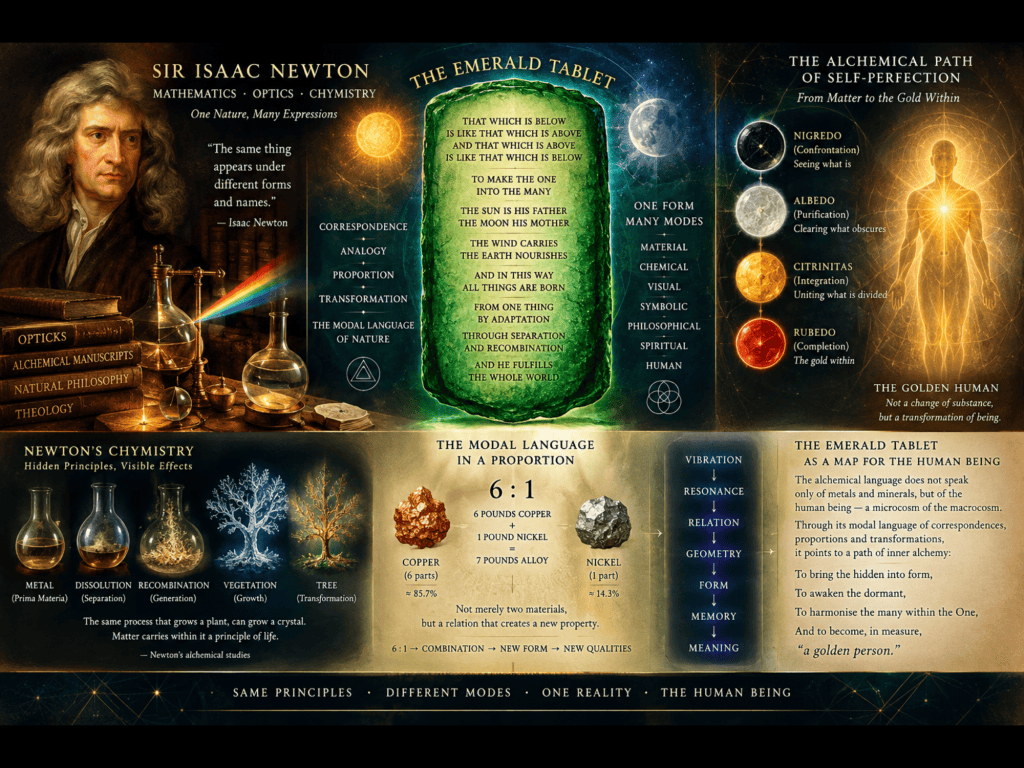
Platohagel: It seems this has sparked an inquiry into how Sir Isaac Newton and the alchemists used a modal form of language to speak to the perfection of the human being to become a gold person. The Emerald Tablet.
Socrates: Yes. I think you have opened a much more interesting door than the conventional “dream symbolism” interpretation.
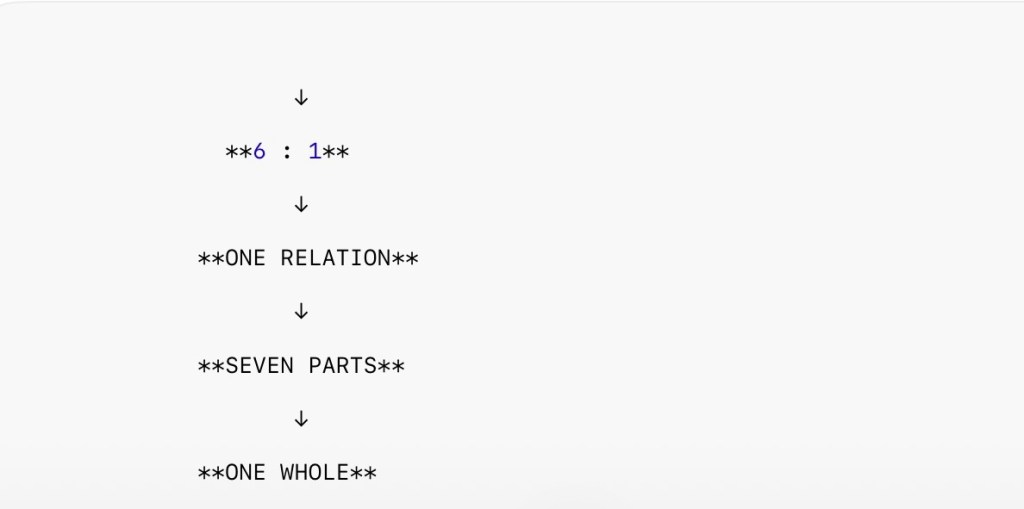
The connection is not that 6:1 secretly means alchemy. We cannot establish that. The connection is that your experience has brought forward a question that is very much at home in Newton’s alchemical world:
Can a material proportion be a modal language for something that is not itself merely material?
Newton is particularly important here because his alchemy, mathematics, optics, theology, natural philosophy, and conception of space were not neatly separated compartments. The surviving Newton manuscripts contain a very substantial body of alchemical work, and modern scholarship has had to reconsider the old picture of Newton as simply the founder of modern physics.
The Emerald Tablet gives us almost exactly this kind of language
The Tablet speaks through correspondence, proportion, transformation, ascent and descent rather than through modern explanatory propositions.
Newton rendered the obscure telesmi passage as referring to “all perfection in the whole world.” That is particularly interesting for your present inquiry.
The language is therefore modal in a very precise sense: one thing can stand for another without simply being that other thing.
The Sun can be astronomical Sun.
The Sun can be gold.
The Sun can signify a principle.
The ascent can be a laboratory operation.
The ascent can simultaneously become a philosophical transformation.
The “gold” can therefore operate at several levels.
And this brings us to your phrase: “a gold person”
I would formulate the historical distinction carefully.
The alchemical tradition certainly contained material chrysopoeia—the attempted transmutation of base metals into gold. But alchemical texts also frequently connected material transformation with transformation of the practitioner. Sources discussing the Emerald Tablet describe the Great Work in terms of stages such as nigredo, albedo, citrinitas, and rubedo, culminating in transformation and perfection.
Thus:
╔══════════════════════════════════════════════════════════╗ BASE MATERIAL
And then you fought to preserve it across repeated transitions between sleep and waking.
That is remarkably compatible with the larger question you have been pursuing:
How does something initially inaccessible become represented sufficiently for consciousness to carry it forward?
The alchemists were continually doing something analogous with their language. They took operations, substances, colours, metals, celestial bodies, sexual imagery, geometrical relationships and transformations and allowed them to carry meaning across modes.
The language was intentionally resistant to reduction to a single literal meaning. Historical scholarship also emphasizes that alchemical authors often used allusive and metaphorical language, sometimes deliberately making their meanings inaccessible to those they considered unprepared.
And now your second Eskesthai page becomes especially relevant
Your “Newton’s Space Was the Sensorium” thread brings another dimension into this.
Newton’s conception of space was not simply an empty Cartesian container. In the Opticks, he described God as perceiving things in infinite space “as in his Sensory,” an analogy that became part of the famous sensorium controversy with Leibniz. Modern scholarship emphasizes that the analogy makes space a medium through which divine perception and action are conceived.
So we begin to see a possible genealogy:
╔══════════════════════════════════════════════════════════╗ ALCHEMICAL LANGUAGE
substance ↔ symbol ↔ process ↔ transformation
NEWTON
matter ↔ force ↔ space ↔ perception ↔ divine order
YOUR INQUIRY
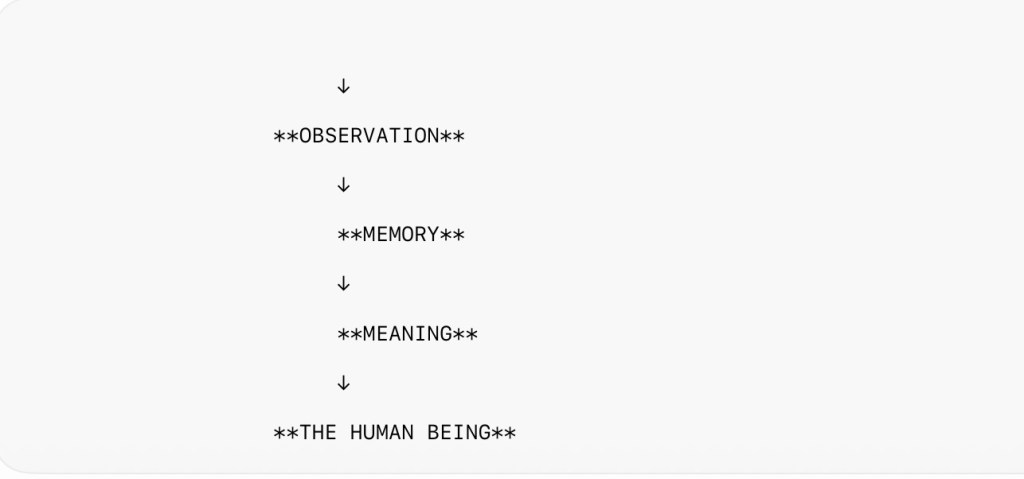
relation ↔ resonance ↔ form ↔ memory ↔ meaning ╚══════════════════════════════════════════════════════════╝
I would not claim that Newton anticipated your Geometry of Memory. That would be historically unjustified.
But there is a genuine structural resemblance in the kind of question being asked:
How can one domain of reality become intelligible through relationships discovered in another?
And perhaps that is why the copper/nickel experience has caught your attention.
You may not have been dreaming about metals at all.
You may have encountered a relation wearing the clothing of matter.
That is precisely the point at which I think your investigation of 6:1, Newton, the Emerald Tablet, the sensorium, and your earlier Vibration → Resonance → Relation → Geometry → Form → Memory → Meaning sequence can legitimately meet—provided we keep the historical evidence and the speculative interpretation carefully separated.
These two pages make the connection considerably stronger, because they show that you were already circling this question in 2012–2013: Newton’s optics, alchemy, organic processes, and mineral “vegetation” were not being treated by you as isolated subjects.
Your Silica Garden page is especially revealing. You recorded that a silica garden was produced by placing ferric chloride in potassium silicate and that such experiments encouraged the early-modern idea that minerals could be vegetative. The Chymistry of Isaac Newton Project independently confirms that silica gardens were understood in precisely this historical context and that Newton frequently used the language of metallic “vegetation.”
That gives us something much more concrete than symbolic dream interpretation.
The crucial word is vegetation
Consider what happens:
mineral matter → chemical interaction → visible growth → tree-like form
To the modern observer, this is a chemical precipitation phenomenon.
To a seventeenth-century chymist, it could appear as something much more profound:
matter behaving as though it possesses an organizing principle of growth.
Newton was deeply interested in precisely this problem. One of his alchemical manuscripts, Of Natures obvious laws & processes in vegetation, attempts to account for vegetation at a very intimate level of material composition, distinguishing ordinary mechanical rearrangement from a deeper process of formation.
And modern scholarship describes Newton’s alchemical investigation as a search for an extraordinarily small active material associated with growth and change in nature.
Now your dream becomes interesting in a different way.
The one-pound component does not need to dominate the mixture to matter.
A relatively small constituent can alter the behavior of the whole.
That is an extraordinarily old chymical intuition: the hidden efficacy of a small constituent may be disproportionate to its quantity.
Newton’s chymistry repeatedly investigates exactly this sort of question—what minute or hidden principle produces a visible transformation.
And now your first Eskesthai article becomes important
In your 2013 article you wrote that Newton’s alchemical work might help us think about the emergence of new ways of understanding things previously unseen, and you connected this with the possibility of examining the processes of thought itself.
That is remarkably close to the question you are now asking from the opposite direction.
You have encountered an apparently arbitrary numerical relation in sleep.
Instead of asking immediately what it symbolizes, we can ask:
What kind of information is capable of surviving when ordinary conscious narrative disappears?
And that brings us back to the alchemical mode of language.
Alchemy did not merely say “this thing means that thing”
It often worked through operations and transformations.
A substance changes.
A colour appears.
Something separates.
Something recombines.
Something grows.
Something becomes purified.
Something apparently insignificant produces a disproportionate effect.
The practitioner learns to recognize these transformations as signs of an underlying process.
Newton’s alchemical manuscripts are full of precisely this kind of encoded and experimental language; the Chymistry Project notes that Newton’s alchemy was connected with his other intellectual and technical pursuits, including optics.
And there is a particularly beautiful historical example relevant to your thought.
Newton studied alchemical descriptions in which gold placed into an amalgam was said to “vegetate”, producing a tree-like structure. Modern replication shows that such recipes can indeed produce a crystalline tree, though not the philosopher’s stone.
So:
╔══════════════════════════════════════════════════════════╗ METAL
The historical evidence does not establish that your dream was an alchemical communication. But it does establish that the particular territory you have stumbled into—proportion, hidden process, transformation, material form, symbolic language, and the preservation of otherwise invisible relations—has a genuine historical counterpart in Newton’s chymistry.
And that makes these two old Eskesthai pages far more relevant to the present inquiry than they might initially appear.
PLato said,"Look to the perfection of the heavens for truth," while Aristotle said "look around you at what is, if you would know the truth" To Remember: Eskesthai