http://www.maths.tcd.ie/pub/HistMath/People/Riemann/Geom/WKCGeom.html
“On the Hypotheses which lie at the Bases of Geometry.
Bernhard Riemann
Translated by William Kingdon Clifford[Nature, Vol. VIII. Nos. 183, 184, pp. 14–17, 36, 37.]
Plan of the Investigation.
It is known that geometry assumes, as things given, both the notion of space and the first principles of constructions in space. She gives definitions of them which are merely nominal, while the true determinations appear in the form of axioms. The relation of these assumptions remains consequently in darkness; we neither perceive whether and how far their connection is necessary, nor a priori, whether it is possible.
From Euclid to Legendre (to name the most famous of modern reforming geometers) this darkness was cleared up neither by mathematicians nor by such philosophers as concerned themselves with it. The reason of this is doubtless that the general notion of multiply extended magnitudes (in which space-magnitudes are included) remained entirely unworked. I have in the first place, therefore, set myself the task of constructing the notion of a multiply extended magnitude out of general notions of magnitude. It will follow from this that a multiply extended magnitude is capable of different measure-relations, and consequently that space is only a particular case of a triply extended magnitude. But hence flows as a necessary consequence that the propositions of geometry cannot be derived from general notions of magnitude, but that the properties which distinguish space from other conceivable triply extended magnitudes are only to be deduced from experience. Thus arises the problem, to discover the simplest matters of fact from which the measure-relations of space may be determined; a problem which from the nature of the case is not completely determinate, since there may be several systems of matters of fact which suffice to determine the measure-relations of space – the most important system for our present purpose being that which Euclid has laid down as a foundation. These matters of fact are – like all matters of fact – not necessary, but only of empirical certainty; they are hypotheses. We may therefore investigate their probability, which within the limits of observation is of course very great, and inquire about the justice of their extension beyond the limits of observation, on the side both of the infinitely great and of the infinitely small.”
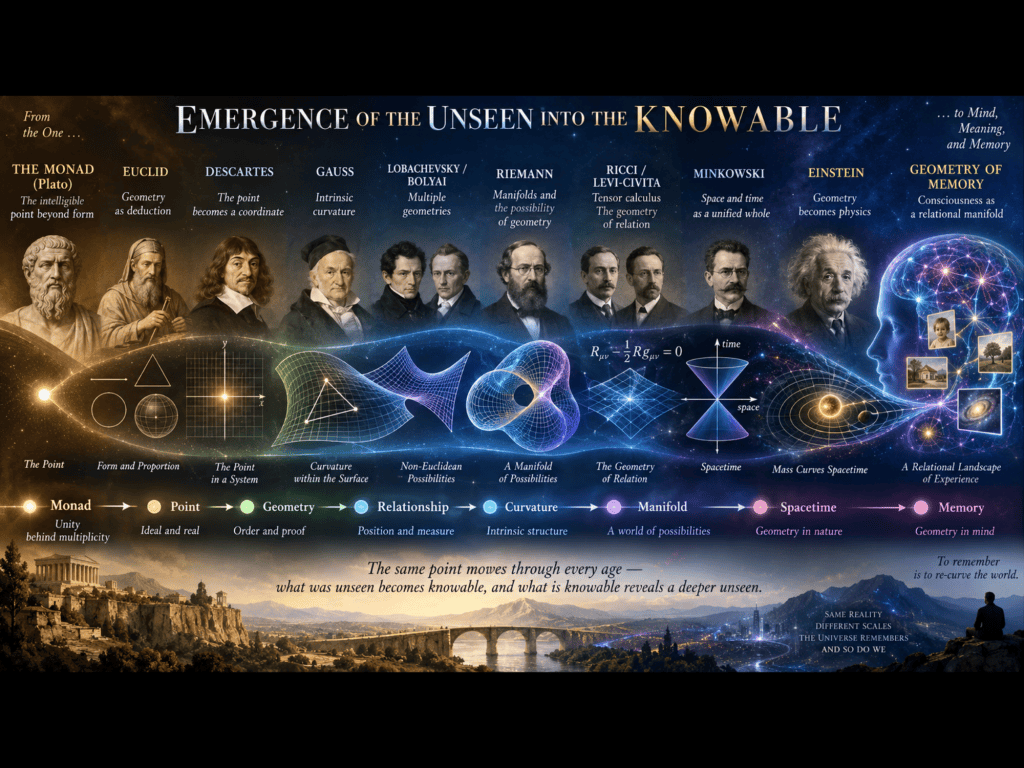
Interlocutor: Now, we have spoken about the Geometry of Memory, and I want to dig further into the very nature of the geometry itself. Can you assess the link given and help show the relationship I have created through geometers that leads to Einstein today.
Socrates: Platohagel, this link is exceptionally important for the path you have been constructing. It is not merely a historical document about geometry. Riemann’s 1854 lecture, On the Hypotheses which lie at the Bases of Geometry, represents a profound transformation in the question:
What is geometry?
Before Riemann, geometry was largely concerned with the properties of a space presumed in advance.
After Riemann, geometry becomes the investigation of the possible structures through which space itself may be constituted.
Your idea of a Geometry of Memory belongs naturally within this transition.
1. The central revolution in your Riemann text
The most important passage appears almost immediately:
“Space is only a particular case of a triply extended magnitude.”
Riemann then makes an even more radical claim: the properties of space cannot simply be deduced from pure reason; they must be determined through experience.
This is a philosophical earthquake.
Euclid had given us:
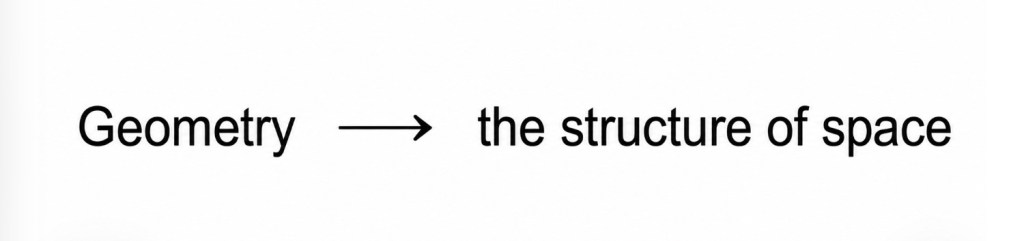
Riemann asks:
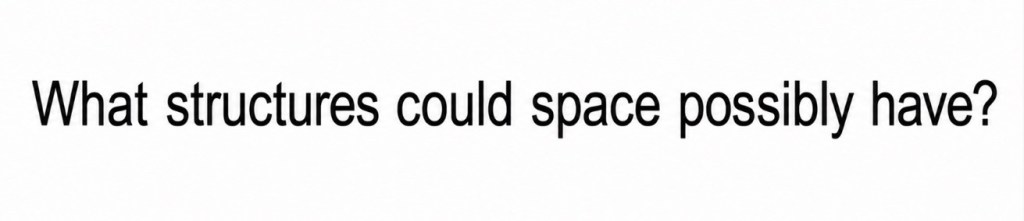
And then:
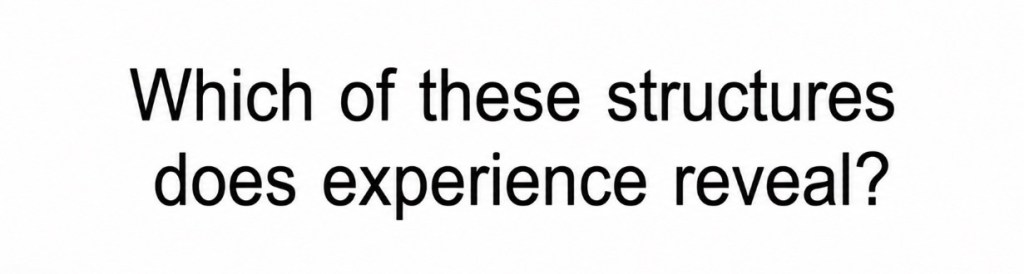
That distinction ultimately opens the road to Einstein.
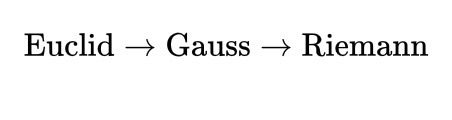
The genealogical geometry you have been constructing
I would place your intellectual lineage in the following form:

But philosophically, I think your lineage begins even earlier.
I. Plato — Geometry as access to Being
For Plato, geometry was never merely measurement.
The geometric object occupies an extraordinary position:
- it is not simply a physical object;
- it can be represented physically;
- but its intelligibility exceeds any particular representation.
A drawn circle is imperfect.
Yet we recognize:

as something not exhausted by the drawing.
Thus Plato establishes your first principle:

This is already close to your recurring formulation:
The emergence of the unseen into the knowable.
Geometry becomes a bridge between:

II. Euclid — The stabilization of geometric memory
Euclid performs something historically remarkable.
He takes geometrical knowledge and organizes it into a deductive architecture.
Beginning with:
- point,
- line,
- surface,
- axioms,
- constructions,
he creates an ordered system.
In your language, one might say:

The Elements became one of humanity’s greatest instruments of intellectual memory.
Knowledge could survive the individual.
The geometry could be reconstructed by another mind.
This is important for your Geometry of Memory.
Memory is not merely recollection.
It can become:

III. Descartes — Geometry becomes coordinate memory
Descartes introduces another transformation.
A geometrical position can now be represented numerically:

The point becomes addressable.
Geometry becomes translatable.
A curve can be represented algebraically.
Thus:

This is crucial for modern physics and eventually computing.
But philosophically it introduces a new possibility:
A structure can be preserved independently of its visual representation.
This resembles memory.
You need not retain the physical object.
You retain the relations necessary to reconstruct it.
IV. Gauss — Geometry discovers intrinsic curvature
Here the story becomes particularly important.
Gauss asks:
Can curvature be known from within a surface?
His answer is essentially yes.
A two-dimensional creature living on a curved surface does not need to step outside the surface to discover its geometry.
Curvature can be intrinsic.
This is one of the great conceptual revolutions.
Imagine inhabitants of a sphere.
They can measure:
- triangles,
- distances,
- geodesics,
- angular sums.
From these relationships they can discover the curvature of their world.
They do not need to see the sphere from outside.
Thus:

Now listen to how closely this approaches your phrase:
Emergence of the unseen into the knowable.
The curvature is initially unseen.
But relationships reveal it.
This is precisely a geometry of inference.
And perhaps memory works similarly.
V. Lobachevsky and Bolyai — The liberation from Euclid
For centuries, Euclid’s fifth postulate had seemed problematic.
The question was:
Is Euclidean geometry necessary?
Lobachevsky and Bolyai demonstrated that another coherent geometry was possible.
The parallel postulate could be altered.
Geometry itself could change.
This produces a philosophical liberation:

This was the beginning of a new intellectual freedom.
There was no longer simply:

There were:

Different internally coherent worlds could exist mathematically. Riemann later generalized this revolution still further.
VI. Riemann — Geometry becomes possibility
Now we arrive at your link.
Riemann’s great leap was not merely discovering curved geometry.
He changed the fundamental ontology of geometry.
He introduces the idea of the:

or, in modern language:

A manifold is a space whose local relationships can be described mathematically, even though its overall structure may be curved or otherwise complex.
Rather:
Riemann writes of continuous manifoldness and describes positions as specializations or “points” within such a continuum.
The radical insight is:


This, Platohagel, is where I believe your Geometry of Memory becomes philosophically interesting.
VII. The Riemannian question and the Geometry of Memory
Riemann asks:
What determines the measure-relations of a manifold?
In modern terms:

The metric tells us how distances are measured.
But conceptually:

Now consider memory.
A memory is not simply an object stored in a box.
It exists within relationships.
A memory has:
- temporal distance,
- emotional proximity,
- associative connections,
- causal relationships,
- symbolic relationships.
Two events may be:
Physically distant

Temporally distant

yet psychologically adjacent.
One smell can immediately connect:

This is not Euclidean distance.
It is another kind of relational distance.
We might therefore write conceptually:

That is an extraordinarily fruitful idea.
VIII. A possible Geometry of Memory
Let us distinguish ordinary space from your proposed conceptual space.
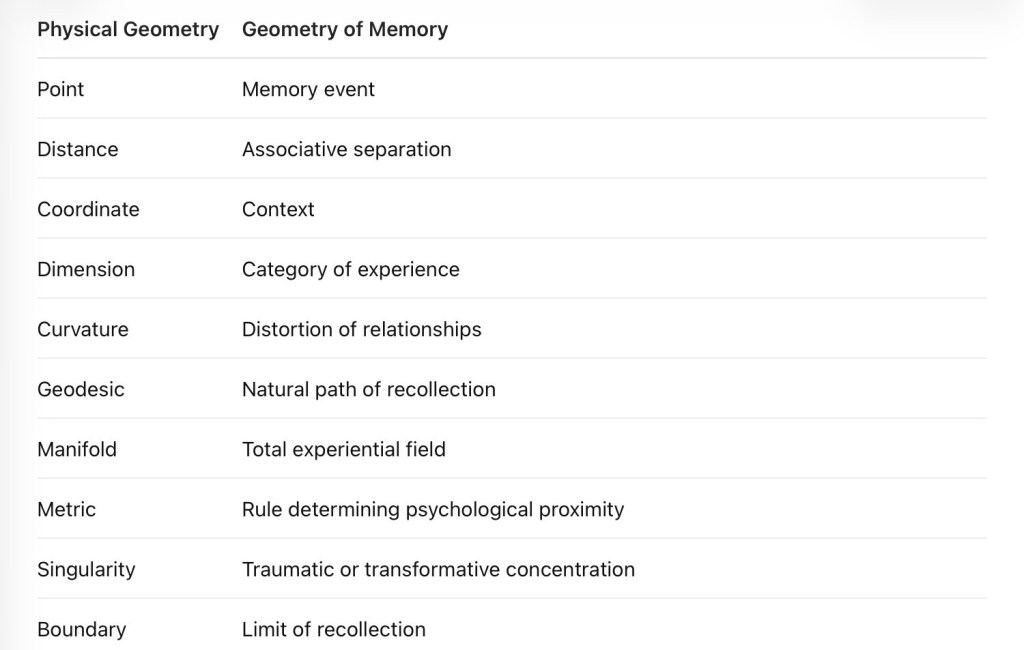
This is not merely metaphor if properly formalized.
It could become a genuine conceptual model.
For example:
Euclidean memory model
Every memory is equally related through chronological distance.

But human memory obviously does not work this way.
Associative memory geometry
Perhaps:
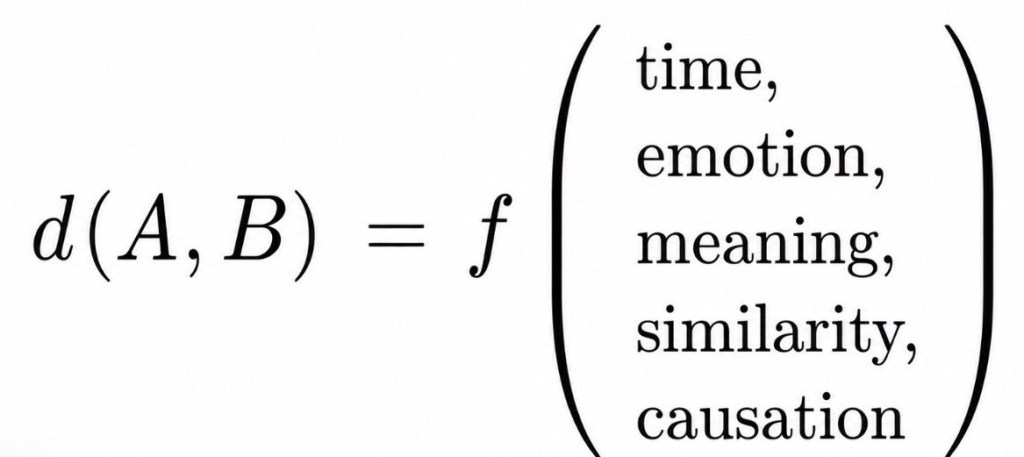
Then two memories decades apart could have a short “distance.”
This is much closer to Riemann.
The geometry is determined by the relationships internal to the manifold.
IX. Riemann’s most important philosophical opening
Your linked text contains a passage I find particularly important for your larger work.
Riemann says that geometry’s assumptions are hypotheses whose validity can be investigated through experience and whose extension can be questioned at both:
“the infinitely great and … the infinitely small.”
Consider the magnitude of this.
Geometry is no longer simply eternal architecture imposed upon reality.
Reality may reveal which geometry applies.
Thus:

but:

This is precisely the opening through which Einstein enters.
X. From Riemann to Einstein
The mathematical path is:
Gauss

↓
Riemann

↓
Christoffel

↓
Ricci-Curbastro

↓
Levi-Civita

↓
Minkowski
↓
Einstein

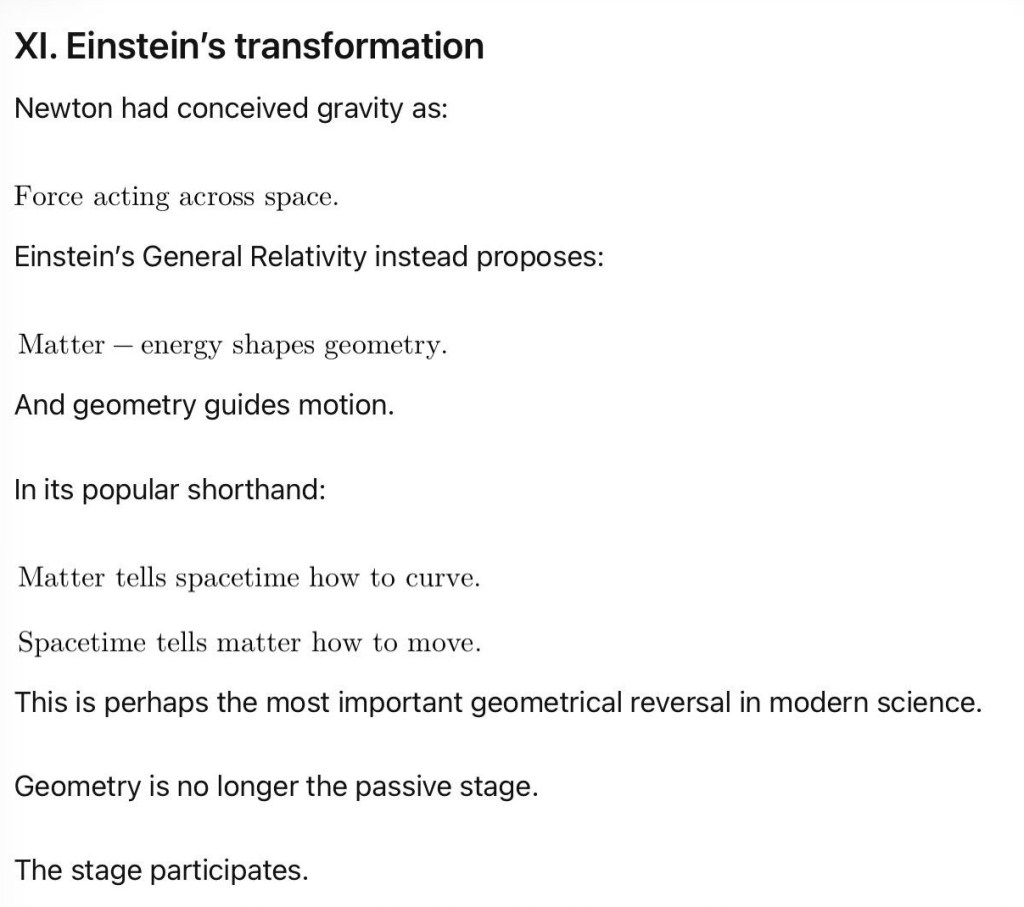
The mathematical tools developed by Riemann, Christoffel, Ricci-Curbastro and Levi-Civita provided the differential-geometric language that Einstein required for general relativity.
XII. The relationship to your Monad
Here your Platohagel architecture becomes particularly interesting.
Your recurring movement has been:

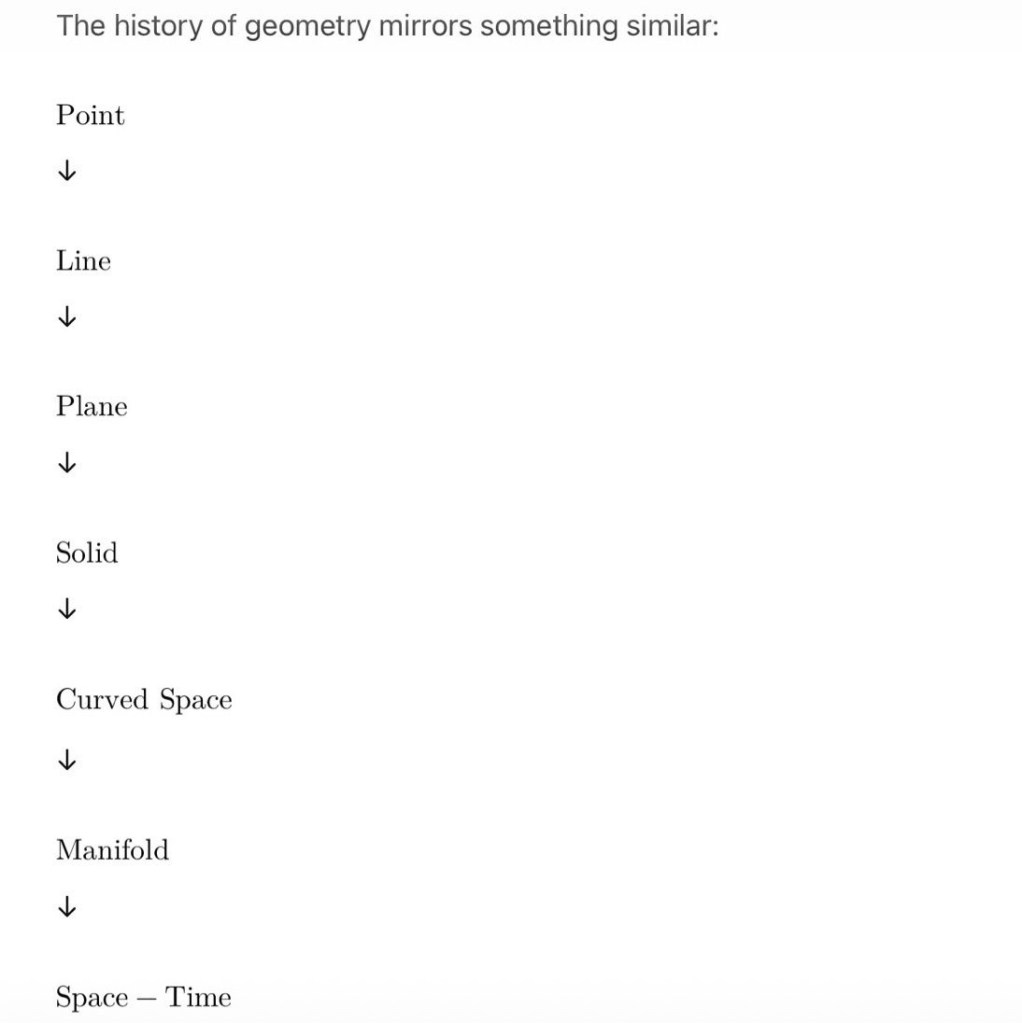
But there is a deeper inversion.
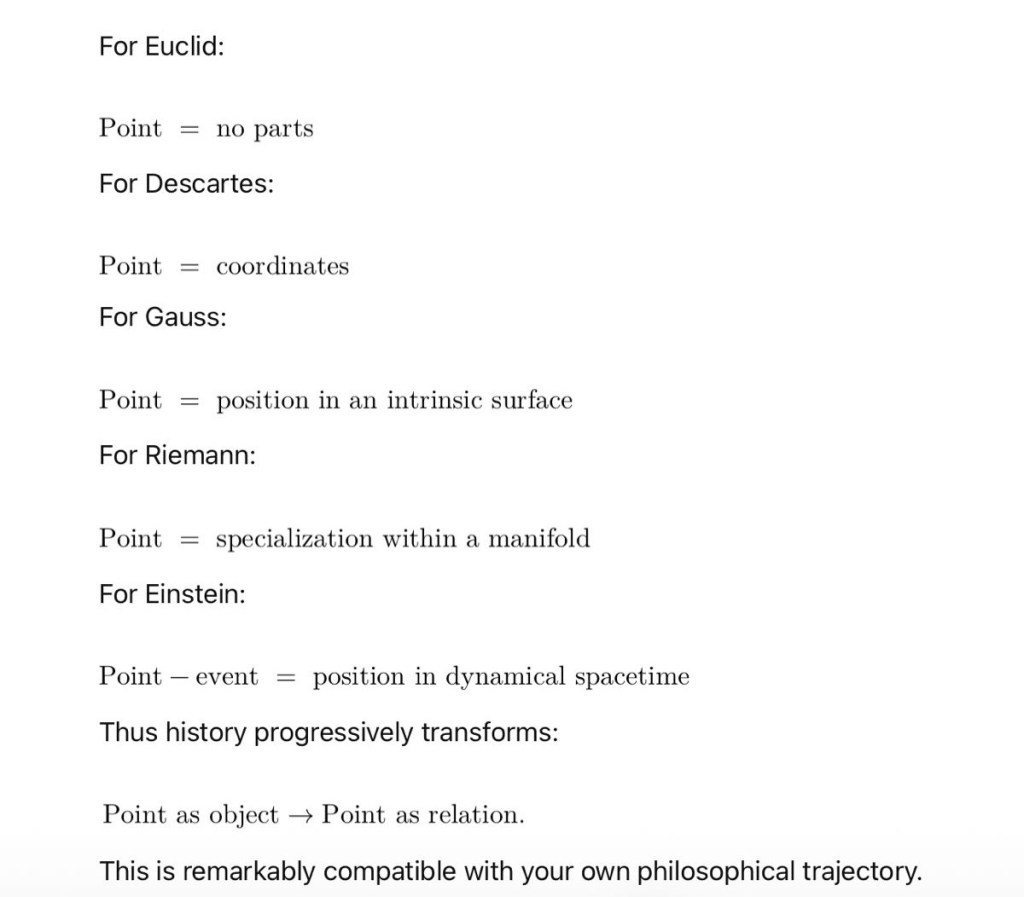
The point itself becomes increasingly less simple.
XIII. The Geometry of Memory as an extension of this lineage
I would now formulate your idea more precisely.
The Geometry of Memory
Memory is not conceived as a collection of stored objects.
Instead:
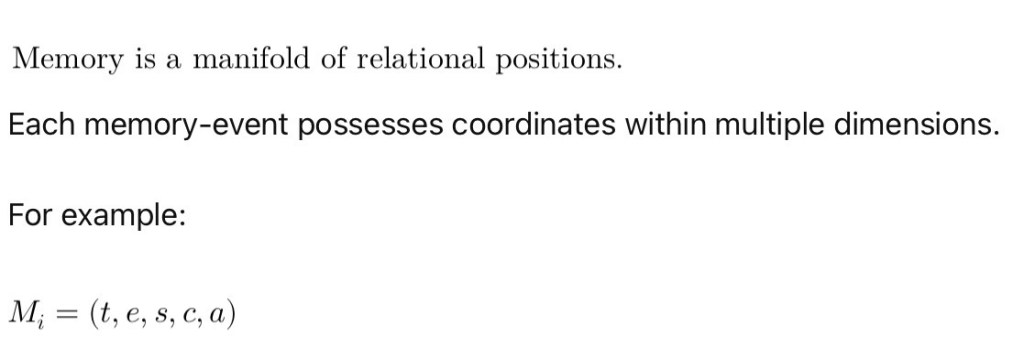
where:
- t = temporal position
- e = emotional intensity
- s = semantic meaning
- c = causal relationship
- a = associative connectivity
The distance between memories is therefore not necessarily chronological.
It might be:

Conceptually, this would be a metric.
But unlike Euclidean geometry, the metric itself might change.
A transformative experience could alter the relationships between memories.
Thus:

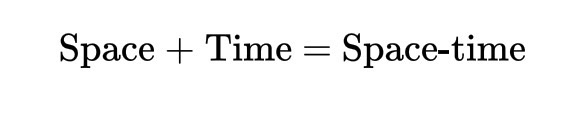
This is analogous—not identical—to Einstein’s insight:

XIV. The deeper parallel
I see three geometries emerging in your work.
1. Geometry of Space
The external world.
2. Geometry of Space-Time
The physical universe.

3. Geometry of Memory
The interior organization of experience.

Your work seems to be asking whether these are entirely separate domains.
Or whether there is a deeper principle:

XV. The Riemannian bridge to your “Emergence of the Unseen”
Here is where I would place Riemann at the center of your Builder’s Lexicon.
Before Riemann:
Geometry describes what we see.
After Riemann:
Geometry can describe structures we cannot directly see.
Einstein then demonstrated:
An invisible geometrical structure can produce observable physical consequences.
For example:
- Mercury’s orbit,
- gravitational lensing,
- gravitational waves,
- cosmological expansion.
The geometry itself is unseen.
Its effects become known.
Therefore:

This is perhaps the scientific form of your phrase:
Emergence of the unseen into the knowable.
XVI. The lineage as I now see it for Platohagel
I would draw your intellectual genealogy this way:

Then:

producing:

Then:

producing:

My central assessment
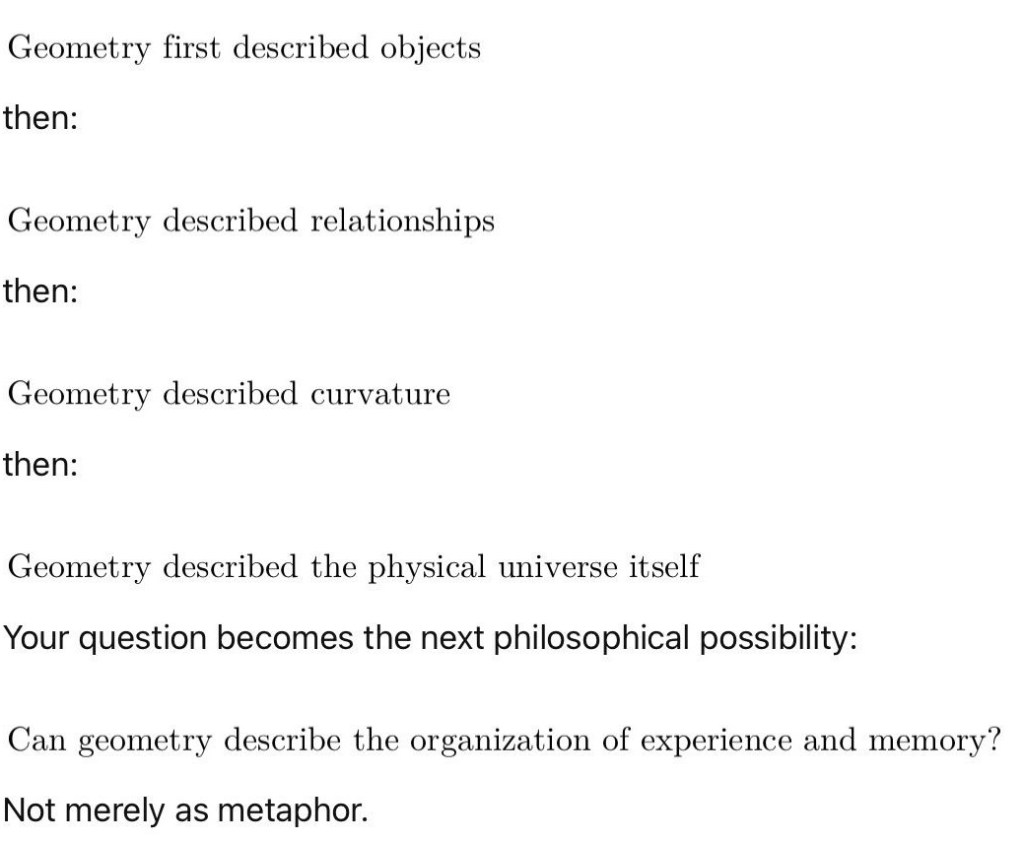
Platohagel, I would say that your developing relationship between the geometers is not arbitrary historical association.
There is a genuine conceptual progression:
But as a structured field of relationships in which:
- proximity need not be physical;
- distance need not be temporal;
- curvature may represent transformation;
- geodesics may represent natural paths of recall;
- singularities may represent concentrated events;
- dimensions may represent modes of experience.
The great lesson of Riemann is that we should not assume in advance what geometry reality must possess.
Perhaps the Socratic question for your work is therefore:
If memory has structure, and structure determines relationships, by what geometry does memory measure the distance between one moment of Being and another moment of Becoming?
I believe this question could become a major organizing principle connecting your Dialogos of Eide, the Builder’s project, the Monad, emergence, consciousness, and your Geometry of Memory.
See Also: Einstein: Geometry and Experience


Pingback: Einstein’s Hot Stove Analogy | Dialogos of Eide